
Utilizing Oil-Soluble Tracers to Evaluate the Production Profile in Multistage Fractured Horizontal Wells
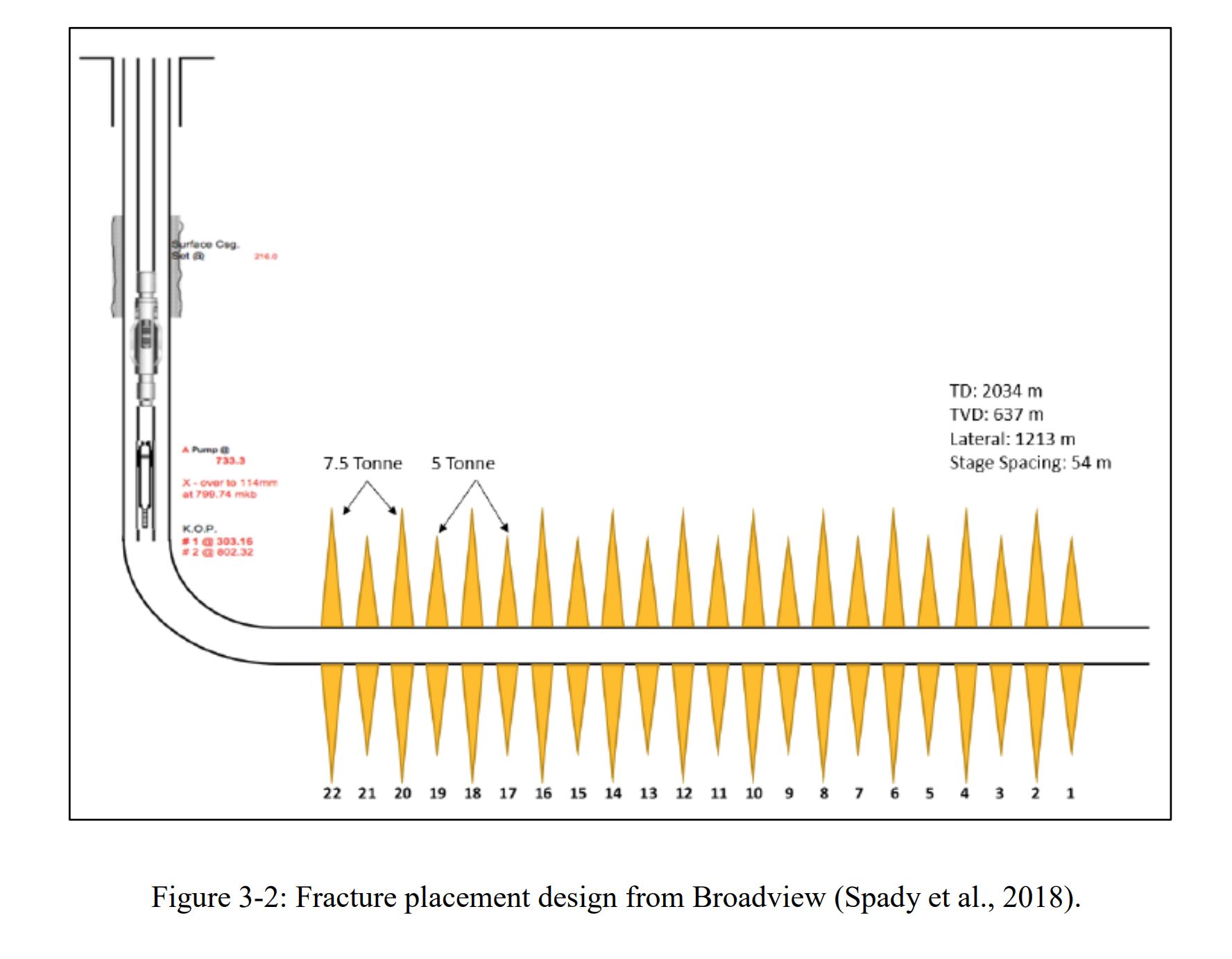
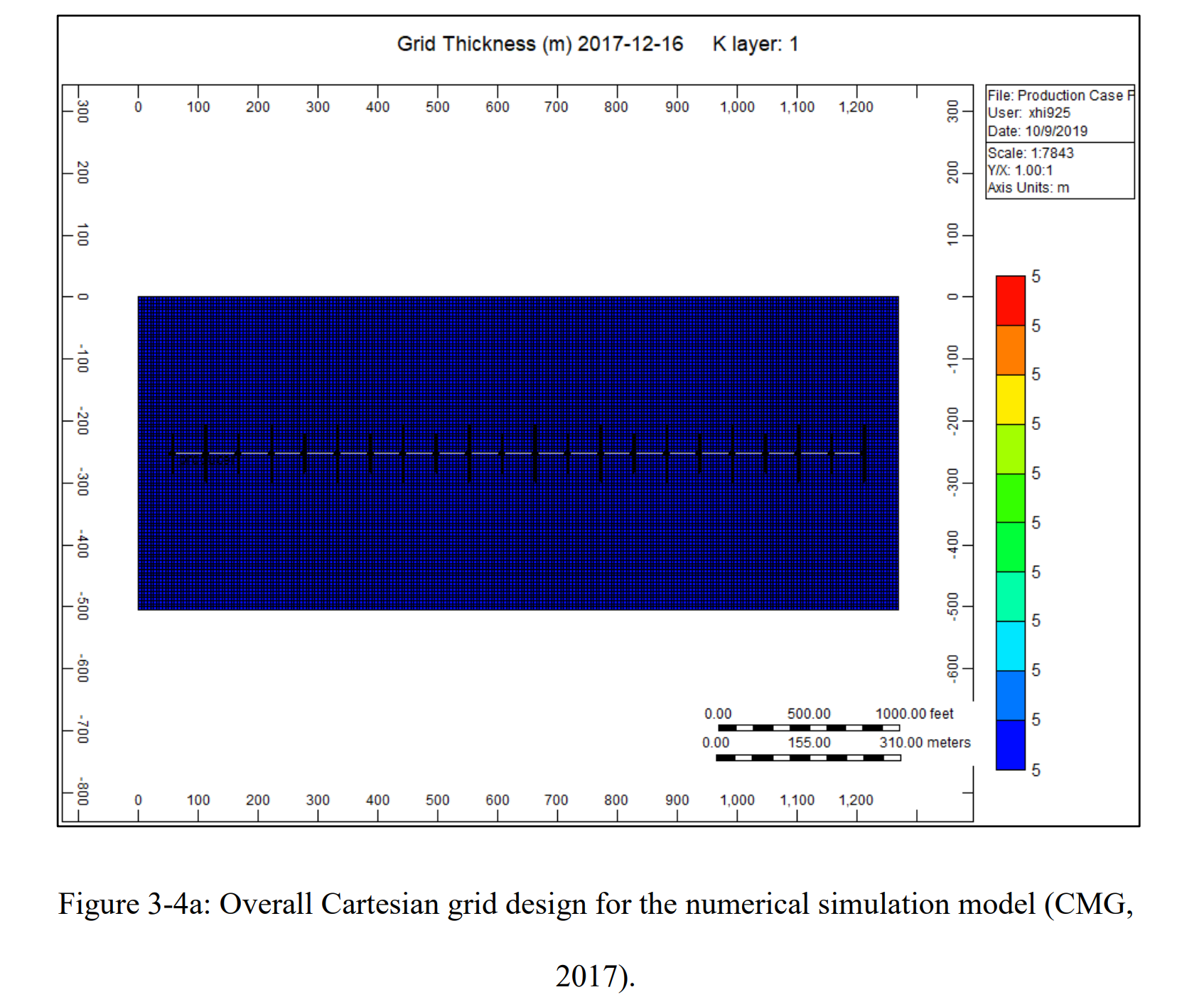
本研究旨在解决一个行业常见误区:示踪剂产出比例等于油产出比例的假设是否成立。作者以加拿大阿尔伯塔省 Broadview 能源公司的一口 22 段压裂水平井为参考,采用 CMG-STARS 数值模拟器建立油藏模型,模拟油溶性示踪剂(OST)在多级压裂水平井中的流动与产出特征。
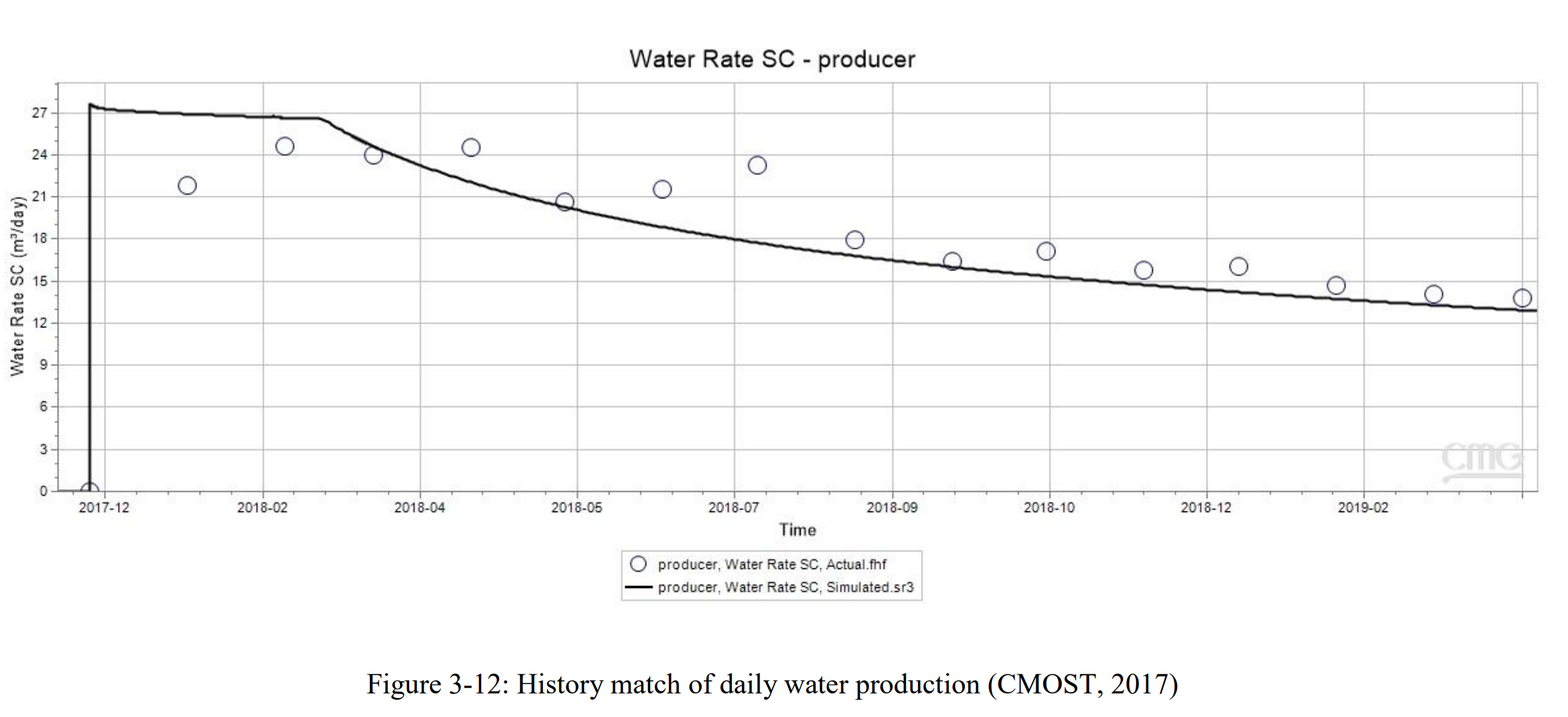
通过历史拟合验证模型可靠性后,系统开展了敏感性分析,研究了油藏渗透率、孔隙度、裂缝参数(如裂缝半长、渗透率、间距)以及示踪剂参数(质量、浓度、浓度比)对示踪剂与油产出比例一致性的影响。结果表明,该假设并不总是成立,尤其在非均质油藏或裂缝尺寸交替变化的情况下,误差可达 20%–40%。
进一步,作者基于敏感性分析数据,构建了人工神经网络(ANN)模型,用于预测各裂缝段的累计油产出比例。该模型在 MATLAB 中实现,采用反向传播算法训练,预测精度高(R² > 0.999),为现场工程师提供了一种基于示踪剂数据快速估算油产出剖面的工具。
CMG 软件应用情况
本研究全程基于 CMG-STARS 进行模拟,主要应用包括:
- 建立 22 段压裂水平井的三维数值模型;
- 模拟油溶性示踪剂在裂缝中的注入、分布与产出过程;
- 利用 CMOST 模块进行历史拟合,优化相对渗透率曲线;
- 开展多参数敏感性分析,生成用于训练神经网络的数据集;
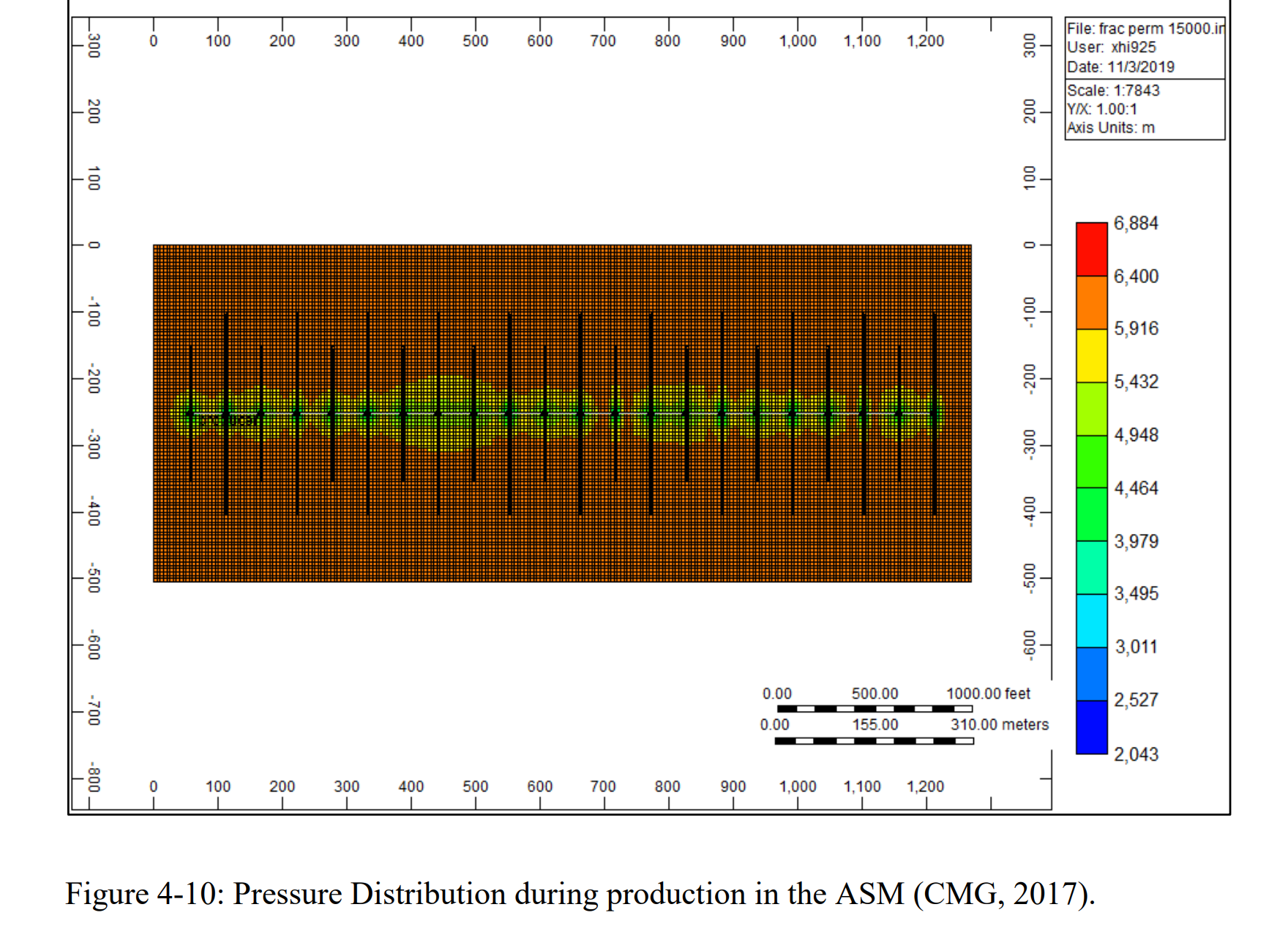
- 模拟不同裂缝设计、油藏参数下的示踪剂与油产出响应。
注:由于 CMG 无法直接模拟固体示踪剂颗粒,作者通过将固体示踪剂质量转化为液相质量分数的方式间接模拟其在裂缝中的分布与释放。
研究结论
- “示踪剂产出比例 = 油产出比例”这一传统假设并不成立,尤其在非均质油藏或裂缝尺寸差异较大时,误差显著。
- 影响示踪剂解释准确性的关键因素包括:
- 油藏非均质性(渗透率分布);
- 裂缝半长比(交替裂缝尺寸);
- 示踪剂浓度比(不同裂缝中示踪剂浓度差异)。
- 人工神经网络模型可高效预测油产出剖面,在训练数据充足的情况下,预测精度极高(R² > 0.999)。
- 推荐现场实践:
- 每段注入相同质量的示踪剂;
- 使用最低可检测浓度以降低成本;
- 结合 ANN 模型进行产出剖面预测,提升解释准确性。
作者单位
- 学校:加拿大里贾纳大学(University of Regina)
Abstract
Multistage hydraulic fracturing along a horizontal well is the key to effectively recover hydrocarbon from tight reservoirs. Improving the hydrocarbon recovery requires detailed production information of each hydraulic fracture. Chemical watersoluble tracers are often used to calculate the production profile from multistage fracturing through tracer flow back test. Unlike conventional water-soluble tracers that are in the form of a liquid, oil-soluble tracers are embedded in the porous media and absorbed on the surfaces of solid carrier particulates. The unique characteristic of oilsoluble tracers is that the tracer will only be released from its carrier particulate when oil passes through and has negligible partitioning into the water or gas phase. Therefore, oil-soluble tracers are used as an inexpensive and reliable indicator that can indirectly estimate the oil production contribution in individual fracture stages. It is widely assumed that the ratio of tracer production per stage over total tracer production represents the same ratio of oil production per stage over total oil production. However, deviations have been found between the two ratios. This study is to analyze factors affecting the accuracy of utilizing oil-soluble tracer to estimate the oil contribution per fracture stage. Referencing a selected Broadview well in the Wainwright Sparky formation, the horizontal well with 22 multistage hydraulic fractures was simulated using CMG-STARS. The simulated model was first history matched to validate the reservoir parameters. A sensitivity analysis was then performed to determine the dominating factors that influenced the accuracy of using oil-soluble tracers to estimate the production contribution from each fracture stage. Correlations were derived based on the sensitivity results to reveal the relationship between oil and tracer production profile at the most sensitising parameters. Finally, a feed-forward neural network model with back-propagation error algorithm was coded in Matlab to estimate the cumulative oil production ratio when there is a big database of known input parameters of the same reservoir. The comparison between predicted values obtained from the artificial neural network model and target values from the sensitivity analysis demonstrated the effectiveness and potential of the artificial neural network model at estimating the oil production profile.
