
Synergistic Effects of Dimethyl Ether and LSW in a CO2 WAG Process for Enhanced Oil Recovery and CO2 Sequestration
将低矿化度水(LSW)与 CO₂ 联合注入的“水气交替”(WAG)工艺,可在提高原油采收率的同时降低作业成本。然而,CO₂ 与原油密度、黏度差异大,易早期突破并形成指进。虽然二甲醚(DME)与 LSW 分别能通过润湿反转、降低最小混相压力、减小界面张力(IFT)及抑制 CO₂ 流度来改善驱替效果,但二者在 CO₂-WAG 中的协同机制尚不清楚,且现有 DME-EOR 研究未把 LSW 视为降低 DME 高成本的经济替代手段。本文提出“CO₂/DME-LSWAG”新思路,系统评价 DME 浓度(0 %、10 %、25 %)与 LSW(海水、2 倍稀释海水、10 倍稀释海水)对二维碳酸盐岩剖面模型的波及/驱替效率、采收率及 CO₂ 封存的影响。
CMG 软件应用情况
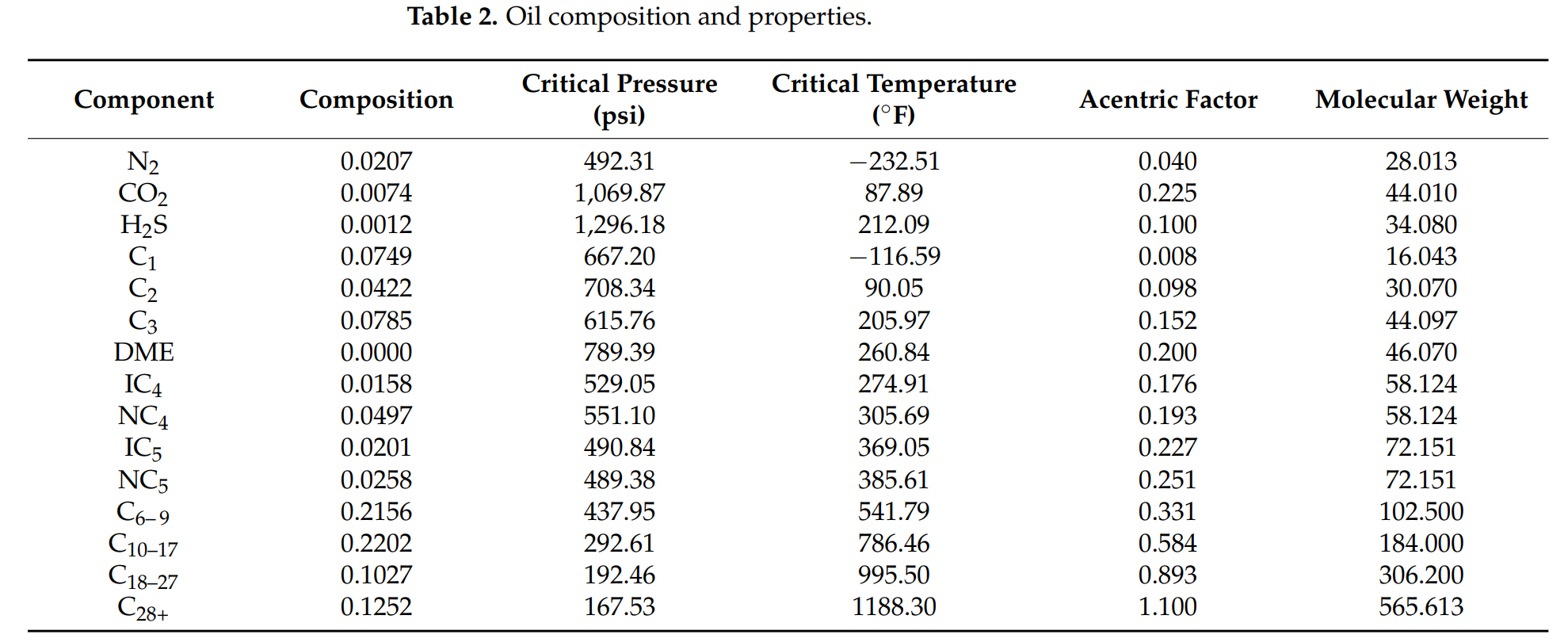
- 流体模拟:采用 CMG WinProp(2025.20 版)建立 Weyburn 油藏流体模型,利用 Peng-Robinson 状态方程计算油/气相逸度及 DME 溶解度,并回归二元交互系数。
- 油藏模拟:使用 CMG-GEM 组分模拟器,耦合
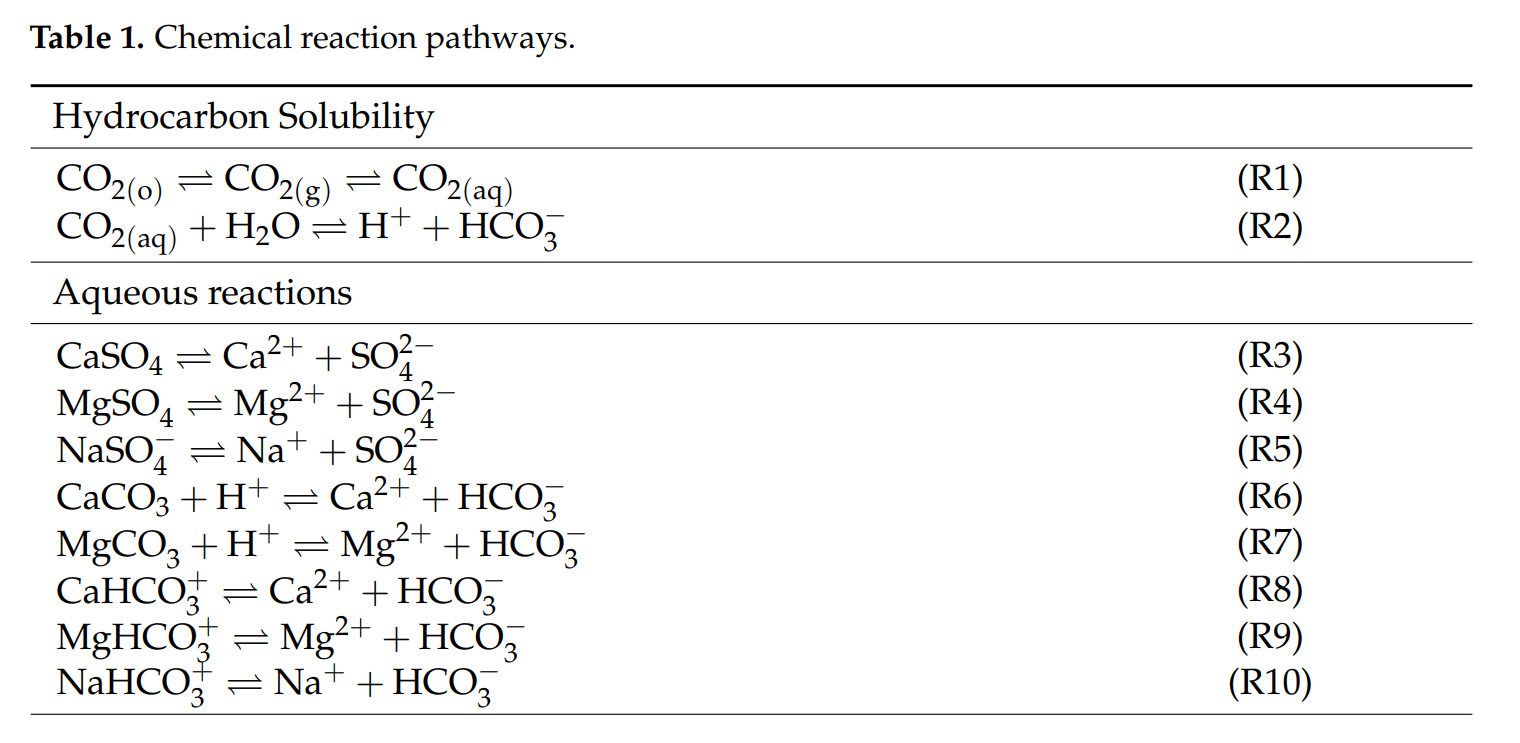
– 15 组油气水-矿物-离子交换地球化学反应;
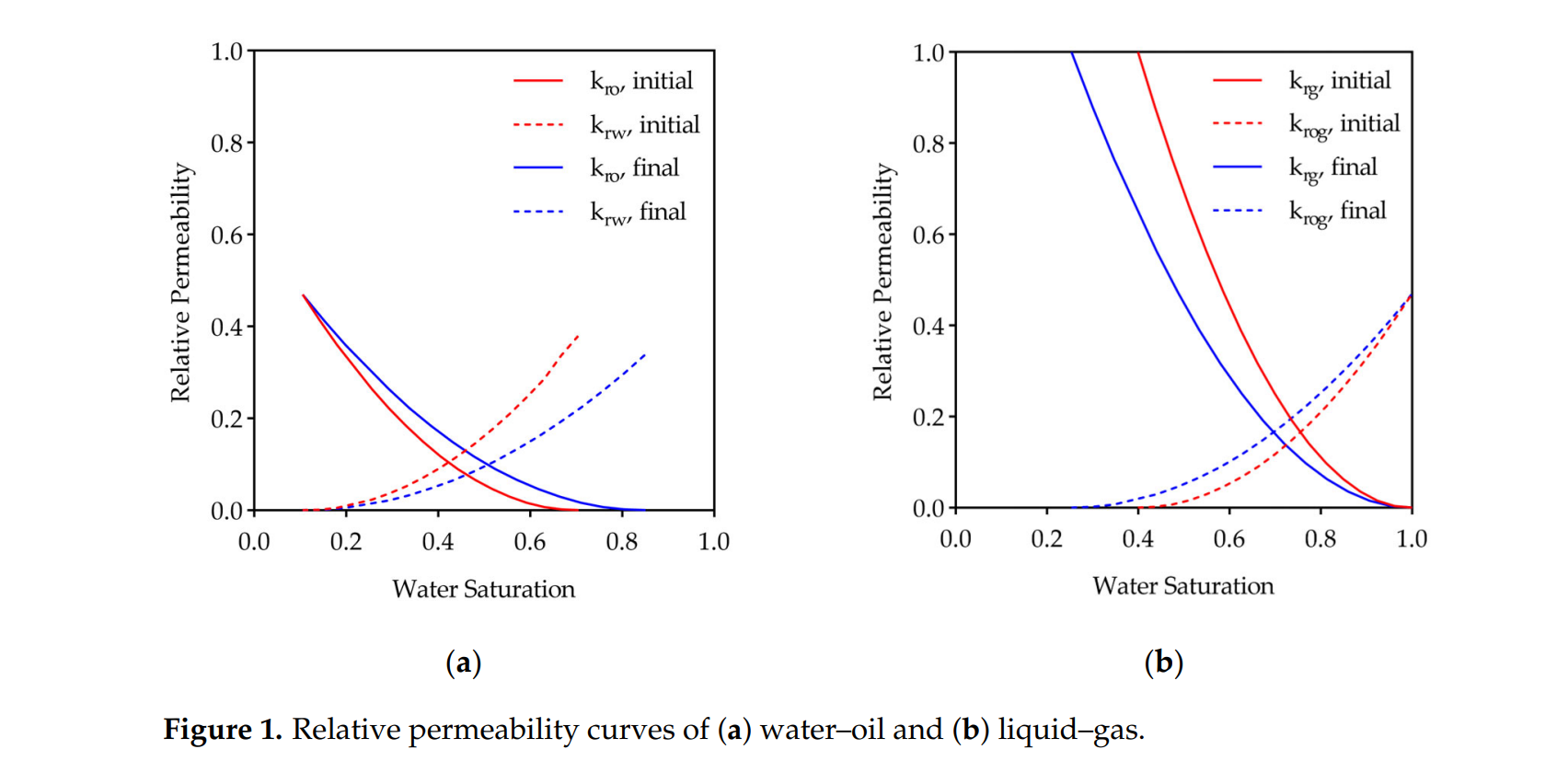
– 基于 Yousef 等岩心渗吸实验的润湿反转相对渗透率插值;
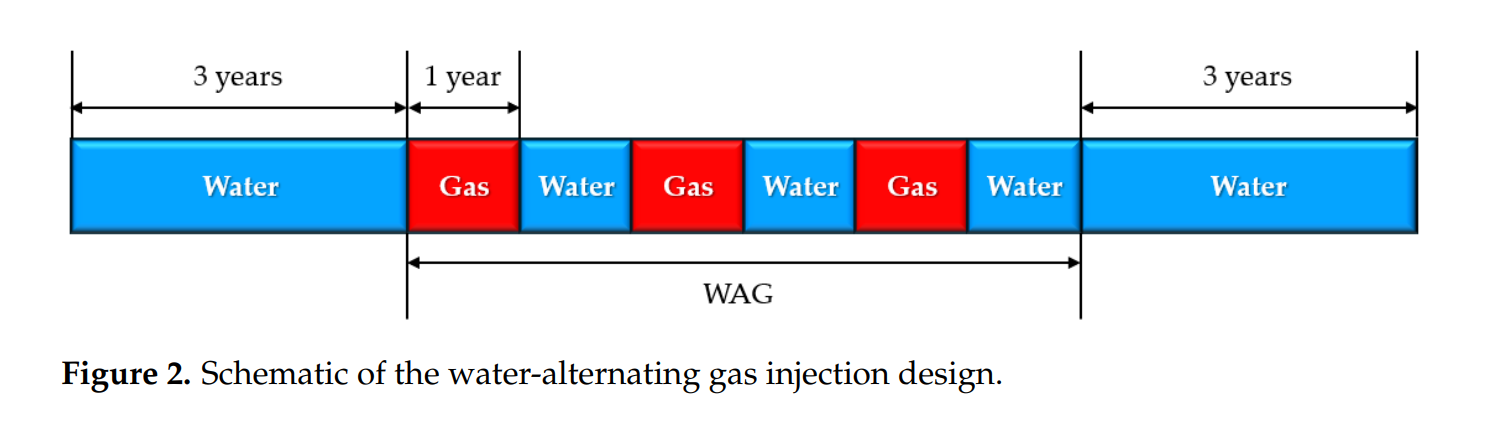
– 52×1×20 二维均质碳酸盐剖面模型(网格 10 ft×10 ft×5 ft),矿物组成:方解石 64 %、白云石 10 %、硬石膏 2 %。 - 全过程 12 年注入:前 3 年 LSW 驱 → 中间 6 年 1:1 LSWAG 交替 → 后 3 年 LSW 驱;共运行 9 组方案(3 种 DME 浓度 × 3 种盐水矿化度)。
主要结论
- 波及效率:DME 使 CO₂ 流度降低、重力超覆减弱, 驱替面积提高 5–8 %;LSW 影响 <1 %。
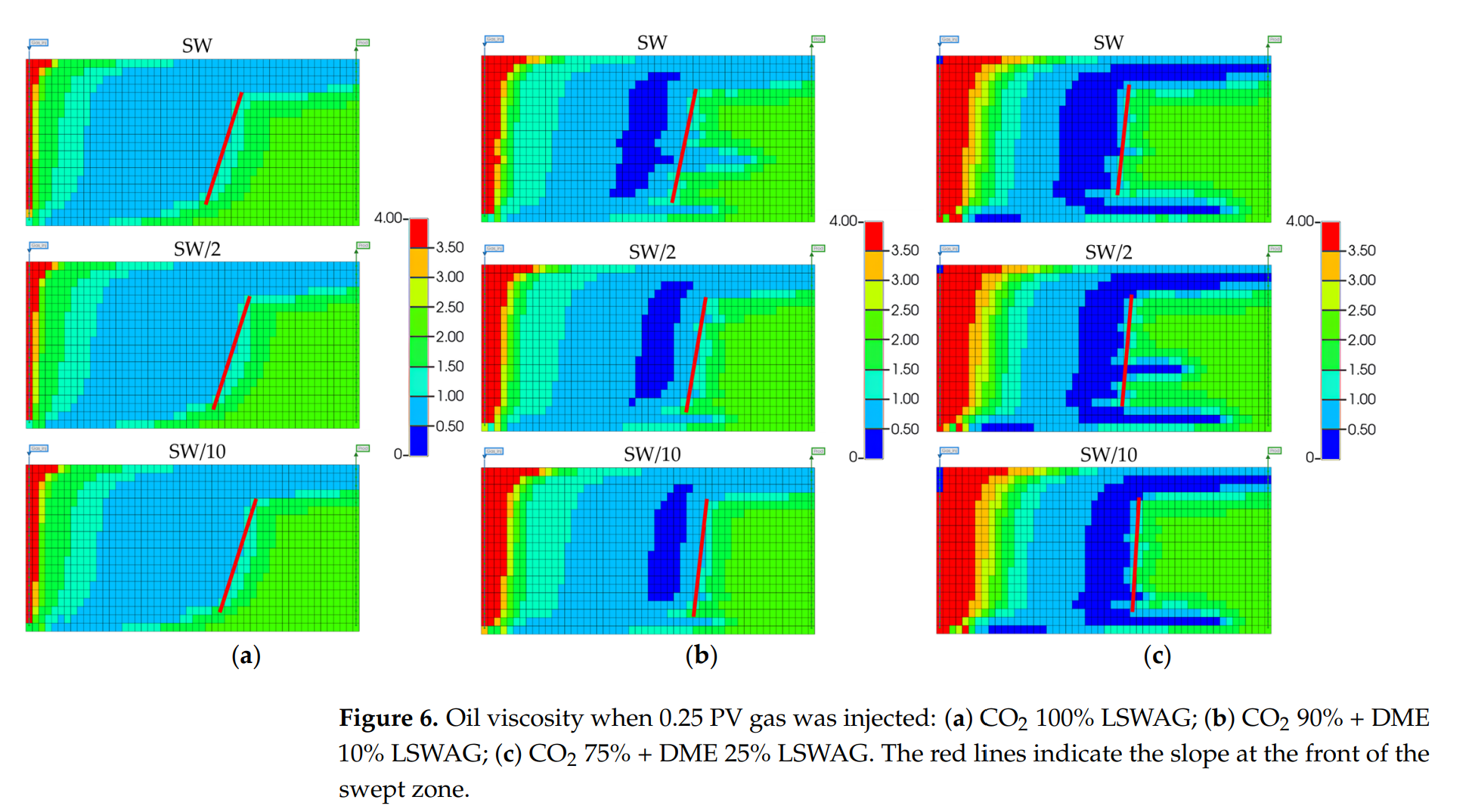
- 驱替效率:25 %DME 可将 IFT 降低 95 %,原油黏度由 2.1 cP 最低降至 0.38 cP;LSW 加速黏度下降并提高 C6–C9 中间组分的采出程度。
- 原油采收率:最高 83.8 %(25 %DME + SW/10),比纯 CO₂ + SW 提高 13.3 个百分点;DME 在高盐水中增效更显著,LSW 在低 DME 浓度下增效最大。
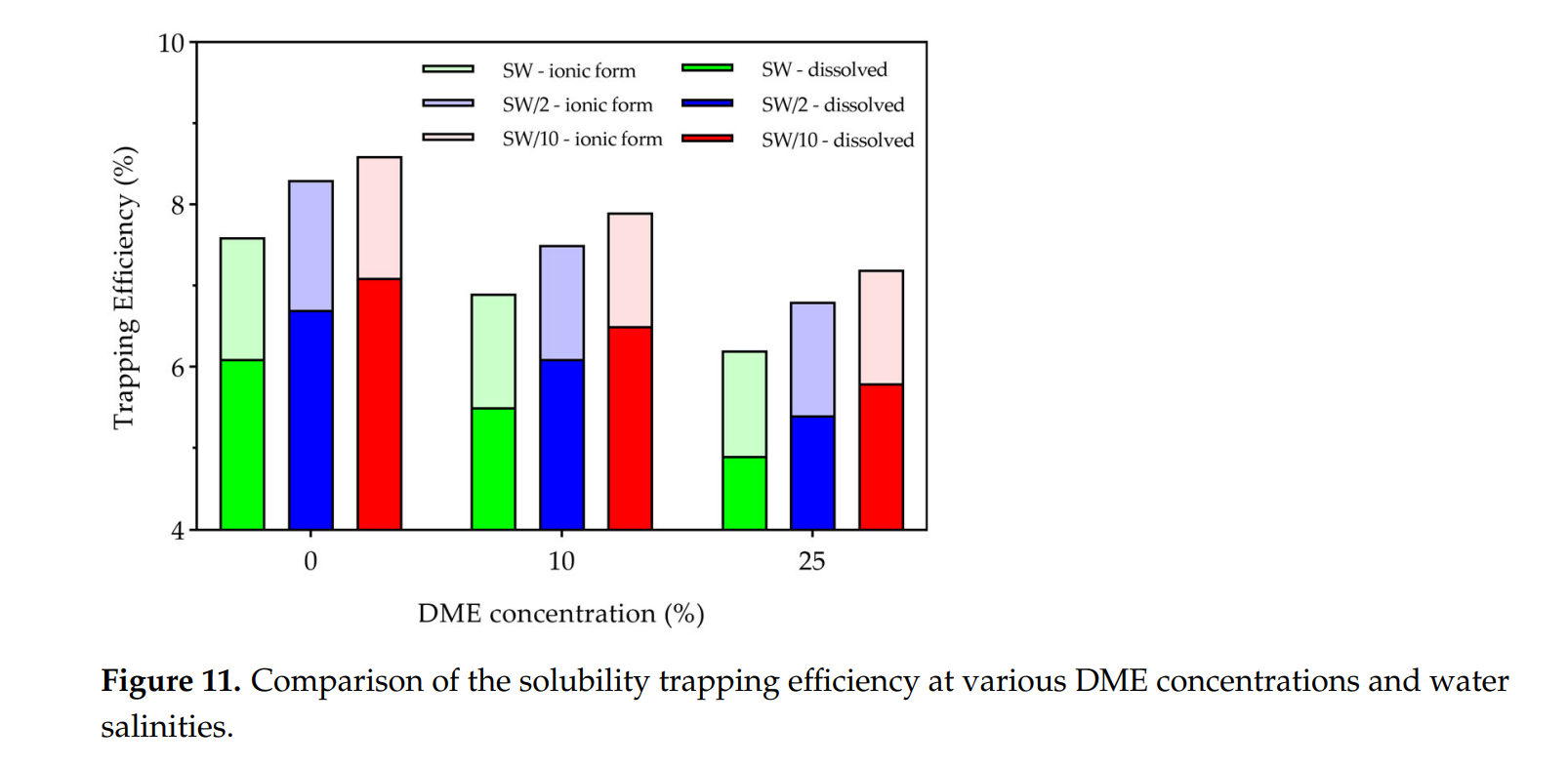
- CO₂ 封存:构造封存占比最大,其效率随 DME 浓度升高而降低、随矿化度升高而增加;溶解封存则相反。随机森林敏感性分析表明 DME 浓度是控制封存效率的首要因素(敏感度 0.50,相关系数 –0.92)。
- 经济-技术平衡:提高采收率与增加 CO₂ 封存存在目标冲突,现场实施需综合优化 DME 与 LSW 的配比,并开展经济评价与 DME 回收再利用研究。
作者单位
韩国汉阳大学 地球资源与环境工程系

Abstract
The integrated injection of low-salinity water (LSW) and carbon dioxide (CO2) into the water-alternating-gas (WAG) process offers advantages, primarily increasing oil recovery and reducing operating costs. However, CO2 has challenges in sweep efficiency due to significant differences in density and viscosity compared with oil. While LSW and dimethyl ether (DME) have shown promise in improving recovery through wettability alteration and reducing minimum miscible pressure, interfacial tension (IFT), and CO2 mobility, their synergistic integration with CO2-WAG remains poorly understood. Existing DME-based enhanced oil recovery (EOR) studies have not explored low-salinity water injection as a cost-effective alternative to mitigate high DME operating costs. This study introduces the CO2/DME-LSWAG method, systematically evaluating the effect of DME concentrations (0%, 10%, 25%) and LSWs (seawater, twice-diluted seawater, ten-times-diluted seawater) on sweep and displacement efficiencies, oil recovery, and CO2 storage in a 2D cross-sectional carbonate reservoir model. Results showed that DME dramatically reduces IFT (67% and 95% at 10% and 25% DME solvent, respectively) while salinity effects are relatively small. Compared with CO2-LSWAG, the oil recovery factor improved by 5.2–13.1% depending on DME concentration and water salinity, with DME performance maximized at higher salinity water. CO2 storage efficiency showed opposing trends. Structural trapping decreased, while solubility trapping increased with lower salinity. The sensitivity analysis identified DME concentration as the dominant factor for CO2 storage. The composition modeling and simulation of the CO2/DME-LSWAG process provide critical engineering guidance for the design of future EOR and CO2 storage projects that utilize DME in carbonate reservoirs.
