
Feasibility study of closed-loop geothermal heat extraction concepts using reservoir simulation
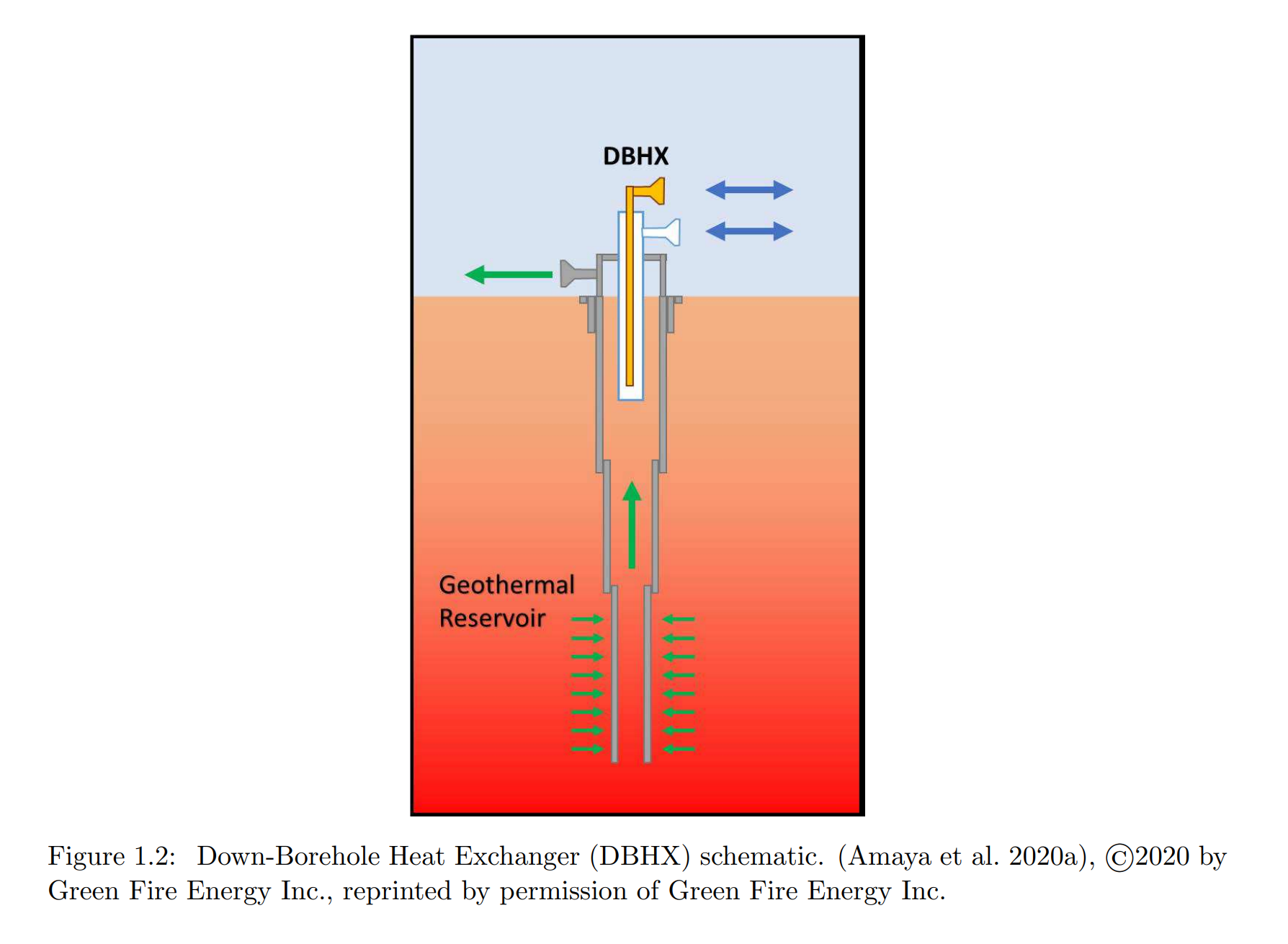
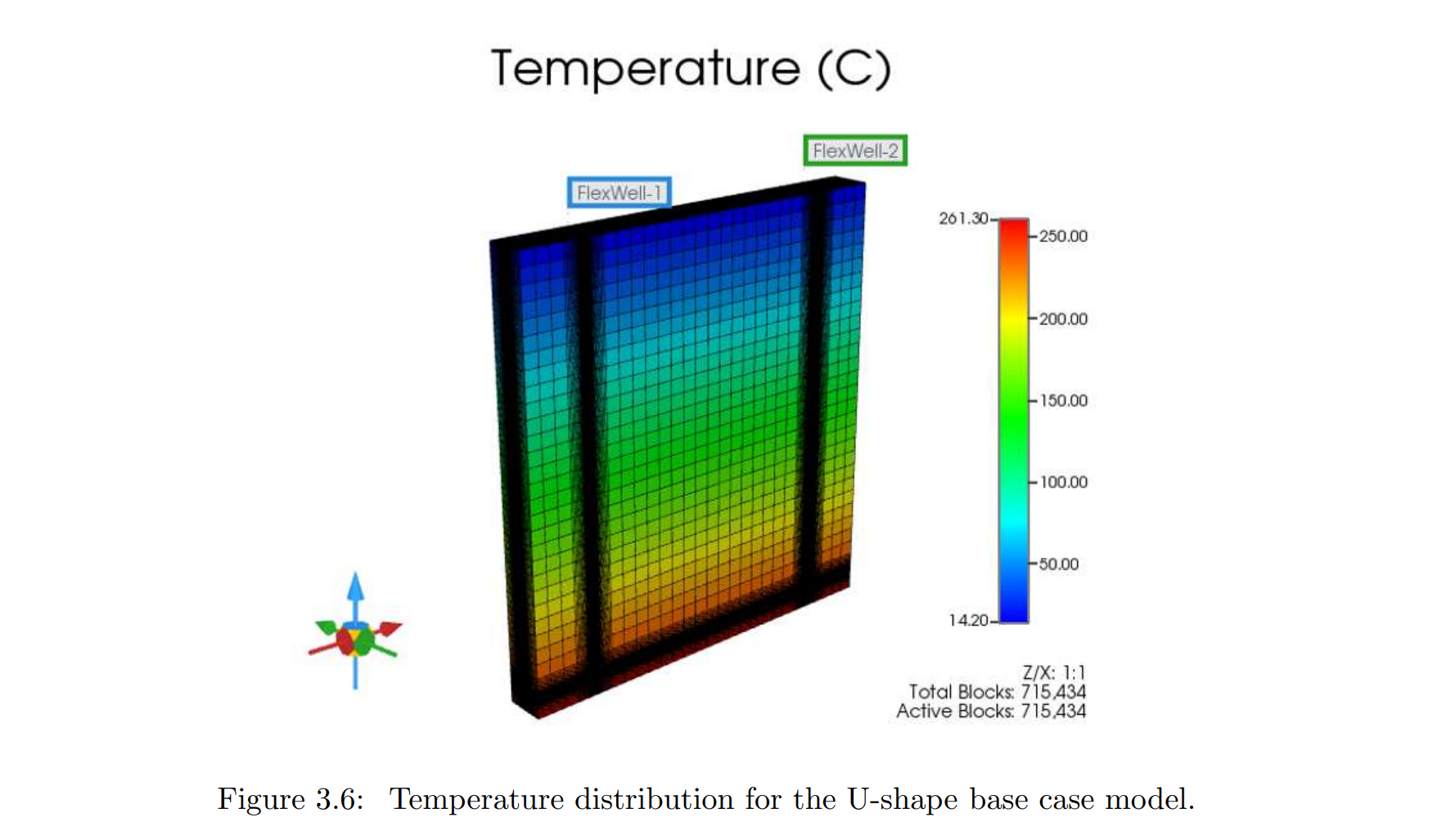
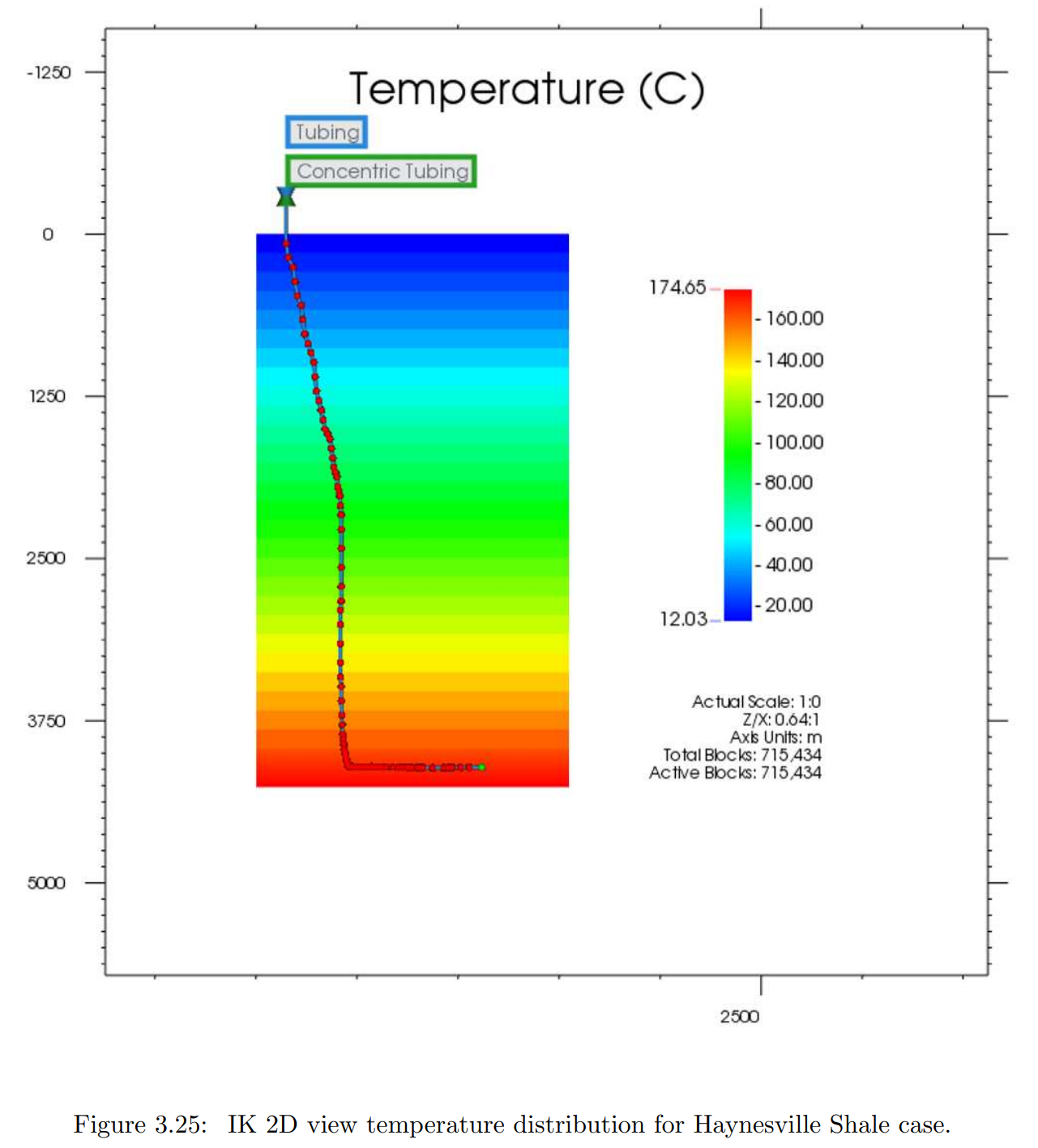
本研究利用储层模拟方法评估闭环地热(CLG)热开采技术的可行性,旨在为未来可用于发电的实地技术提供理想条件建议,并探索其在偏远社区中利用废弃油气井进行直接利用的潜力。研究使用CMG-STARS热采模拟器,构建了两种典型闭环地热模型:同轴套管(pipe-in-pipe)模型和U型井(U-shaped)模型,并通过对比不同参数(如储层深度、温度、流量、工质类型等)下的模拟结果,分析其对热产出的影响。
研究结果表明,停留时间、流量、储层温度和工质性质是影响热产出的关键因素。虽然高流量会降低出口温度,但其热能总产量更高。水和超临界CO₂作为工质表现良好,而添加铜纳米颗粒的水体可进一步提升热传导效率。对于废弃油气井,若其井下温度足够高,采用CLG技术进行直接利用是可行的;若用于发电,则需多井联合或更高的储层温度支持。
CMG软件应用情况
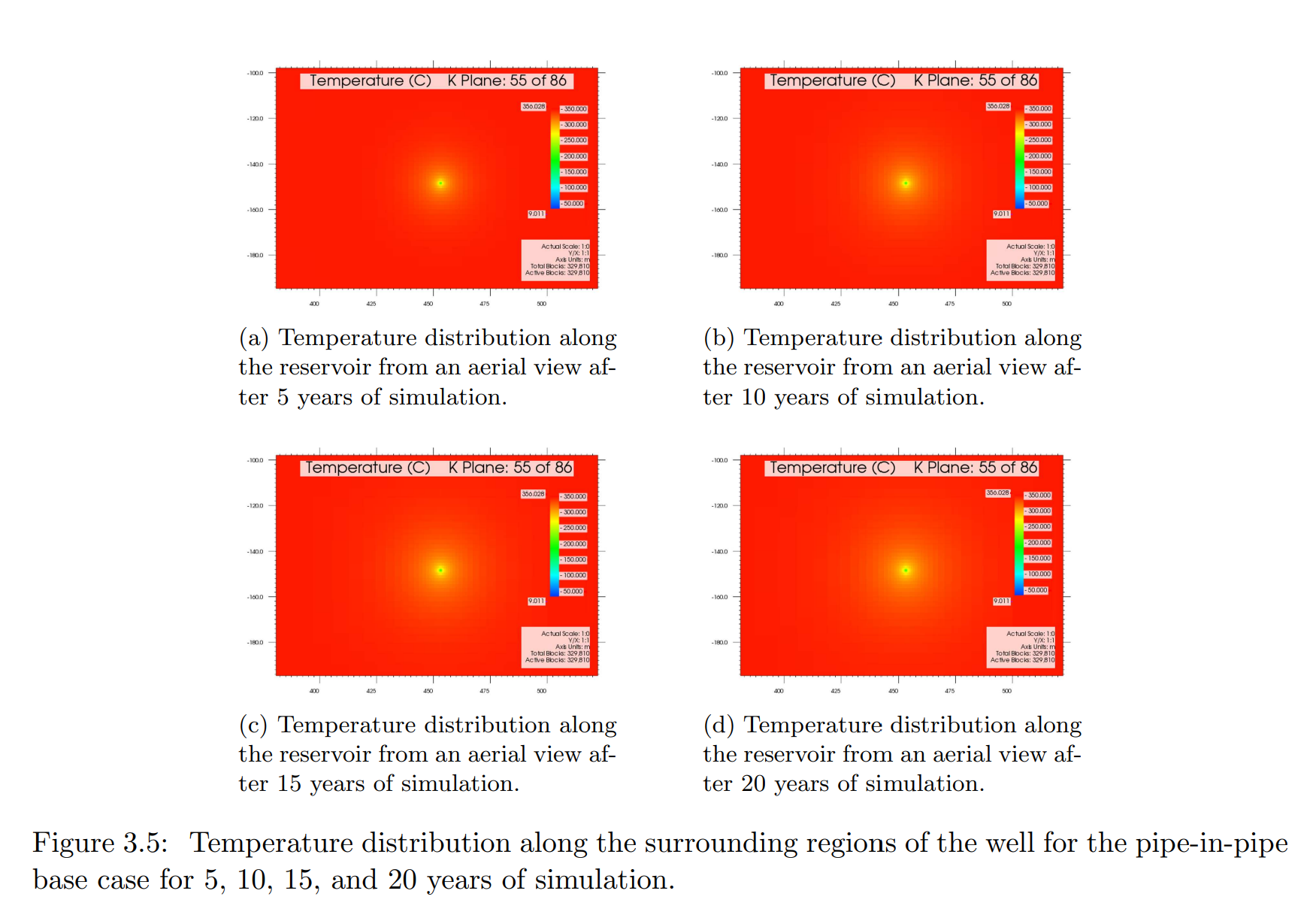
本研究采用CMG-STARS(Computer Modelling Group Ltd. 的热采模拟器)进行所有数值模拟工作。CMG-STARS被用于模拟闭环地热系统中工质在井筒与地层之间的热传导过程,考虑了井筒结构(如套管、隔热层)、流体性质(如水、CO₂、纳米流体)以及地层热物性参数。研究还利用其 FlexWell 模块模拟复杂井筒结构,验证了该软件在地热模拟中的适用性和准确性。
结论
- CMG-STARS可有效模拟闭环地热系统,模拟结果与已有解析模型(如Slender Body Theory)吻合良好,验证了其在热传导模拟中的可靠性。
- 主要影响因素排序为:停留时间 > 流量 > 储层温度 > 工质类型。增加井深和横向段长度有助于提高热产出。
- 水作为工质整体表现优于超临界CO₂,但CO₂可实现热虹吸效应,减少泵送能耗。
- 添加铜纳米颗粒可提升水体热导率,从而提高出口温度和热能产出。
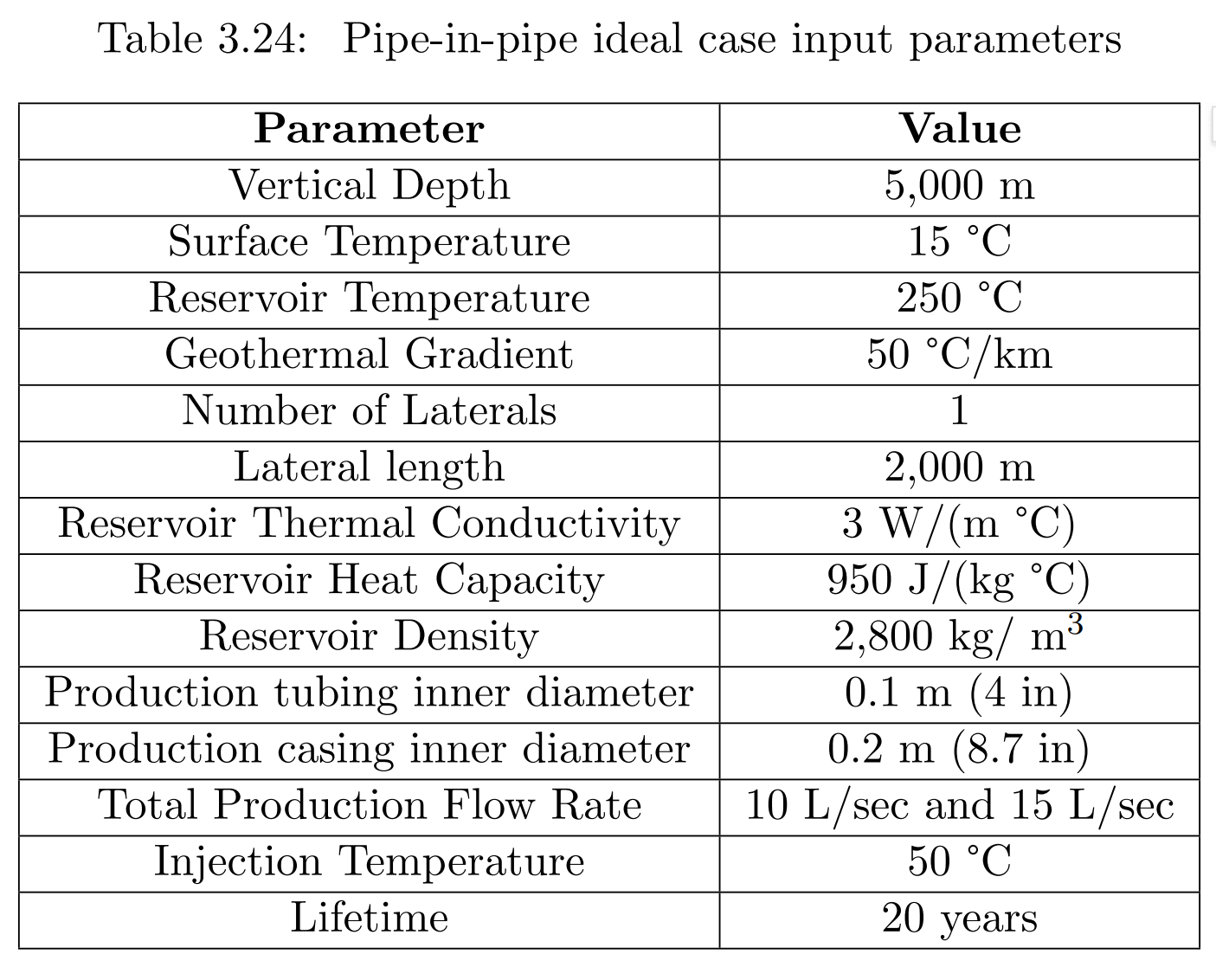
- 理想条件下(储温≥350°C,流量10–20 L/s),单井可产生约1–2 MW热能,具备发电潜力。
- 废弃油气井再利用具备直接利用价值,如用于供暖或温室等,降低初期投资成本。
- 未来需发展更高效率的低温发电技术,以拓展CLG在中低温储层中的应用潜力。
作者单位
- 科罗拉多矿业学院石油工程系硕士学位论文
Abstract
This work evaluates the feasibility of closed-loop geothermal heat extraction concepts using reservoir simulation and proposes ideal conditions to guide the development of future field-ready technologies for electricity generation. Additionally, this thesis presents alternative uses of this technology for direct use in remote communities based on abandoned petroleum wells with high reservoir temperatures. Technical analysis is presented focusing on the possible applicability of closed-loop geothermal heat extraction with available technology, identifying the parameters required to develop technologies for electricity generation. First, a base case is verified against results from published modeling studies for two closed-loop geothermal concepts including a pipe-in-pipe model and a U-shaped model. These models are developed using reservoir simulator software (CMG-STARS). Then different properties, such as, depth of the reservoir, number of laterals, reservoir temperature, type of fluid, and total production flow rate, are modified to analyze different scenarios that can benefit from Closed-Loop Geothermal (CLG) technologies. Ultimately, technical analysis is performed on all of the cases to assess the feasibility of these concepts. Results show that residence time, flow rates, reservoir temperatures, and properties of working fluids are the parameters impacting thermal outputs. Higher flow rates lead to lower surface production temperatures; however, higher mass flow rates have higher thermal energy production. On the other hand, water and supercritical carbon dioxide show fair results that are enhanced with a fluid combining water with copper nanoparticles. Direct use application may be feasible in abandoned petroleum wells that are already completed as capital investment is reduced. Electricity generation may be feasible with current technology when multiple wells feed the power plant. This thesis demonstrates that CLG is a concept that may be used for direct use application with abandoned oil and gas wells, and with further technological developments, it could also be applied for electricity generation from geothermal reservoirs without having to enhance the reservoir permeability. Additionally, it is demonstrated that reservoir simulation software can be applied to related disciplines, such as geothermal heat extraction, and that knowledge from petroleum engineering can be applied to develop alternative solutions for energy generation.
