
Experimental and Numerical Study on Optimizing CO2 Foam-Assisted Gas Channeling Control in Tight Reservoirs: Geological Influences
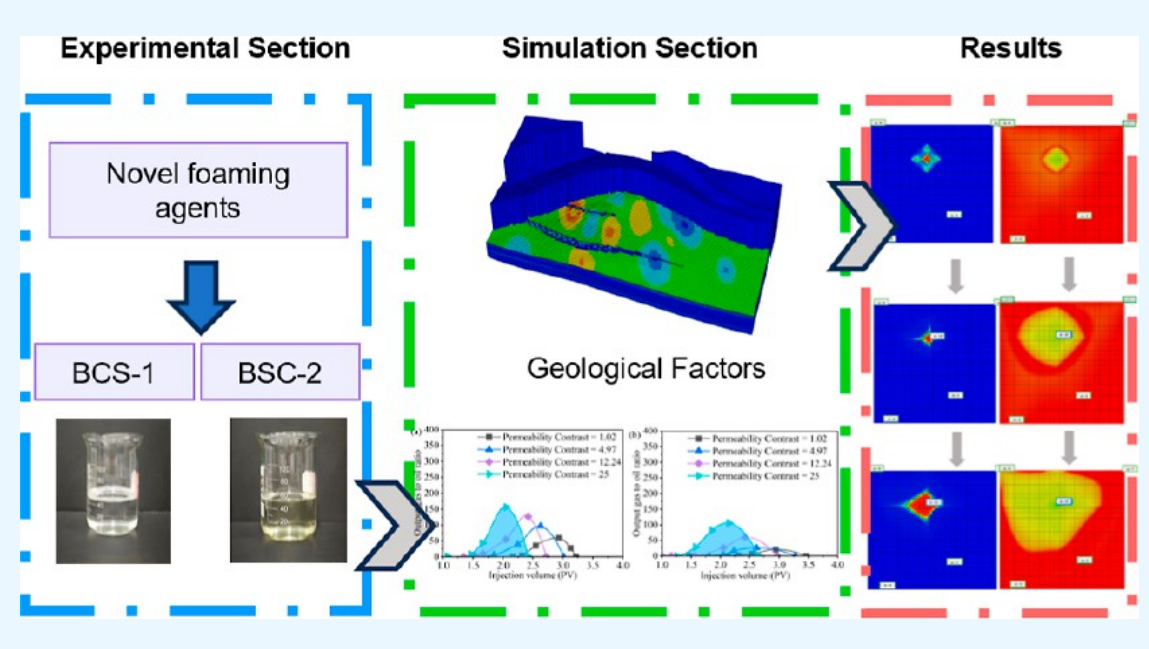
在碳中和目标下,CO₂ 泡沫驱兼具提高致密/低渗透油藏采收率和地质封存双重效益,但气窜问题严重制约其效果。本文首先通过岩心流动实验,对比两种新型发泡剂(BSC-1、BSC-2)在致密岩心中的泡沫性能;随后利用 CMG-STARS 建立三维地质模型,系统分析储层致密程度、纵向/横向非均质性、裂缝形态等关键地质因素对 CO₂ 泡沫稳定性及气窜控制的影响。结果表明:
- 实验优选发泡剂 BSC-1 在超低渗(3.36 mD)岩心中的注入性指数高达 5.31,是 BSC-2 的 4.6 倍,且阻力系数(RF)和残余阻力系数(RRF)均优于 BSC-2;
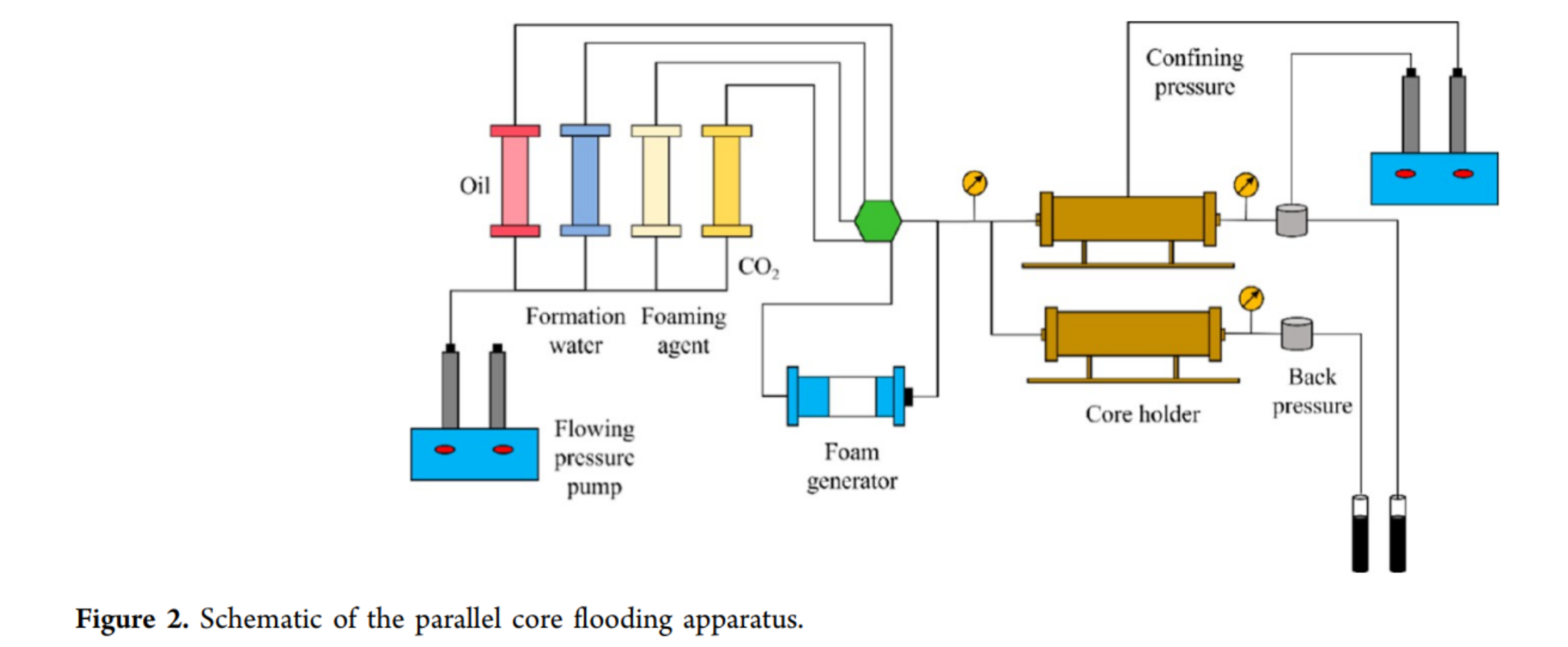
- 并行岩心驱替实验证实,BSC-1 可在渗透率级差 12.24 的条件下将出口 GOR 降至 0,最终采收率 69.19%;
- 数值模拟显示,泡沫驱(SAG)在 50 mD 储层中可将最终采收率提高至 50.06%,显著优于 WAG(46.63%)和连续注气(26.43%);
- 裂缝研究指出:垂直裂缝有利于泡沫沿裂缝定向封堵,水平裂缝需降低注入速度以延长泡沫作用时间。
研究为致密油藏 CO₂-EOR 与封存协同优化提供了地质适应性工程参数与理论依据。
【CMG 软件应用情况】
• 软件版本:CMG-STARS(商业版)
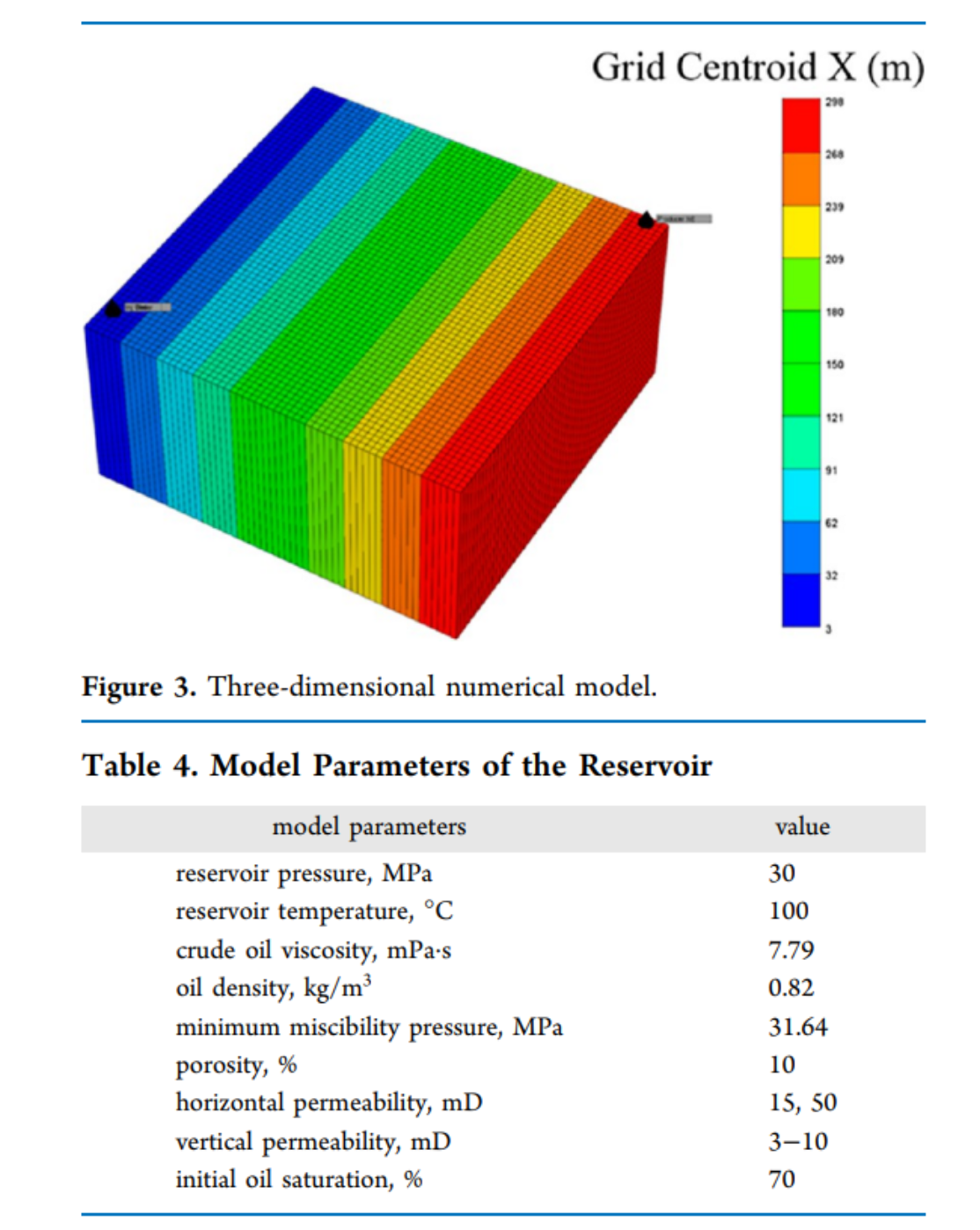
• 模型规模:60×60×1 三维笛卡尔网格,网格尺寸 300 m×300 m×10 m
• 模拟功能:
– 建立 CO₂-油-水三相流动模型,耦合泡沫动力学模块;
– 输入实验标定的发泡剂反应参数、相对渗透率、泡沫强度半经验公式;
– 通过敏感性分析模块,定量评价渗透率、非均质性、裂缝方位/长度对泡沫驱效果的影响;
– 输出指标:产油速率、采收率、气油比(GOR)、泡沫强度分布、残余油饱和度。
• 数据来源:实验室测得的 BSC-1/BSC-2 泡沫性能参数、现场 A-10/AB38 井组地质资料。
【主要结论】
- BSC-1 发泡剂综合性能最优,兼具高注入性、高封堵强度及长期稳定性,推荐用于现场实施;
- SAG(泡沫+气体交替)策略在致密—低渗—裂缝发育储层中均能有效抑制气窜,提高扫油效率;
- 储层越致密,泡沫前缘推进距离越短,需要降低注入速度或采用分级段塞;
- 垂直裂缝体系可显著增强泡沫定向封堵效果,水平裂缝体系需降低注入速度并增加段塞体积;
- 横向非均质性越强,泡沫封堵优势越明显,为现场井网调整及注入参数优化提供了直接依据。
【作者单位】
中国石化江苏油田分公司石油工程技术研究院

Abstract
Under the goal of carbon neutrality, CO2 foam flooding combined with the sequestration offers multibenefits for the development of low-permeability and tight oil reservoirs. However, its effectiveness is often hindered by severe gas channeling caused by foam instability and complex geological conditions. This study investigates the foam performance of two foaming agents inside tight porous media via core flooding tests, followed by reservoir-scale optimization studies of foam injection strategies, which are subsequently performed to assess the effectiveness of foam-assisted gas channeling control under different geological scenarios. The results elucidate the impact mechanisms of geological heterogeneity on the CO2 foam performance and provide theoretical and technical support for the integrated optimization of foam-based enhanced oil recovery and CO2 sequestration in low permeability and tight reservoirs.
