
Numerical Simulation Study on Synergistic Influencing Factors of CO2 Flooding and Geological Storage in Low-Permeability and High-Water-Cut Reservoirs
本研究以大庆油田Y区块为对象,针对其低渗透、高含水特征,采用数值模拟方法系统揭示了CO₂驱油与地质封存协同作用机制。研究建立了表征该区块地质特征的三维组分模型,重点分析了地质因素(埋深、非均质性、物性)与工程参数(注气速度、注气量、井底流压)对驱替与封存过程的控制作用。模拟结果表明,Y区块的低渗透特性有效抑制了气窜,CO₂驱可提高采收率15.65%。随着埋深增加,地层压力与温度升高,驱替与封存效率同步提升。优化注入参数是实现协同效益的关键:最佳注气速度为700–900 m³/d,经济注气量为0.4–0.5 PV,最优井底流压为9–10 MPa。研究证实,对于类似Y区块的高含水低渗透油藏,CO₂驱是一项极具潜力的接替技术,可在提高采收率的同时实现高效碳封存。
🧪 CMG软件应用情况
- 使用CMG软件的Winprop模块进行流体组分建模与PVT拟合,准确复现了最小混相压力(MMP),实验值17.5 MPa,模拟值18.1 MPa,误差仅3.4%。
- 使用GEM组分模拟器建立三维地质模型,模拟水驱后转CO₂驱全过程,分析不同参数对采收率与封存效率的影响。
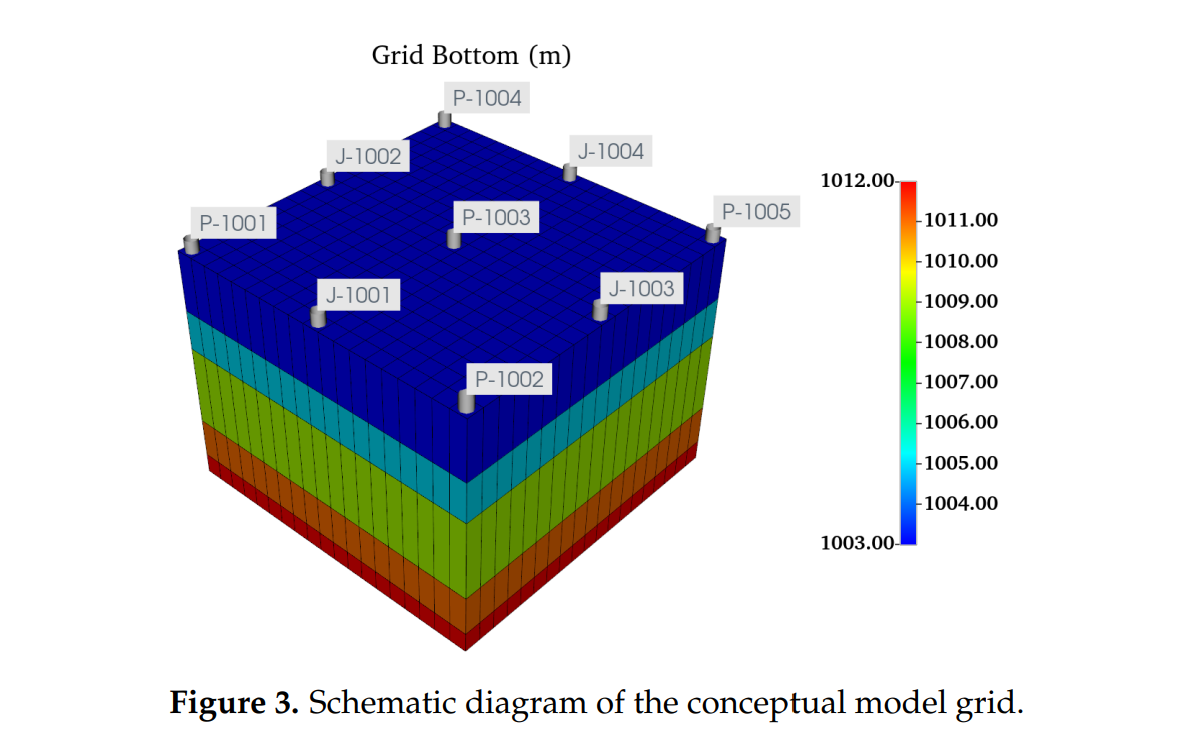
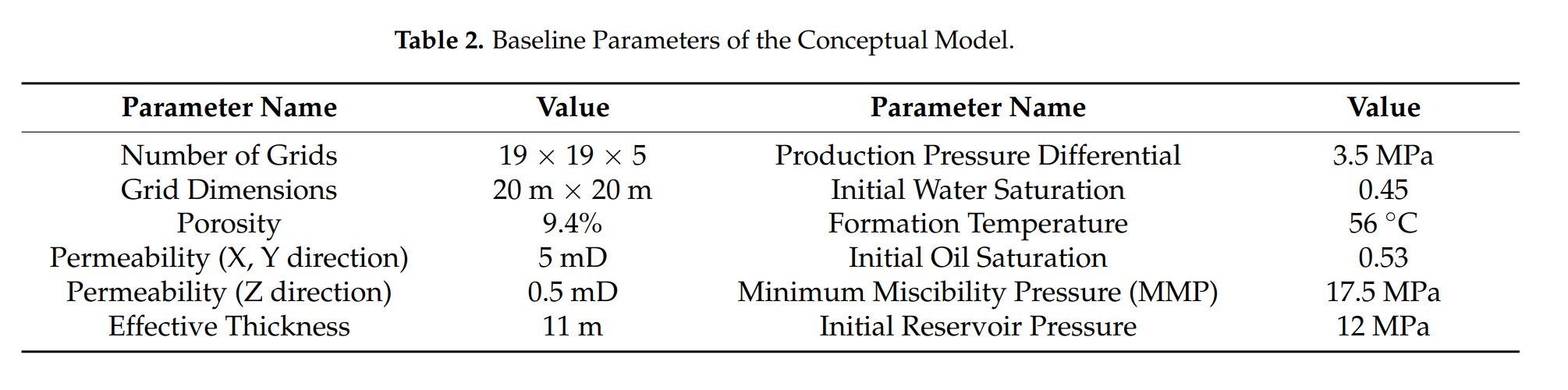
- 模型采用均质概念模型,网格尺寸为19×19×5,共1805个网格块,模拟了水驱至含水80%后转CO₂驱的全过程。
✅ 结论
- Y区块低渗透率(约5.45 mD)天然抑制CO₂气窜,有利于提高驱替效率,采收率增幅达15.65%。
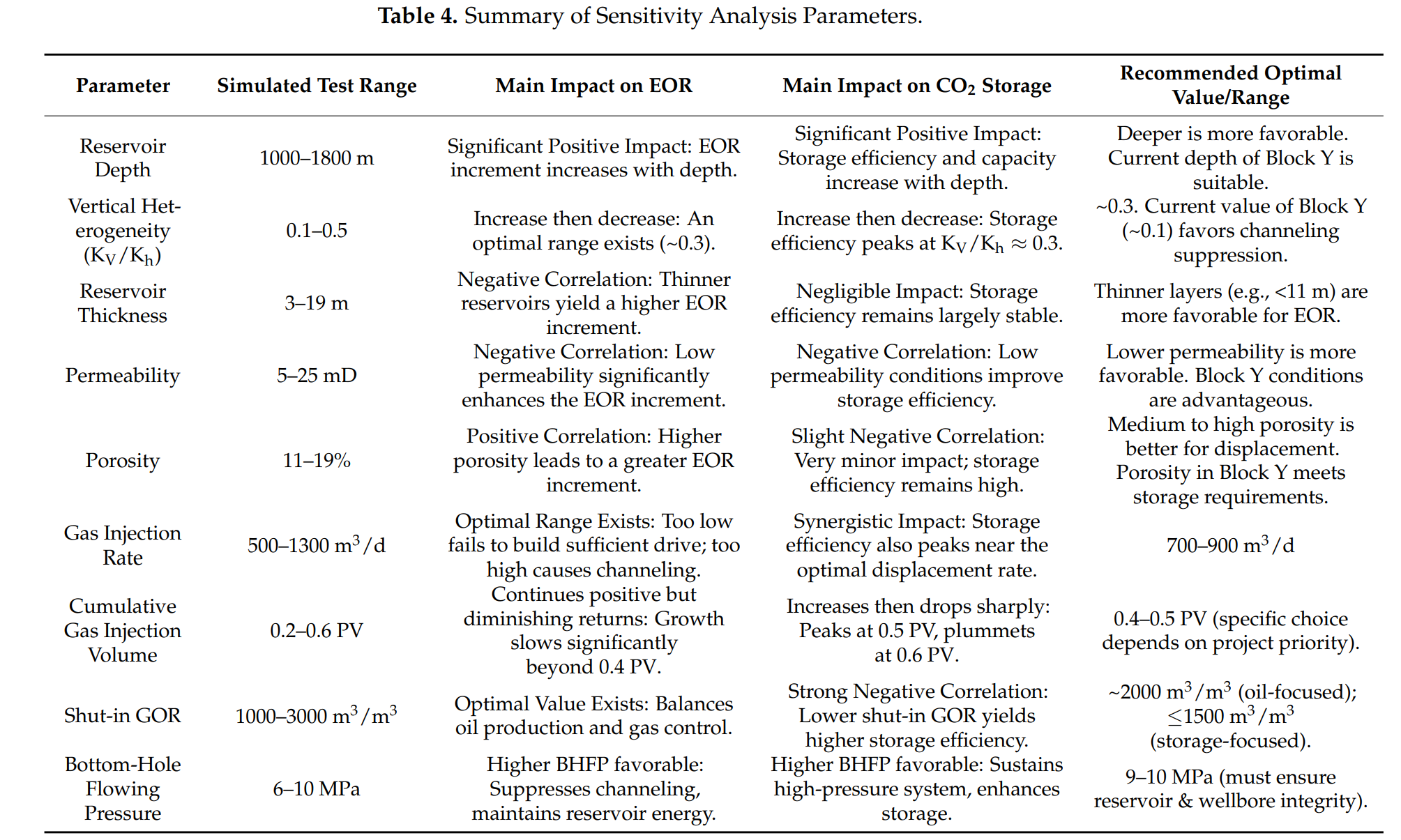
- 埋深增加显著提升CO₂驱替与封存效果,是地质因素中最关键的影响参数。
- 存在最优的垂向渗透率比值(KV/Kh ≈ 0.3),较薄储层更有利于提高采收率。
- 工程参数优化是实现协同效益的核心:
- 注气速度:700–900 m³/d
- 注气量:0.4–0.5 PV
- 井底流压:9–10 MPa
- 在Y区块类似油藏中,通过地质与工程参数协同优化,完全可实现“增油+封存”双赢目标。
🏢 作者单位
- 提高油气采收率教育部重点实验室(东北石油大学)
Abstract
How to economically and effectively mobilize remaining oil and achieve carbon sequestration after water flooding in low-permeability, high-water-cut reservoirs is an urgent challenge. This study, focusing on Block Y of the Daqing Oilfield, employs numerical simulation to systematically reveal the synergistic influencing mechanisms of CO2 flooding and geological storage. A three-dimensional compositional model characterizing this reservoir was constructed, with a focus on analyzing the controlling effects of key geological (depth, heterogeneity, physical properties) and engineering (gas injection rate, gas injection volume, bottom-hole flowing pressure) parameters on the displacement and storage processes. Simulation results indicate that the low-permeability characteristics of Block Y effectively suppress gas channeling, enabling a CO2 flooding enhanced oil recovery (EOR) increment of 15.65%. Increasing reservoir depth significantly improves both oil recovery and storage efficiency by improving the mobility ratio and enhancing gravity segregation. Parameter optimization is key to achieving synergistic benefits: the optimal gas injection rate is 700–900 m3/d, the economically reasonable gas injection volume is 0.4–0.5 PV, and the optimal bottom-hole flowing pressure is 9–10 MPa. This study confirms that for Block Y and similar high-water-cut, low-permeability reservoirs, CO2 flooding is a highly promising replacement technology; through optimized design, it can simultaneously achieve significant crude oil production increase and efficient CO2 storage.
