
The Experimental and Numerical Studies on Optimizing Injection Strategies for Microspheres-Alternating-Nanoemulsion Flooding in Tight Reservoirs
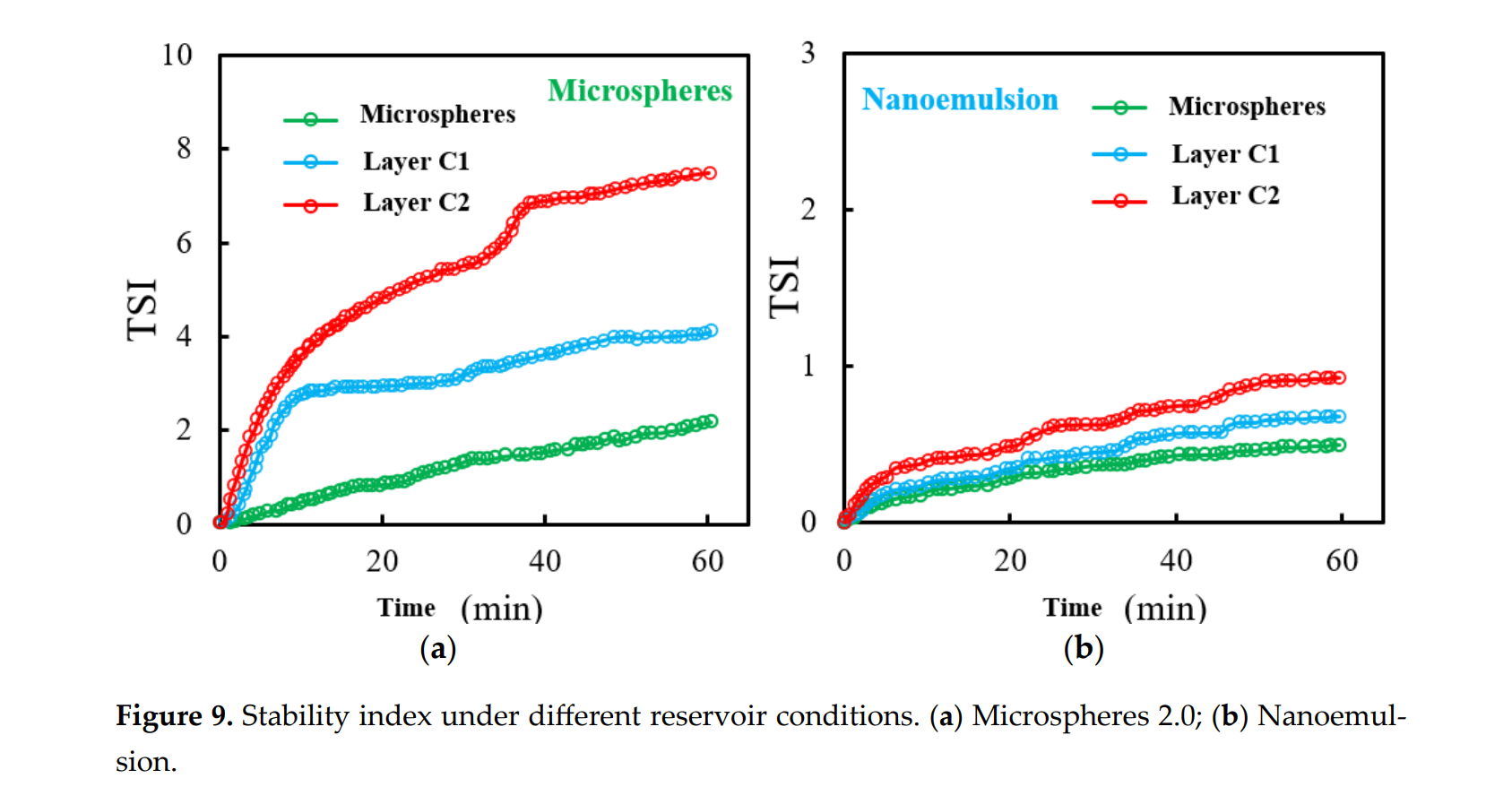
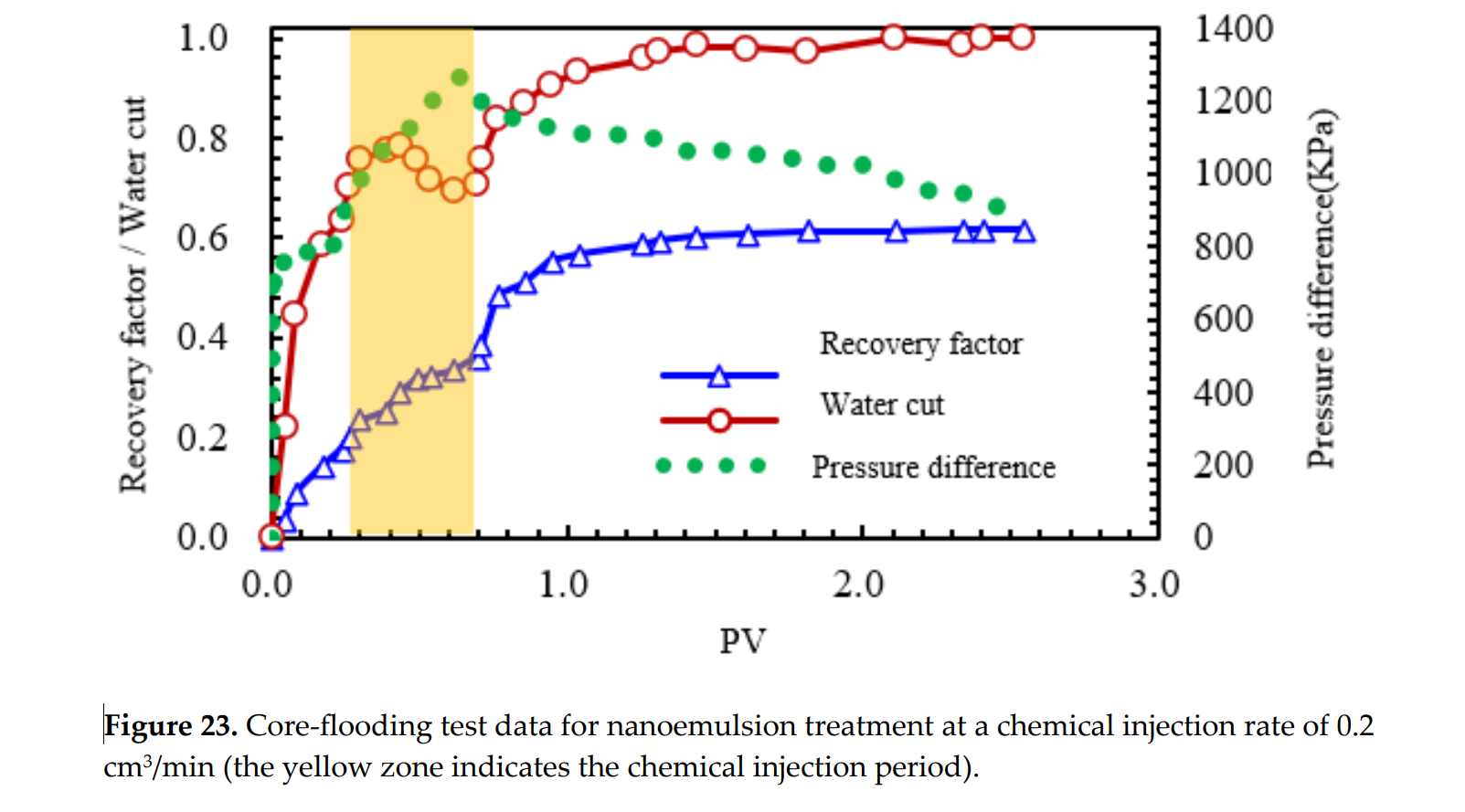
针对中国致密油藏注水开发后期含水上升、产量递减快、采收率难以再提高的难题,本文提出“微球-纳米乳液交替驱”复合化学驱技术。研究首先通过激光粒度仪、界面张力仪、长岩心驱替等实验,评价了微球 2.0 与定制纳米乳液在高温高盐条件下的分散稳定性、热盐耐受性、注入能力、孔喉匹配系数及渗流特性;随后利用升级后的 CMG-STARS 组分模型,建立了涵盖“微球延迟膨胀-降解失效”与“纳米乳液聚并-吸附固化”等微观动力学的多尺度数值平台,完成岩心尺度和井组尺度的历史拟合与方案优化。研究形成了从配方筛选到注入参数优化的完整技术流程,为特高含水致密油藏进一步提高采收率提供了现场可复制的技术模板。
CMG 软件应用情况
- 模型选择:采用 CMG-STARS 模拟器,并二次开发嵌入微球与纳米乳液的“拟组分”反应动力学模块。
- 关键改进:
– 引入慢速膨胀系数(FREQFAC1=3.4×10⁻⁴)与静态降解系数(FREQFAC2=1.61×10⁻⁶),描述微球吸水增粘及后期失效;
– 引入纳米乳液聚并频率(FREQFAC1=1.4×10⁻⁷)与增溶频率(FREQFAC2=2.15×10⁻⁴),刻画液滴聚并与界面张力降低过程;
– 修改相对渗透率端点(KRWIRO=0.35,KROCW=0.05)和吸附参数(ADMAXT、ADRT),实现“动态封堵-调剖”反馈。 - 模拟尺度:
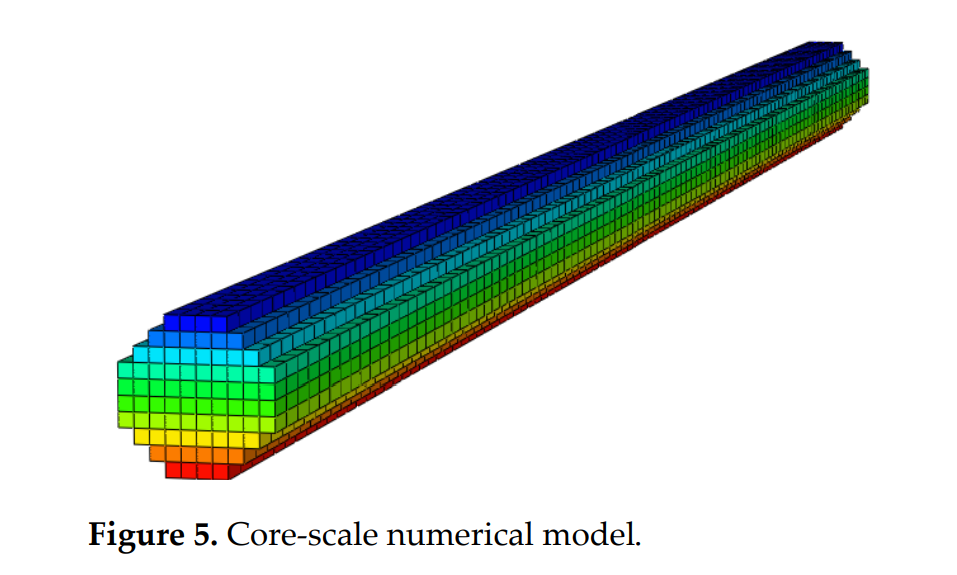
– 岩心尺度:单根岩心网格 1×1×50,历史拟合误差采收率 < 4.2 %、含水 < 3 %;
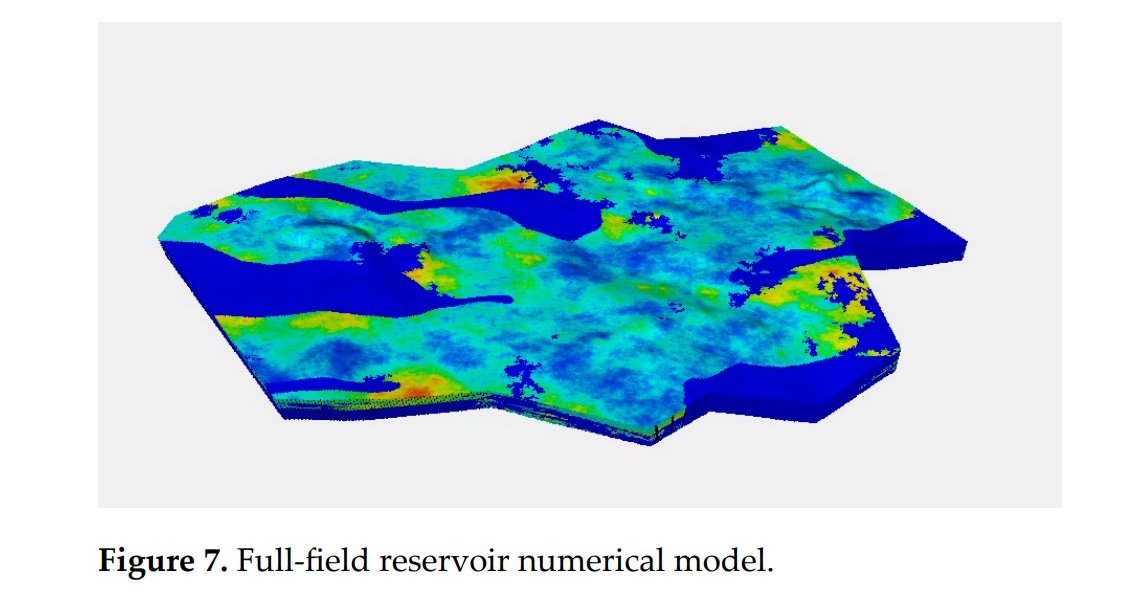
– 井组尺度:五点法 1/4 对称模型,网格 31×31×5,研究注入速度、段塞比例、浓度、时机等 60 余套方案;
– 全油田尺度:整体模型 61×91×8,对 6 个代表井组进行 2025 年 9 月前的生产历史拟合,整体误差油率 3.7 %、含水 2.5 %。 - 优化方法:固定液量 0.6 PV,通过 CMG 多方案批量跑 + 经济评价,确定“1:3 四段塞交替”为最佳注入策略。
主要结论
- 实验证实微球-纳米乳液复合体系在 70 °C、8.2×10⁴ mg L⁻¹ 矿化度下仍保持良好的分散与注入能力,孔喉匹配系数 0.8–1.2 时封堵效率最高。
- 升级后的 CMG-STARS 可准确描述微球延迟膨胀、降解失效及纳米乳液聚并-吸附过程,历史拟合误差 < 5 %。
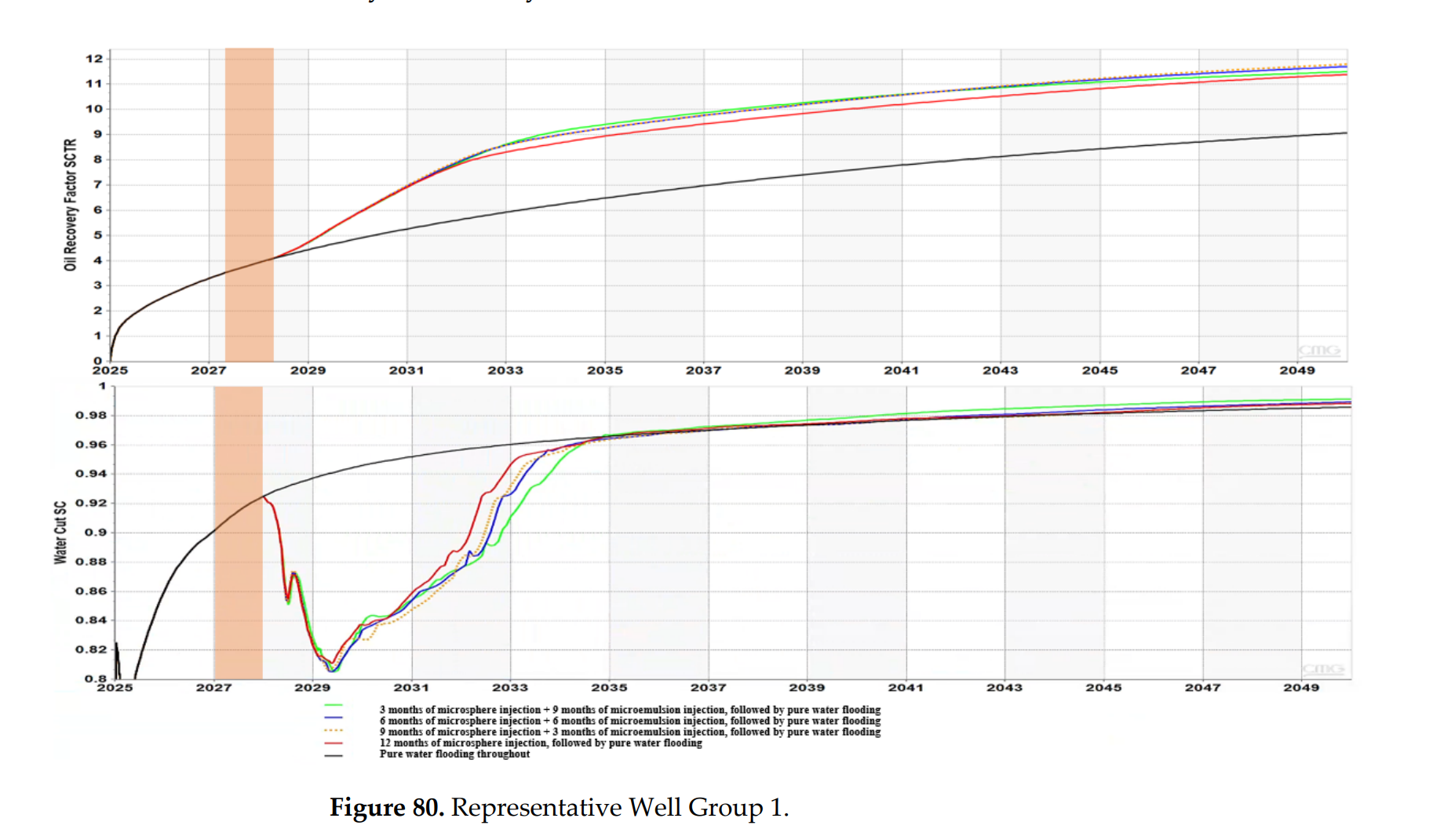
- 井组尺度最优参数:微球 0.2 %、0.3 PV,纳米乳液 0.3 %、0.3 PV,交替比例 1:3,分 4 段塞注入,日注 30 m³,10 年采收率提高 0.46 %,含水下降约 5 %。
- 微球主要发挥“深部调剖、封堵高渗通道”作用,纳米乳液主要降低界面张力、改善相对渗透率曲线,两者协同实现“堵-驱”双赢。
- 该研究形成了“实验-数值-现场”一体化优化流程,为高含水致密油藏进一步提高采收率提供了可复制的技术模板。
作者单位
中国石油天然气股份有限公司长庆油田分公司油气工艺研究院
Abstract
In recent years, the production of tight reservoirs with waterflooding in China has entered a progressively declining phase with unstable oil rate and higher water cut, rising challenges to any further enhancement of oil recovery. Targeting the high water cut and complex pore structure characteristics typical of these reservoirs, this work evaluates the reservoir compatibility of a microspheres-alternating-nanoemulsion flooding process and optimizes its injection strategy. Representative reservoir scenarios were first established; laser-particle-size analyzers and other laboratory instruments were then employed to quantify formulation-reservoir compatibility. A multiscale numerical study has been performed with CMG-STARS v.2022. The core-scale simulations systematically examined the influence of key factors on displacement efficiency improvement and water cut reduction, matched with the experimental results of core flooding tests. The combined experimental/numerical workflow furnishes a theoretical framework for optimizing the injection scheme. Beyond assessing formulation compatibility, the study delivers optimized injection parameters and strategies for microspheres-alternating-nanoemulsion flooding, providing both theoretical analysis and practical technology reference for improving oil recovery in tight reservoirs with higher water cut. Specifically, when the microsphere concentration increased from 0.1% to 0.3%, the minimum water cut was reduced by approximately 5%, while further concentration increases showed no significant additional impact on water content. Compared with water flooding, the relative permeability curve of the microspheres-alternating-nanoemulsion flooding system shifted entirely to the right. Numerical simulation of representative well groups revealed that a slug design with a microsphere-to-nanoemulsion ratio of 1:3 yielded the optimal enhanced oil recovery effect, and after ten years of production, the recovery factor increased by 0.46%.
