
Compositional WAG Processes at Unstable Flow Conditions
本文提出了一种新的数值模拟方法,用于研究在非稳定流动条件下(即存在黏性指进现象时),不同混相程度(非混相、近混相、完全混相)CO₂驱与水气交替注入(WAG)过程中的油藏动态。
CMG软件应用情况
本研究使用 CMG-GEM(Computer Modeling Group Ltd.) 组分模拟器进行建模与模拟。主要应用功能包括:
- 多相多组分流动模拟;
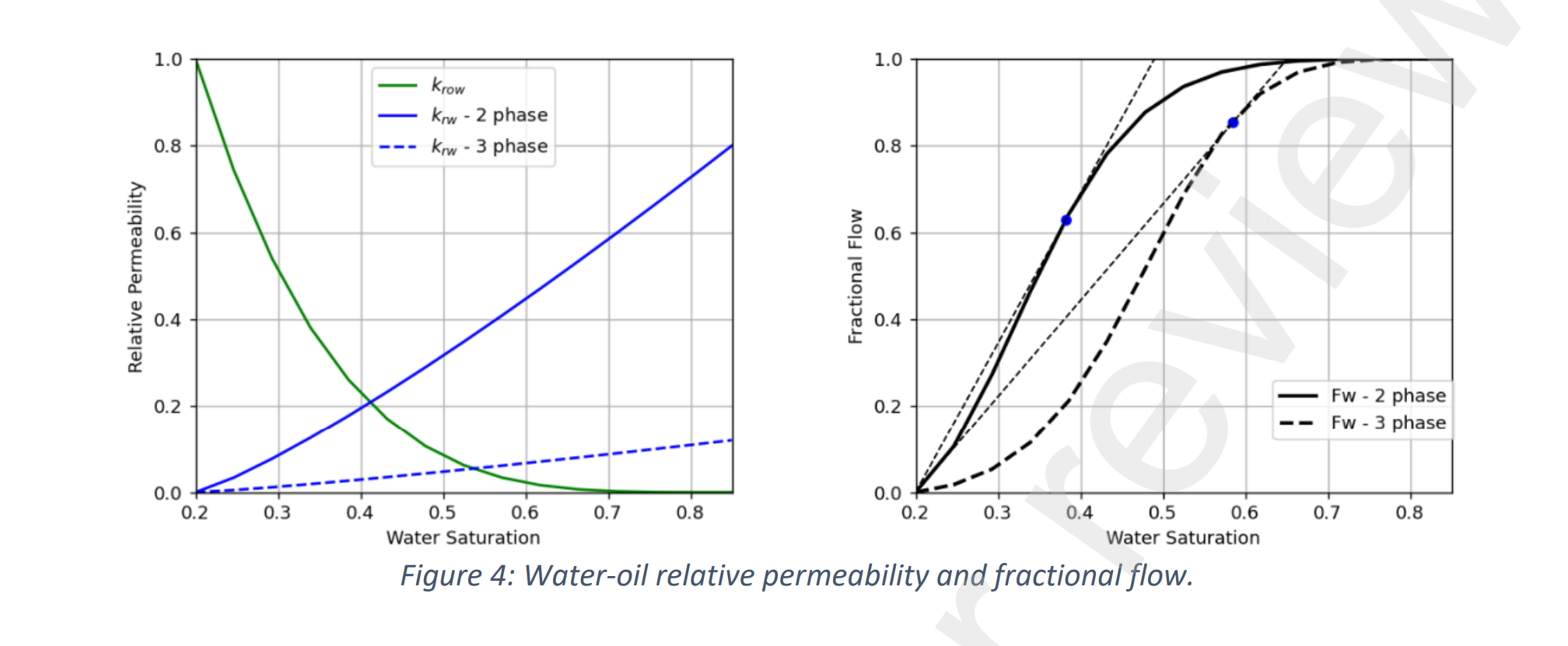
- 三相相对渗透率滞后建模(Larsen-Skauge模型);
- 流体性质调控(通过调整二元交互系数改变混相程度);
- 模拟不同注入策略(连续注气、注水、WAG)下的动态响应;
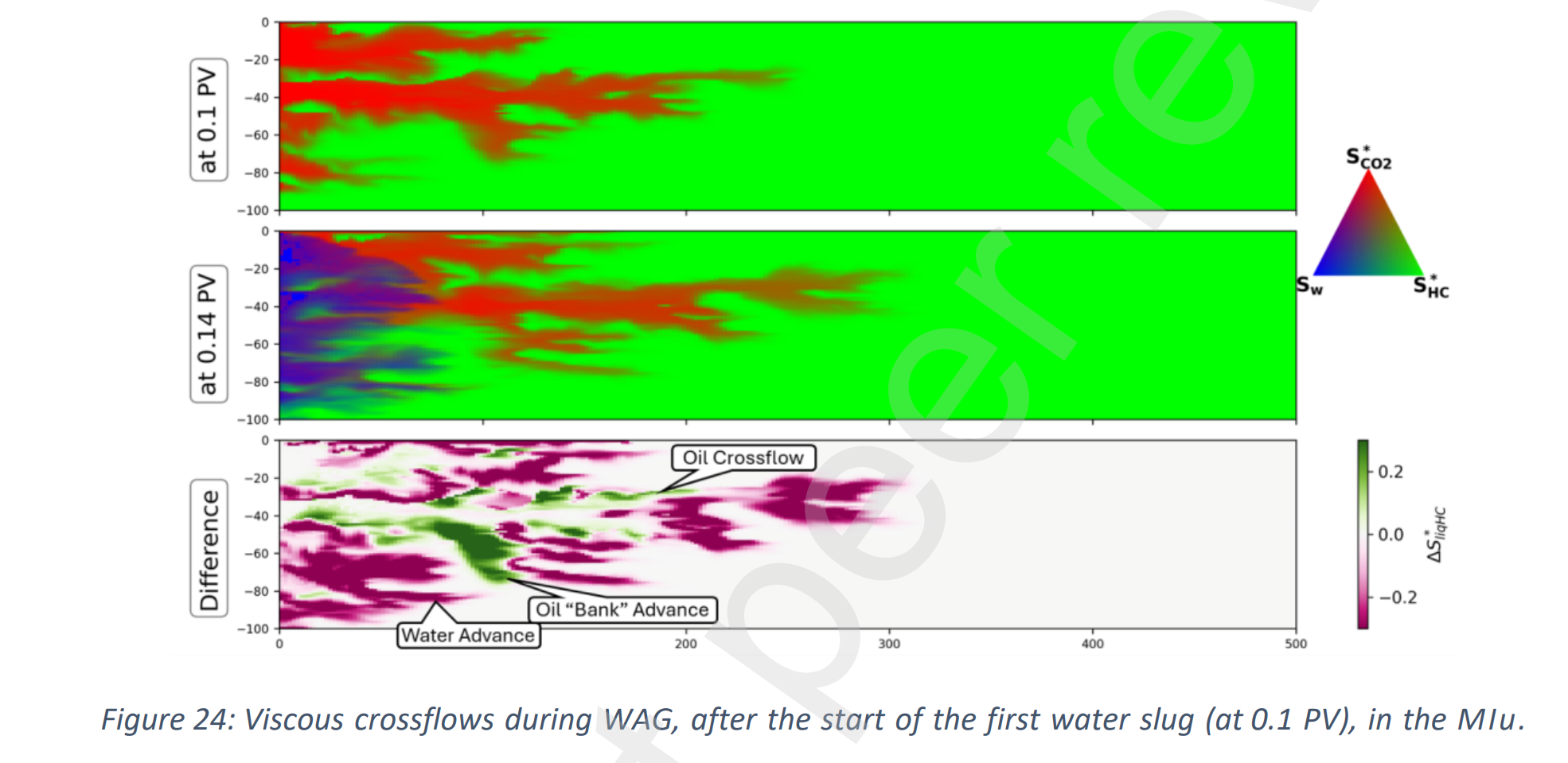
- 模拟黏性指进与油交叉流现象。
尽管GEM支持IFT(界面张力)依赖的相对渗透率模型,但由于与LS滞后模型存在兼容性问题,本文未启用该功能。
研究结论
- 首次实现在组分模拟中同时考虑:
- 黏性指进(基于Sorbie方法);
- 三相滞后效应(LS模型);
- 不同混相程度的流体模型(基于Rios方法)。
- WAG注入在非混相和近混相条件下显著提高采收率,主要通过:
- 改善线性驱替效率;
- 提高面积波及效率;
- 降低气体流度,减缓重力分异。
- 滞后模型对采收率影响显著,尤其在近混相条件下,气体捕集参数的影响大于流度抑制参数。
- 油交叉流现象在WAG过程中广泛存在,有助于:
- 捕集气体;
- 激活未波及区域的原油;
- 但也可能导致油相饱和度周期性变化,需考虑油相滞后效应。
- 提出的模拟流程具有良好的扩展性,可用于:
- 更真实的油田尺度WAG模拟;
- CO₂封存与提高采收率(CCUS-EOR)联合项目设计;
- 未来可进一步引入组分滞后模型以提升模拟精度。
五、作者与单位信息(中文)
- 挪威能源技术研究院(IFE)

Abstract
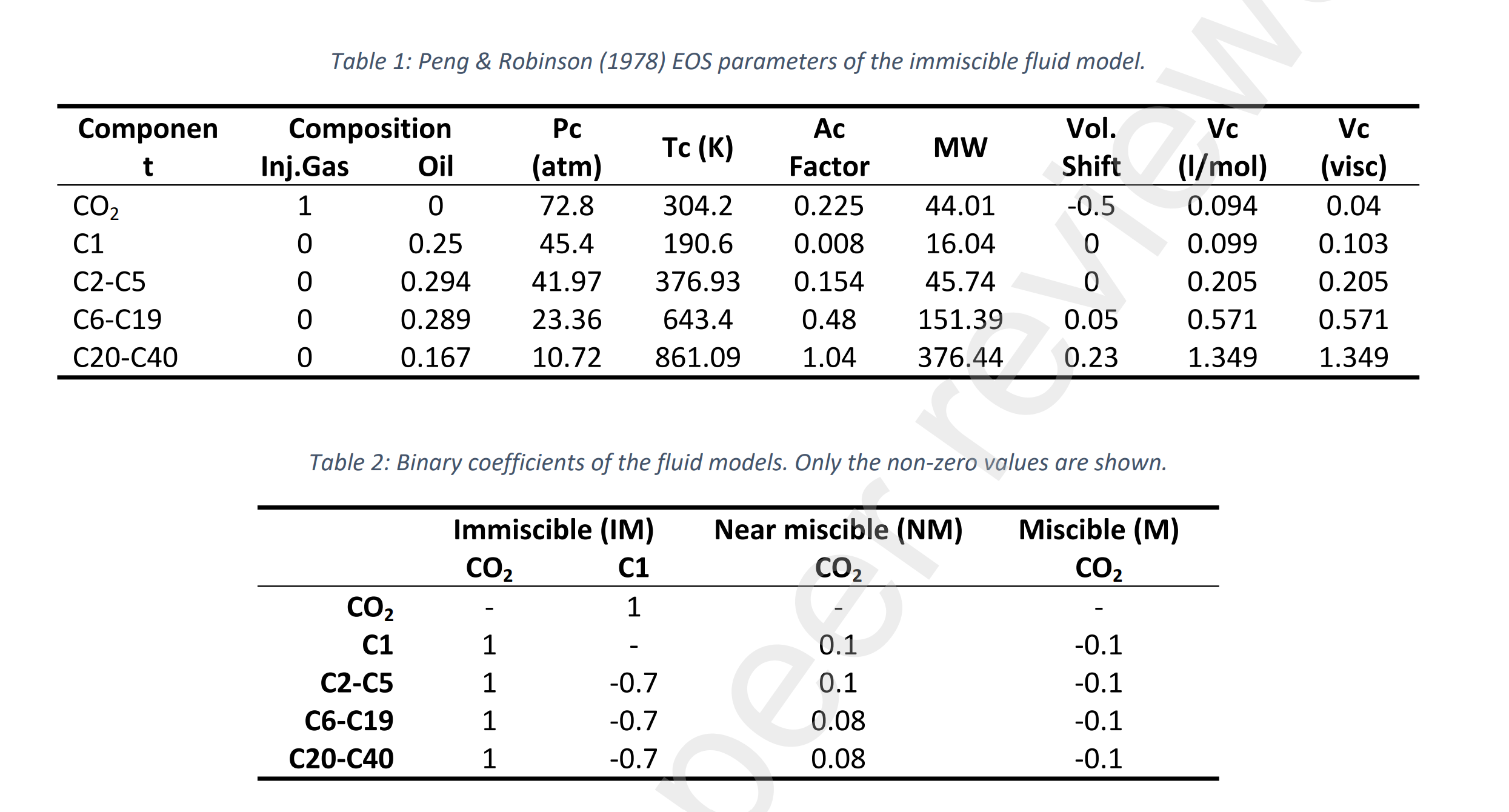
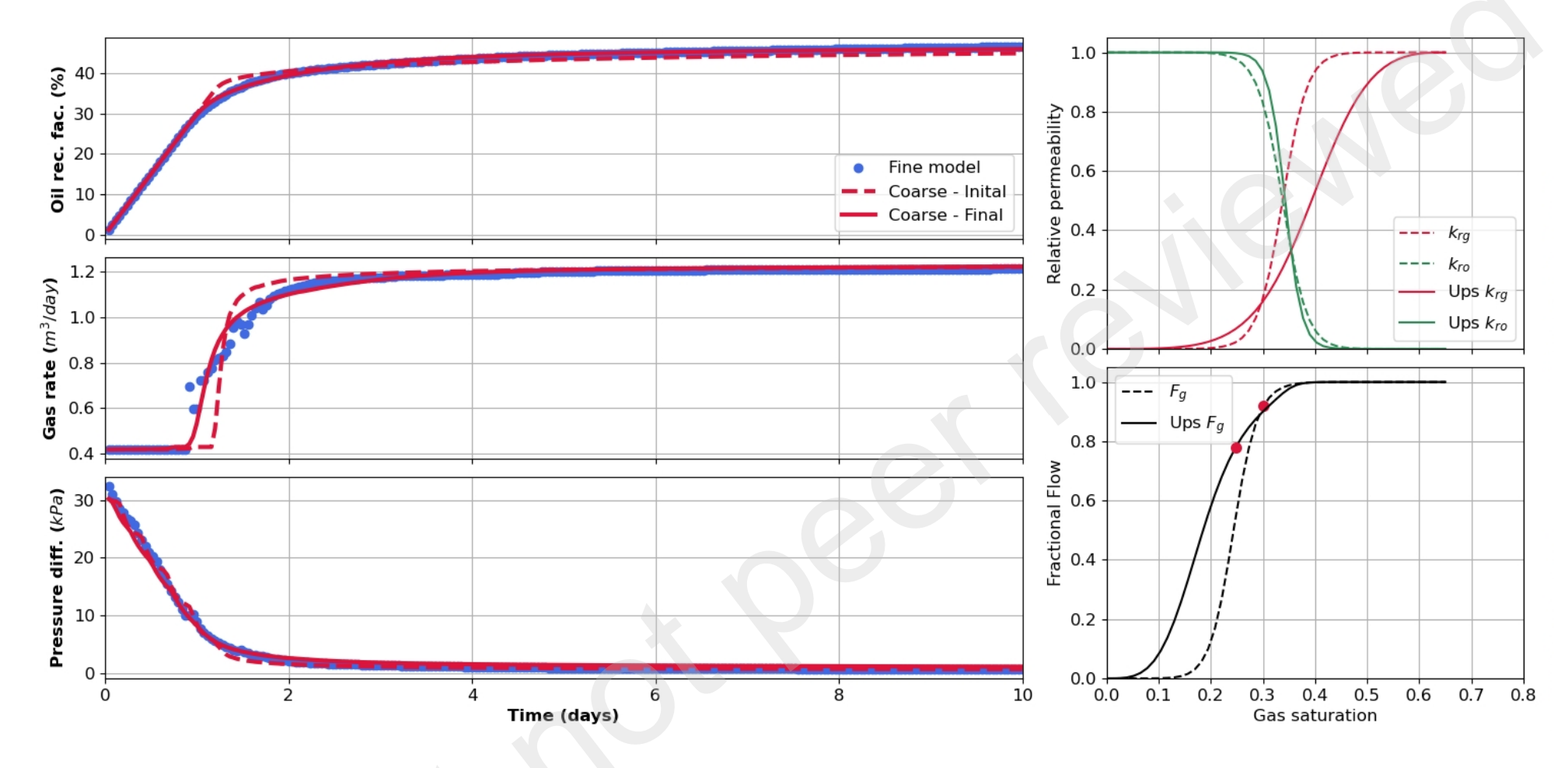
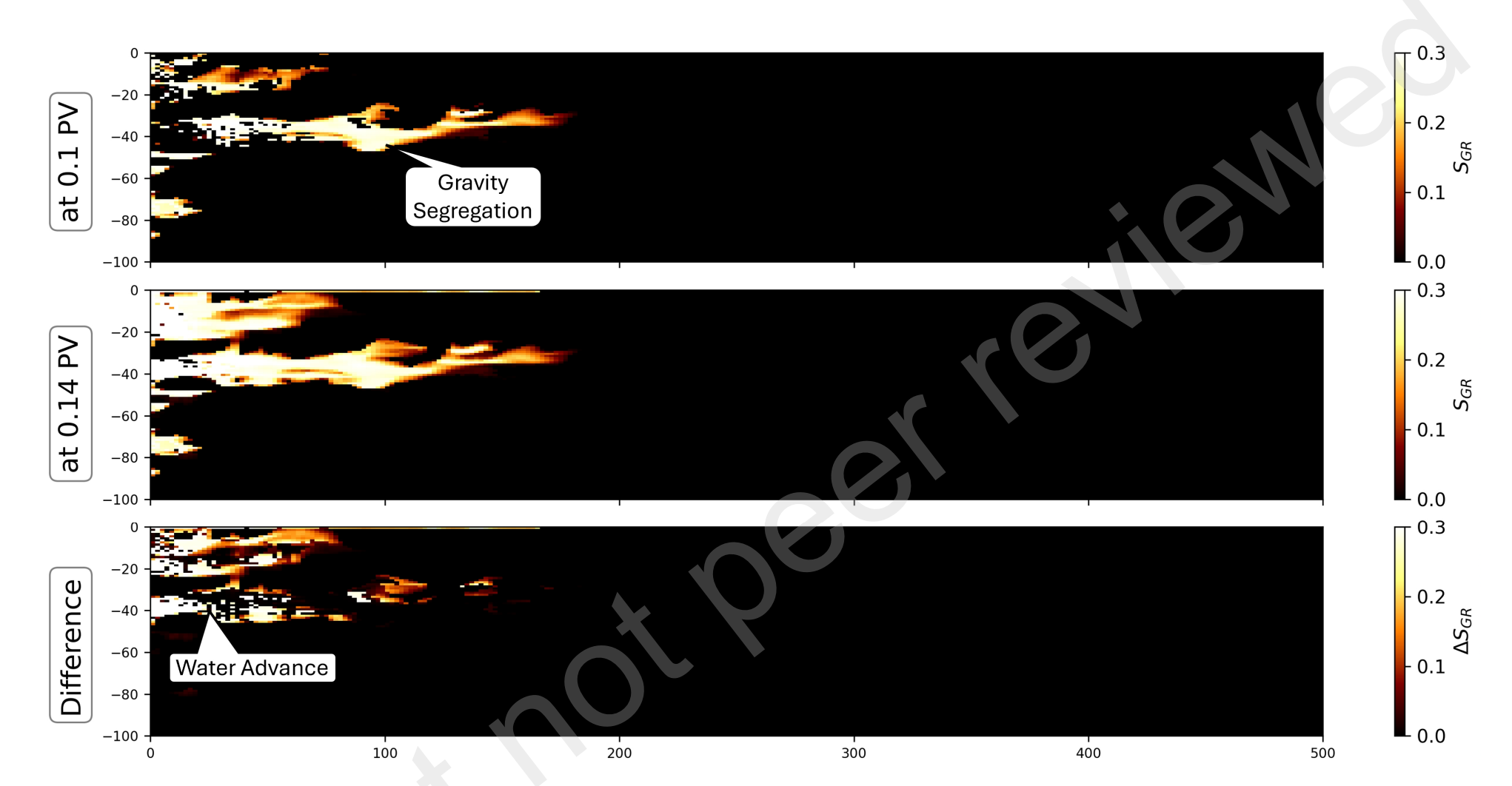
A workflow for modeling the interaction between hysteresis and viscous fingering under Water-alternating-gas injection (WAG) processes, at different levels of miscibility, is developed. The workflow combines the Larsen-Skauge hysteresis model for WAG (Larsen and Skauge, 1998), a novel methodology for simulating viscous fingering (Sorbie et al., 2020) and a convenient approach for modeling miscibility in compositional simulations. An upscaling step in the workflow, following the methodology proposed by Rios et al. (2019), provides a way of anchoring experimental results of immiscible viscous fingering found in the literature to immiscible, near-miscible and miscible gas injection on a refined, field-scale grid. Numerical simulations were performed to validate the proposed methodology.In all miscibility scenarios, WAG injection improved oil recovery compared to either gas or water flooding. Simulation results showed that while gains in recovery for the immiscible and near-miscible scenarios were due both to improved efficiency in oil displacement and areal sweep by the injected phases, the miscible case benefited mainly from the latter.The interaction between hysteresis effects (trapping and mobility reduction) and gas fingering provided interesting new insights into the fluid mechanics of the WAG process. Gravity segregation of the gas phase was shown to be a major contributor for gas trapping along the gas fingers. For the immiscible and near-miscible cases, oil crossflow into gas fingers also played a major role in trapping the gas phase. Such “crossflow trapping” during WAG could be of interest in CO2 storage projects.
Keywords: Water-alternating-gas injectionGas fingeringCompositional simulationThree-phase flow
