
Advances and Factors Influencing In Situ Combustion Effectiveness: A Review
火驱技术作为一种提高原油采收率(EOR)的技术,面临技术和经济挑战。该技术通过点燃地层中的原油并注入氧气(通常为空气),利用燃烧产生的热量降低原油黏度、提高流动性,尤其适用于稠油和油砂等高黏度石油资源。然而,火驱机理复杂,工程设计中仍存在诸多问题,尤其是对地下燃烧过程的直观监测与控制不足。本文综述了渗透率、含油饱和度、注气速率、注采井距及储层厚度等因素对火驱效果的影响,提出了通过优化参数提升火驱稳定性和效率的方法,以实现更好的实际应用效果。
使用CMG软件的解决方案
- 模型构建
- 采用CMG STARS模拟器建立三维实验室尺度燃烧模型,模拟多孔介质中的多相流、传热及化学反应。
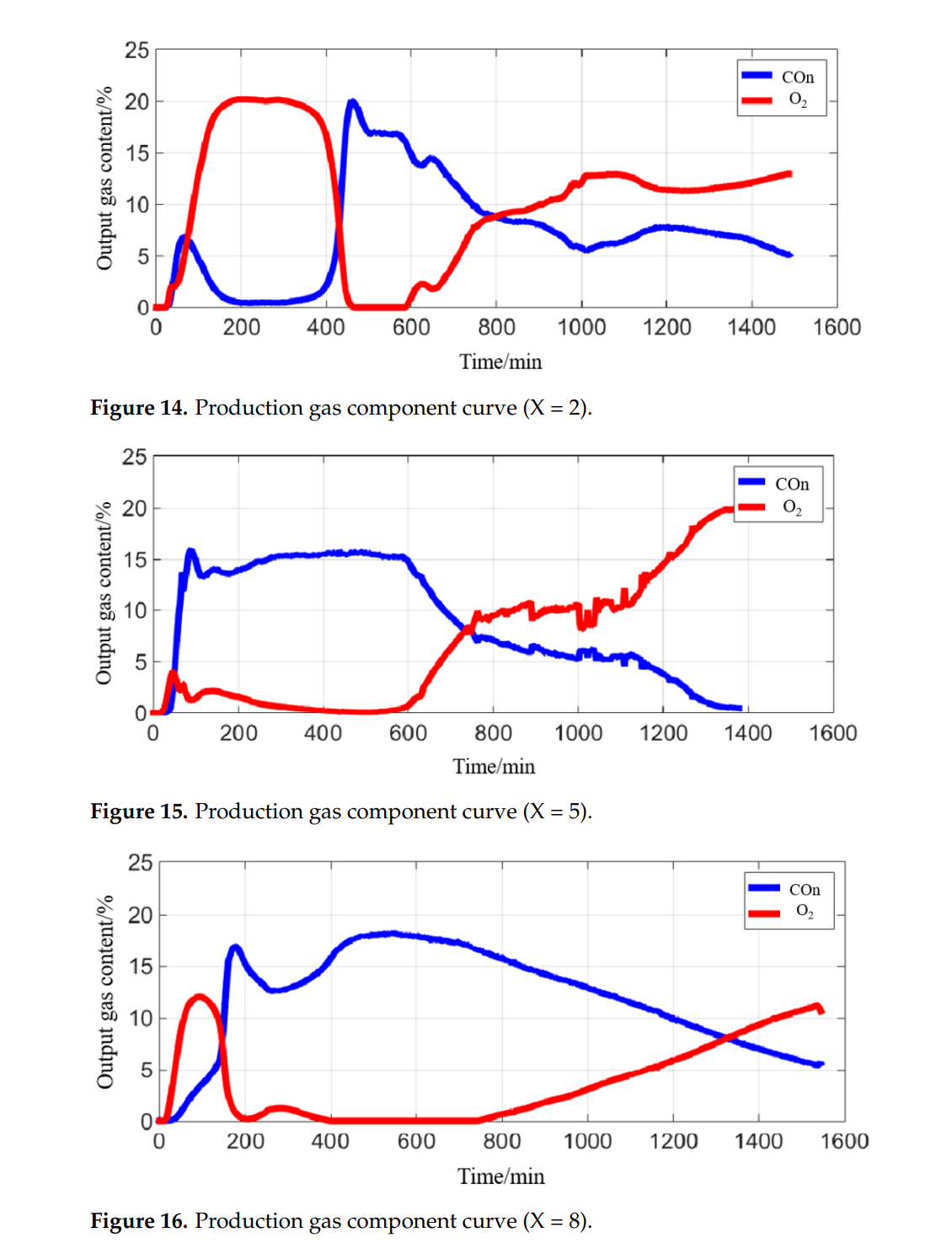
- 模型维度为30×19×7网格,模拟不同注采井距(X值分别为2 cm、5 cm、8 cm)对火驱效果的影响。
- 井网布局包括垂直注气井与水平生产井的组合(THAI技术),研究重力泄油与压力差对火驱腔扩展的影响。
- 参数优化
- 调整注气速度(8 L/min、10 L/min、12 L/min),分析氧气突破时间与燃烧稳定性关系。
- 通过改变储层覆盖层厚度(6 cm、10 cm),模拟储层厚度对火驱腔扩展和气体窜流的影响。
模拟结果
- 注采井距影响
- 井距X值越大(如8 cm),燃烧稳定时间越长(达1100分钟),氧气利用率最高(54.58%),采收率显著提升。
- 井距过小(如2 cm)导致氧气过早突破,燃烧不稳定,采收率仅26.7%。
- 注气速度影响
- 注气速度过高(12 L/min)导致压力差增大,氧气突破时间缩短(800分钟),形成死油区;
- 注气速率适中(10 L/min)可维持1100分钟稳定高温燃烧,平衡热效率与气体窜流风险。
- 储层厚度影响
- 储层厚度较大(10 cm)时,火驱腔纵向扩展更充分,重力泄油效果显著,峰值燃烧温度达495°C;
- 厚度较小(6 cm)时,边界热损失增加,燃烧区易形成焦炭带,采收率下降至3.07%。
结论
- 关键因素总结
- 渗透率:高渗透率加速火线推进,但需避免气体窜流。
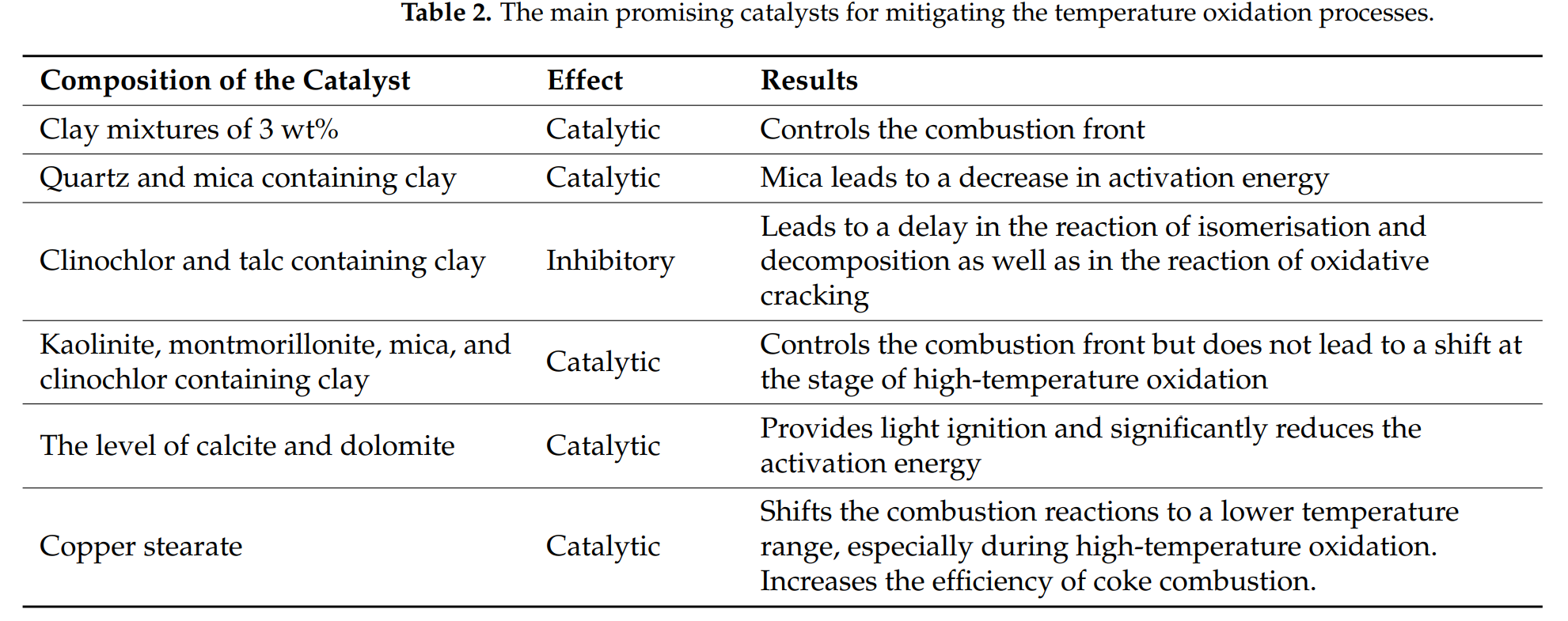
- 含油饱和度:饱和度低于8%时无法维持稳定燃烧,需补充燃料添加剂。
- 注气速率与井距:合理参数可平衡氧气利用与压力控制,最优注气速率为10 L/min,井距X=8 cm。
- 储层厚度:厚储层更利于火驱腔扩展,薄储层需优化井网布局。
- 技术潜力与挑战
- 火驱技术适用于稠油老区及难动用储量,绿色低碳(无需消耗水资源),但需解决燃烧前缘控制、气体窜流及复杂储层非均质性等问题。
- 未来可通过耦合蒸汽驱、化学添加剂(如金属盐催化剂)及智能监测技术进一步提升效率。
Abstract
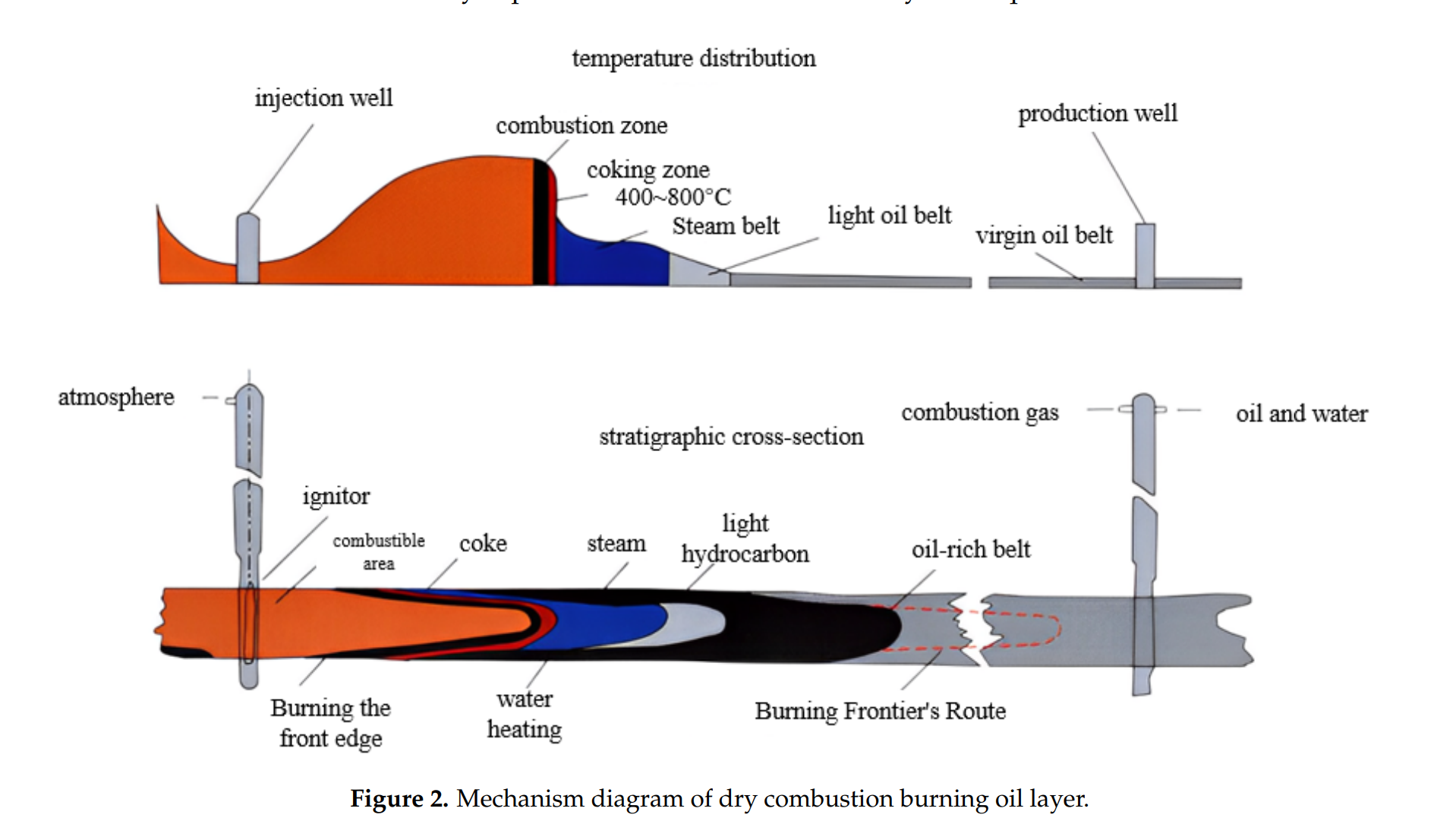
In situ combustion, as a technology for improving oil recovery efficiency, faces technical and economic challenges. Fire-driven oil recovery technology is renowned for its significant technical advantages, including wide reservoir applicability, efficient crude oil recovery rate, and lower extraction costs. It is particularly suitable for the recovery of high viscosity petroleum resources such as heavy oil and oil sands. However, due to the complexity of the fire-driven mechanism, there are still many problems in the engineering design of fire-driven reservoirs. In particular, the lack of intuitive and accurate understanding of the combustion and fire-driven process in the reservoir makes it difficult to take effective means to accurately judge the underground combustion conditions, monitoring and control of the fire-driven leading edge. This paper reviews the effects of permeability, oil saturation, gas injection rate, injection and extraction well spacing, and reservoir thickness. These findings can help to improve the stability and efficiency of fire-driven technology so as to realise better mining results in practical applications.
作者单位
辽宁石油化工大学石油工程学院
