
Simulation analysis of salt precipitation in large-scale CO2 storage using periodic injection via a horizontal well
本模拟研究探讨了在高含水饱和度和不可忽视残余油的海上枯竭油藏中进行CO₂储存时,水平注入井附近盐析和地层伤害的新方面。基于先前的实验发现,本研究深入研究了周期性CO₂注入期间的置换、蒸发和毛细管回流之间的复杂相互作用,需要在井筒附近进行精细网格划分(例如,低至2厘米),并等效地表示井筒区域,以准确捕捉盐析动态。本研究的一个关键贡献是识别并详细定量表征了三个不同的干燥阶段——蒸发阶段、毛细管阶段和黏性阶段——这些阶段基于射孔处的气体通量,对储层模拟提出了独特的挑战。
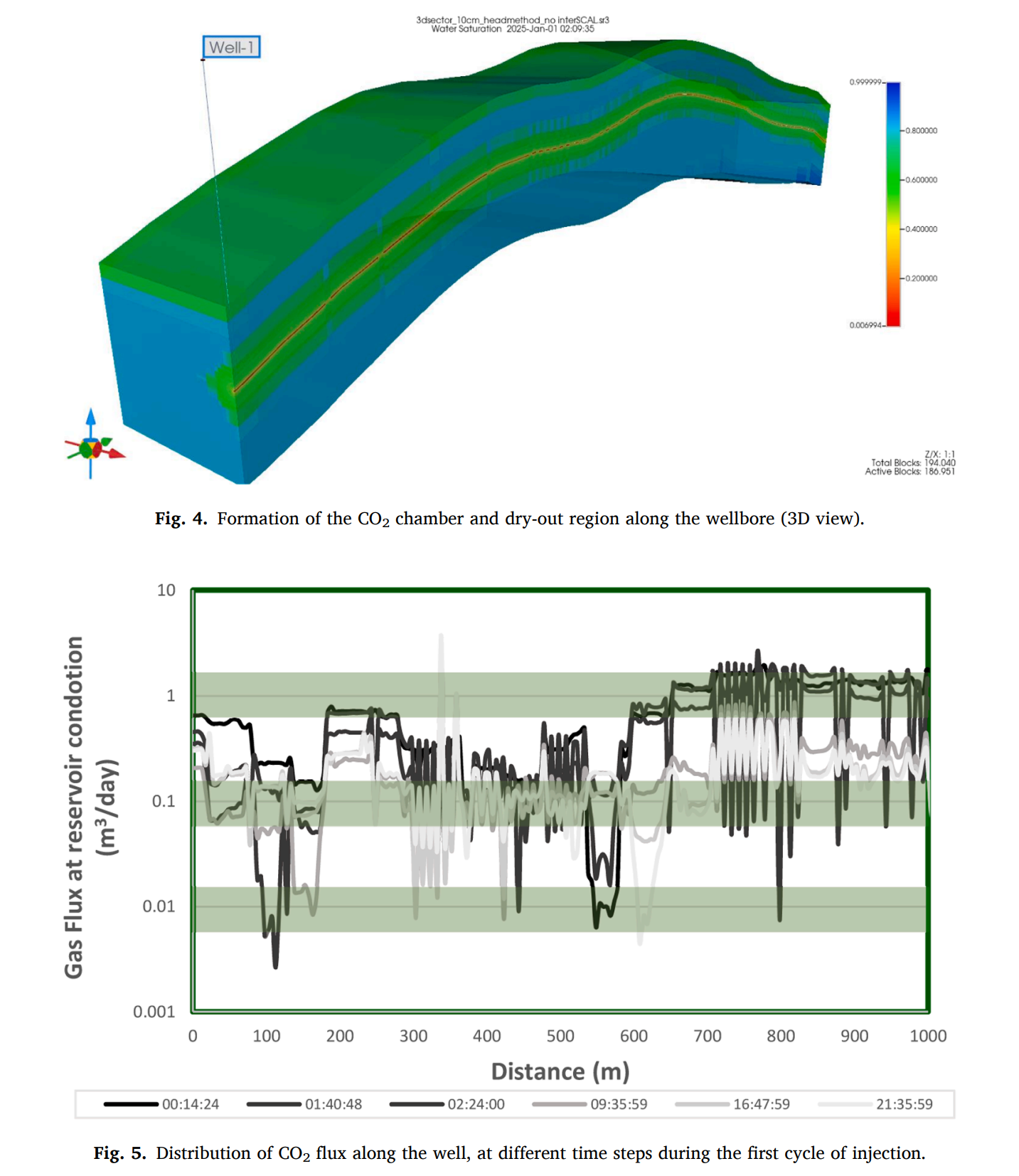
值得注意的是,本研究首次沿着单个CO₂注入井展示了这些干燥阶段,为储层管理提供了关键见解。结果突出了毛细管阶段对注入速度损失的重大影响,并强调了为减轻潜在的完全堵塞风险而需要细化井筒网格分辨率的必要性。此外,本研究评估了注入温度和残余油的影响,揭示了它们对盐析的抑制作用。重要的是,使用三维扇区模型,我们探索了极端场景,例如在毛细管阶段完全堵塞射孔,展示了气体通量的重新定向以保持注入速度。总体而言,本研究通过提供详细的定量评估干燥阶段,推进了该领域的发展,并强调了为有效管理复杂海上环境中的残余油的储层管理,需要量身定制的模拟方法。
CMG软件应用情况
本研究使用CMG-GEM软件模拟了在高含水饱和度和不可忽视残余油的枯竭油藏中,水平注入井附近的盐析情况。CMG-GEM软件用于模拟盐析、地层伤害以及多相流的组成变化。研究中特别关注了周期性CO₂注入的影响,因为这种注入方式会增加毛细管回流和盐析的风险。为了准确捕捉盐析动态,研究中采用了精细网格划分(低至2厘米),并提出了等效井筒区域的概念,以更准确地模拟CO₂通量分布和盐析,尤其是在井筒附近区域。
结论
- 本研究通过CMG-GEM软件评估了在丹麦海上枯竭油藏中进行大规模CO₂储存时盐析和地层伤害的风险。该储存具有周期性注入、长水平井和残余油存在的独特特征。
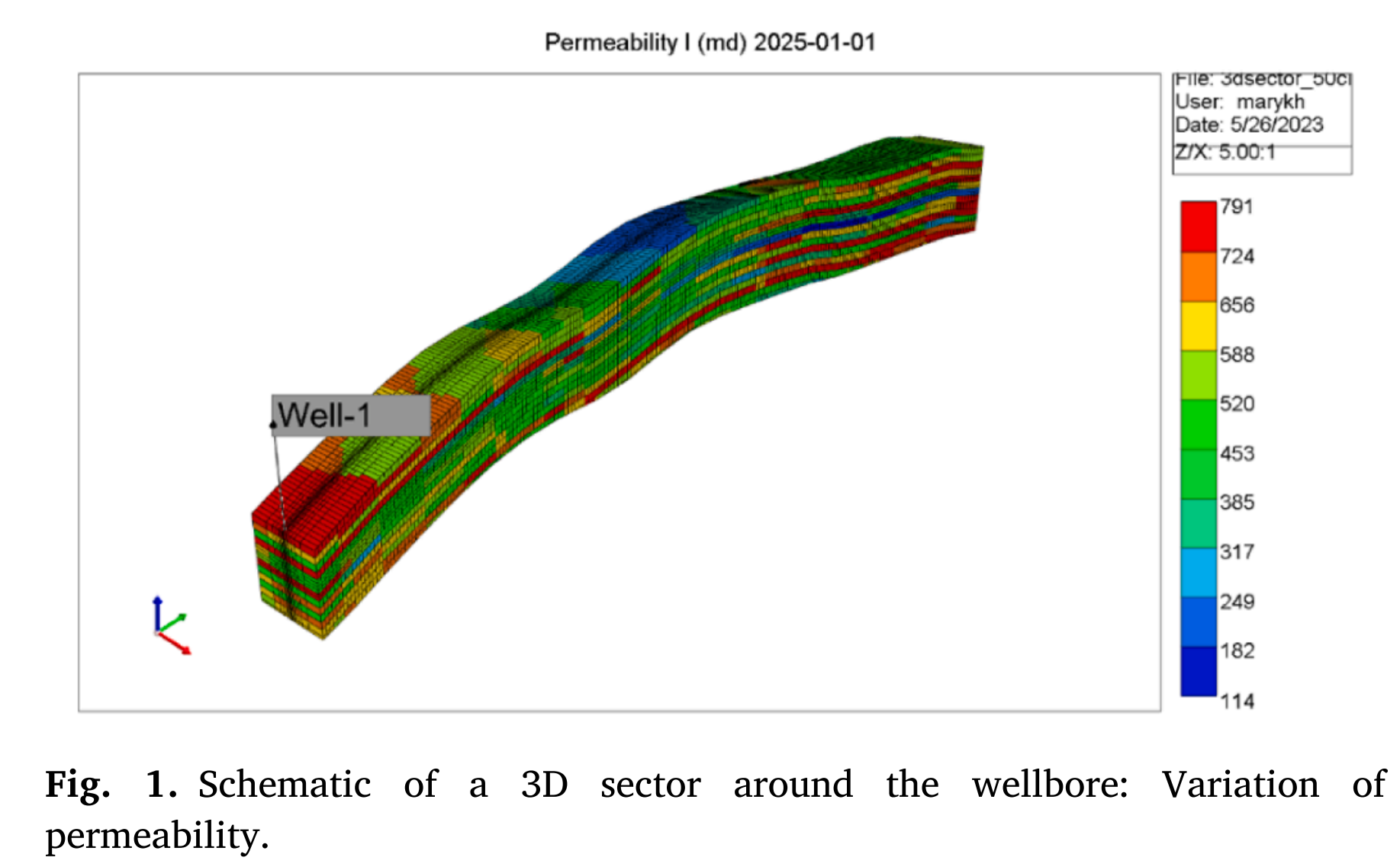
- 研究展示了如何结合2D模拟(非常细的网格)和3D扇区模拟来评估注入速度受损的风险。
- 研究识别了三个干燥阶段(蒸发阶段、毛细管阶段和扩散阶段),并详细分析了每个阶段的盐析和地层伤害情况。
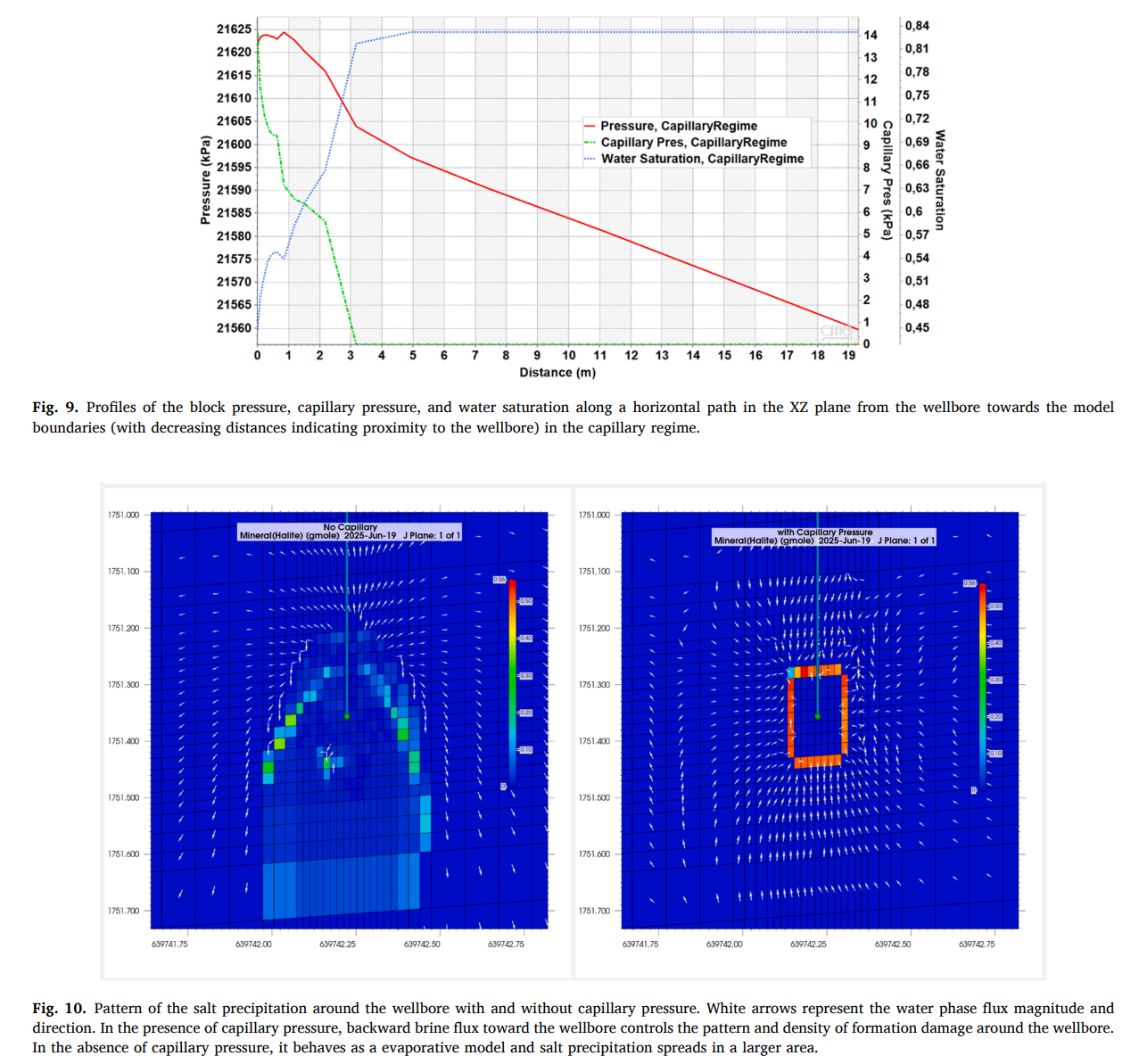
- 蒸发阶段具有最大的干燥区域,盐析量大,但没有显著的地层伤害。毛细管阶段对盐堵塞的风险最高,因为盐析发生在井筒附近,导致堵塞。扩散阶段没有盐析。
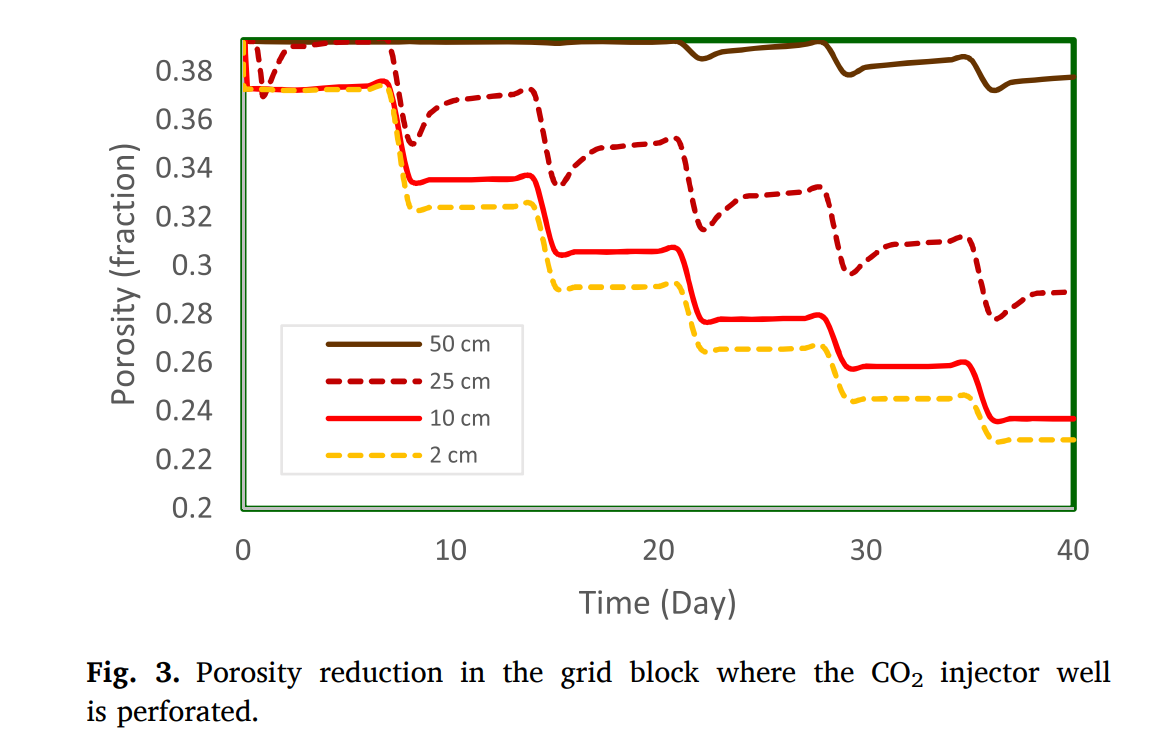
- 适当的网格划分和井筒区域的等效表示对于准确描述毛细管阶段的盐析至关重要。
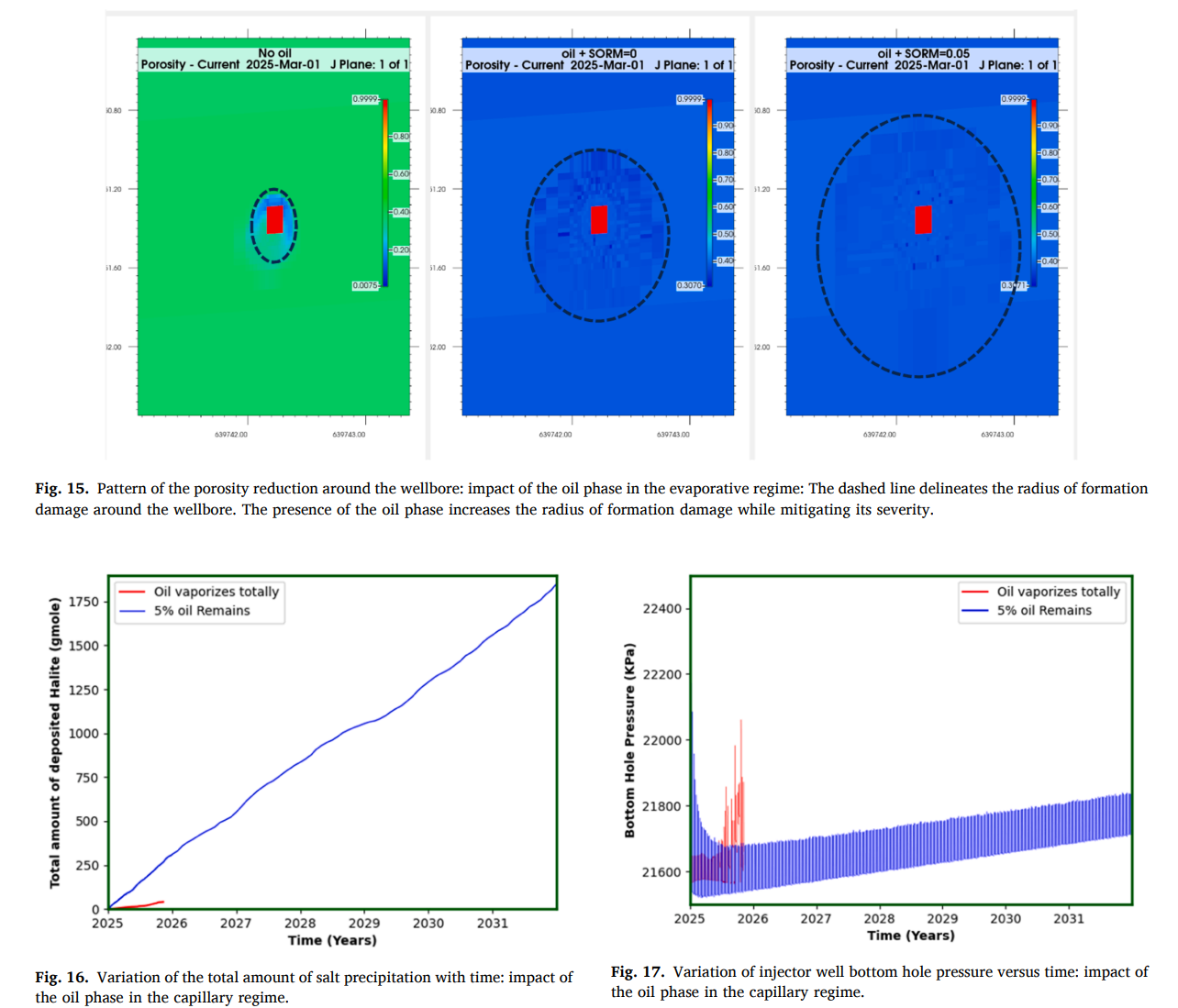
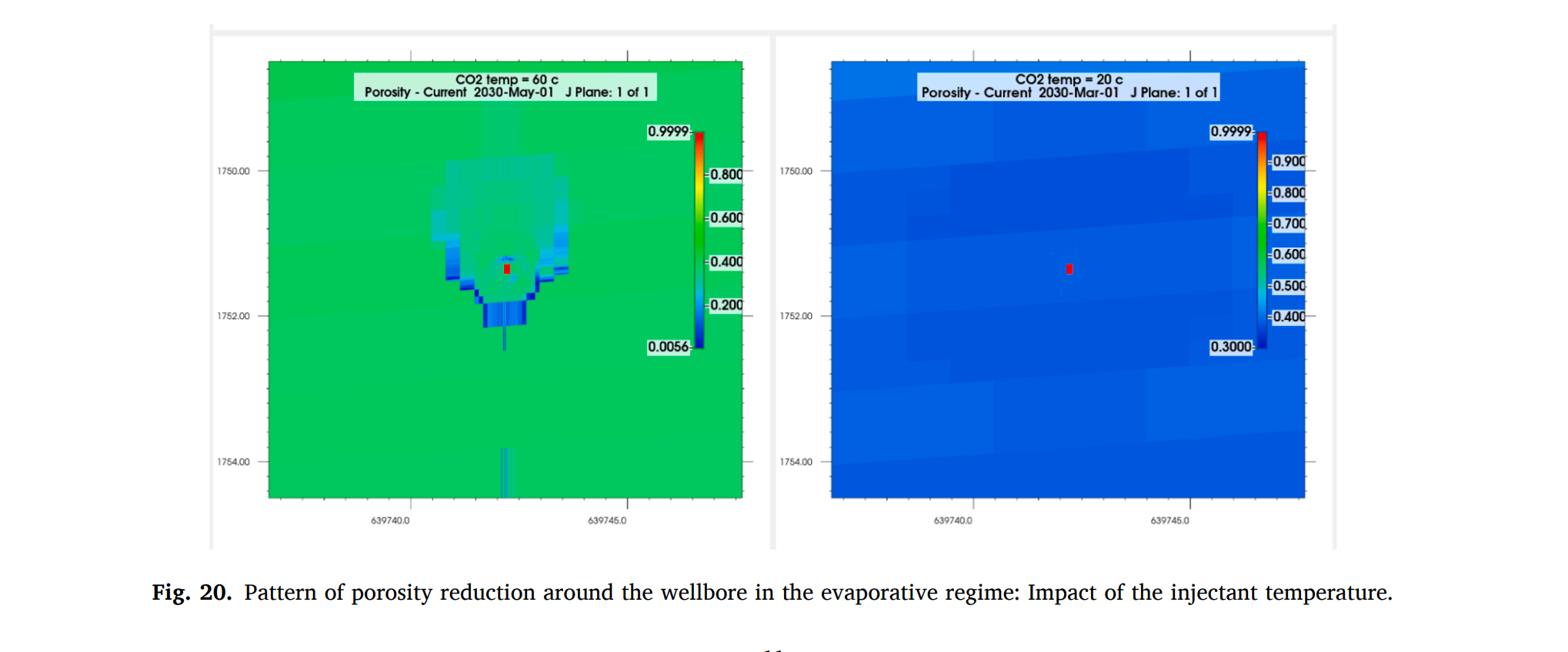
- 敏感性分析表明,较低的注入温度和残余油的存在可以减轻盐析,尤其是在毛细管阶段。较高的注入速度(对应蒸发阶段)也降低了堵塞风险。
- 在一个极端场景中,模拟了毛细管阶段的射孔完全堵塞的情况。结果表明,气体通量会重新定向到其他打开的射孔中,蒸发阶段的增加通量不会增加地层伤害,总体注入速度不受影响。
作者单位
丹麦技术大学能源资源工程中心
Abstract
This simulation study investigates the novel aspects of salt precipitation and formation damage near a horizontal injector during CO2 storage in an offshore depleted oil reservoir with high water saturation and non-negligible residual oil. Built upon prior experimental findings, our study delves into the intricate interplay between displacement, evaporation, and capillary backflow during periodic CO2 injection, necessitating fine gridding (e.g., down to 2 cm) near the wellbore and an equivalent representation of the wellbore area to capture salt precipitation dynamics accurately. A key contribution of this work is the identification and detailed quantitative characterization of three distinct drying regimes—evaporative, capillary, and viscous—based on gas flux at the perforation, which poses unique challenges in reservoir simulation. Notably, our study is the first to demonstrate these drying regimes specifically along a single CO2 injector well, providing critical insights for reservoir management. The results highlight the significant impact of the capillary regime on injectivity loss and underscore the necessity of refined wellbore grid resolution to mitigate potential total plugging risks. Furthermore, this work evaluates the effects of injection temperature and trapped oil, revealing their suppressive effects on salt precipitation. Importantly, employing a 3D sector model, we explore extreme scenarios such as complete perforation plugging within the capillary regime, showcasing redirection of gas flux to preserve injectivity. Overall, this study advances the field by offering detailed quantitative assessments of drying regimes and underscores the critical importance of tailored simulation approaches for effective reservoir management in complex offshore environments with residual oil.
