
Enhancing Hydrogen Recovery from Saline Aquifers: Quantifying Wettability and Hysteresis Influence and Minimizing Losses with a Cushion Gas
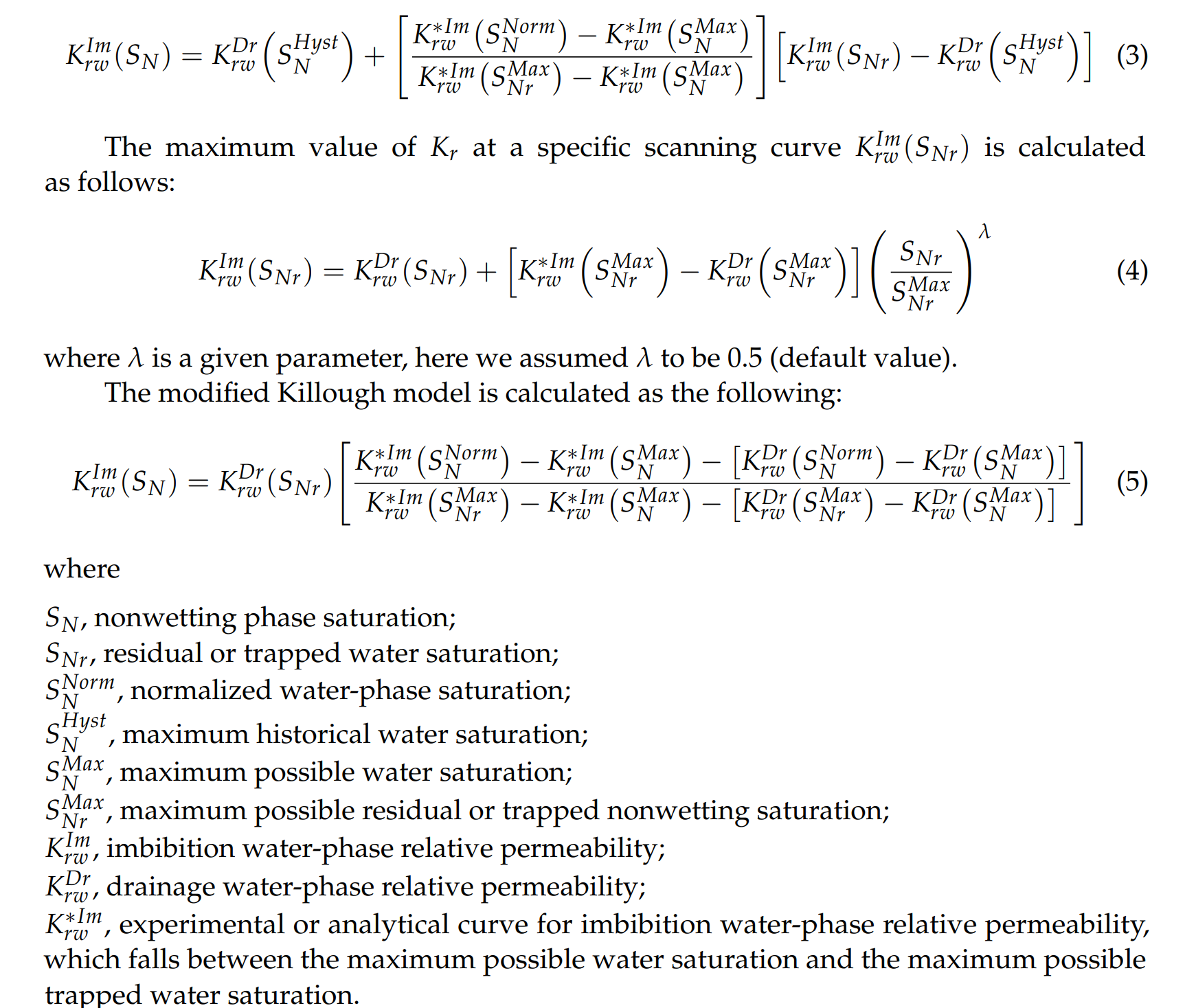
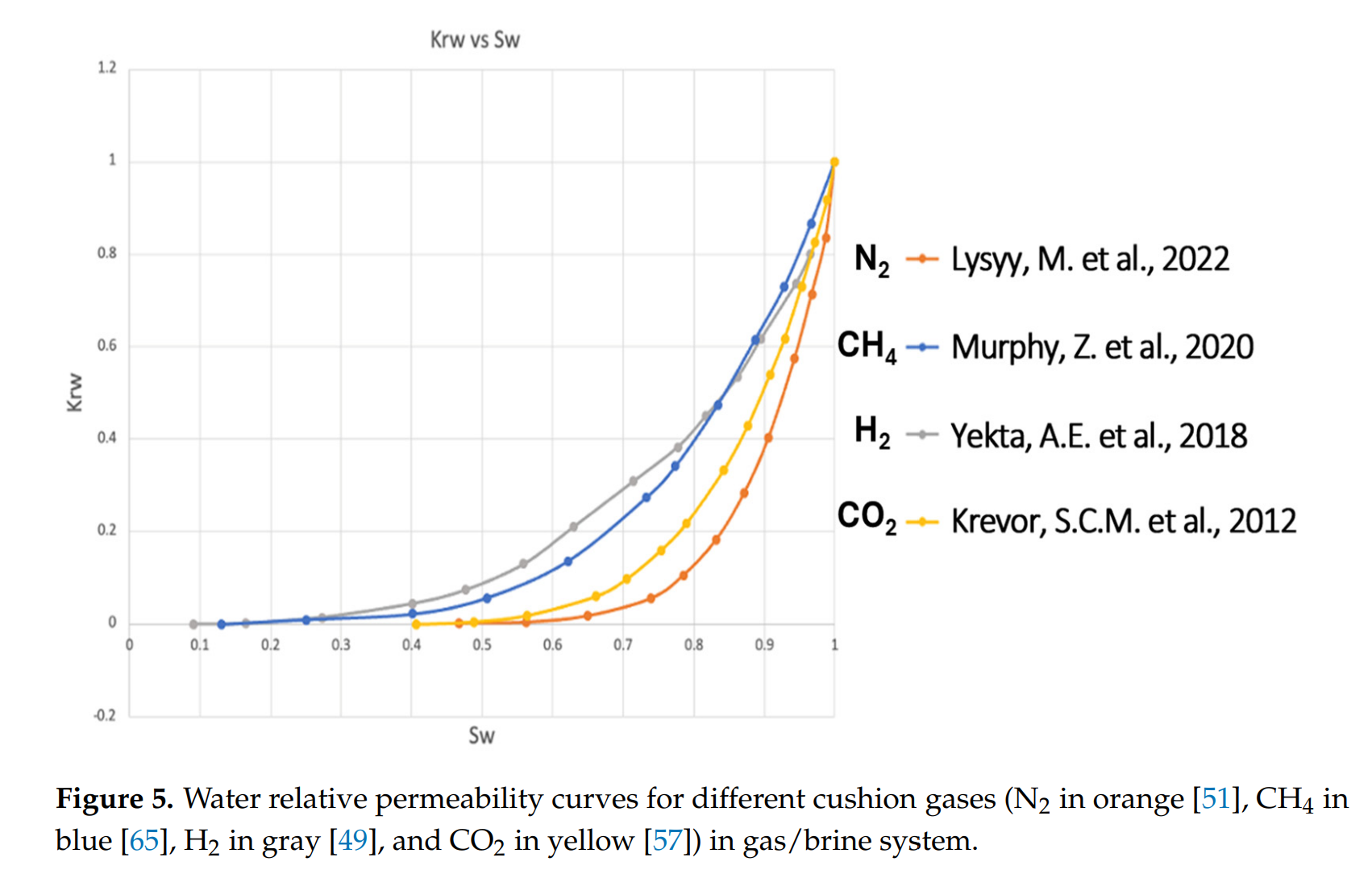
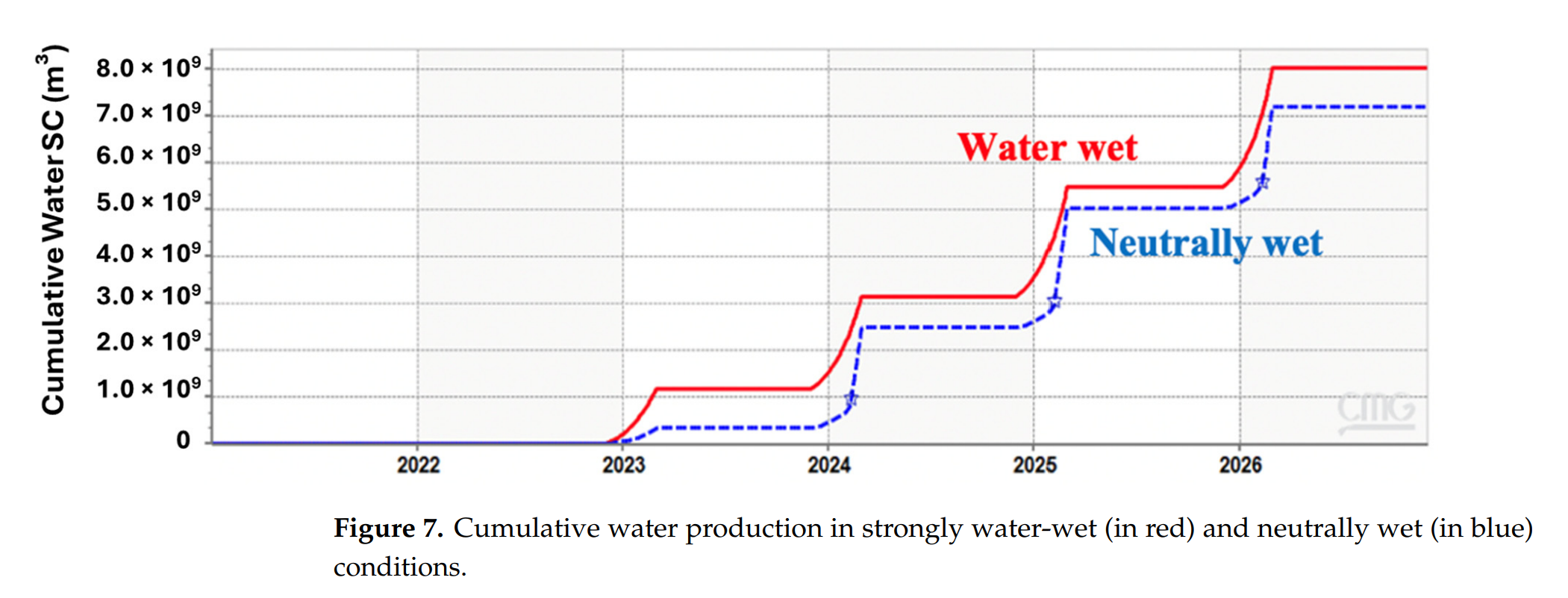
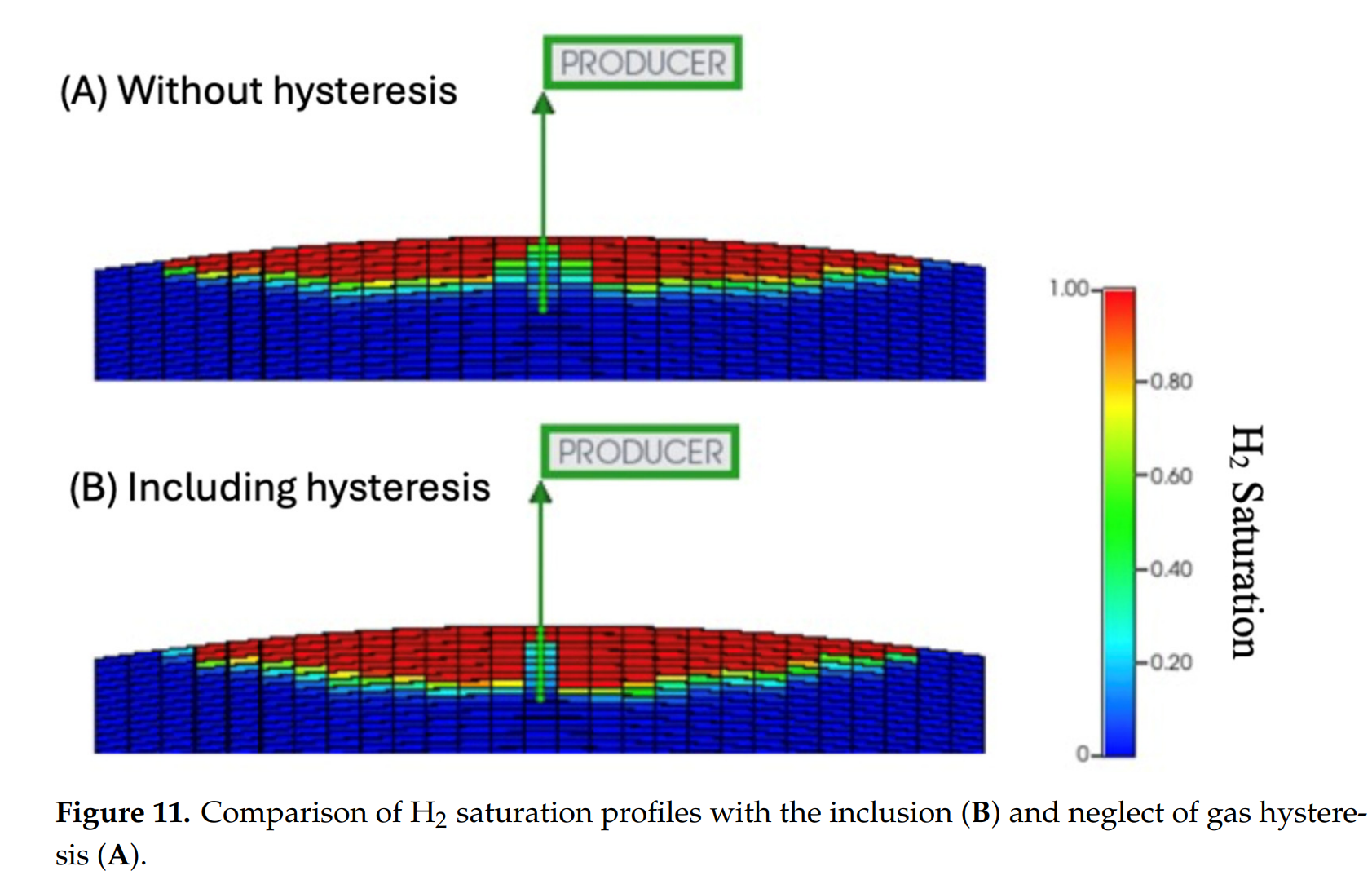
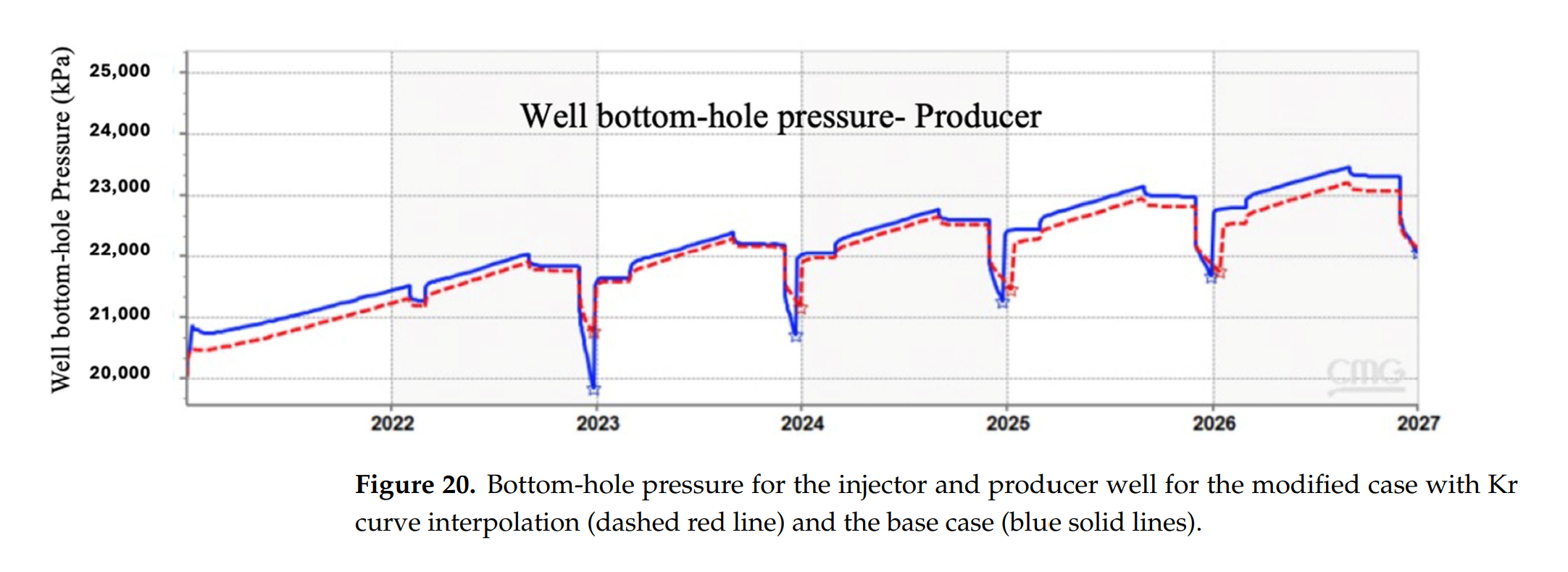
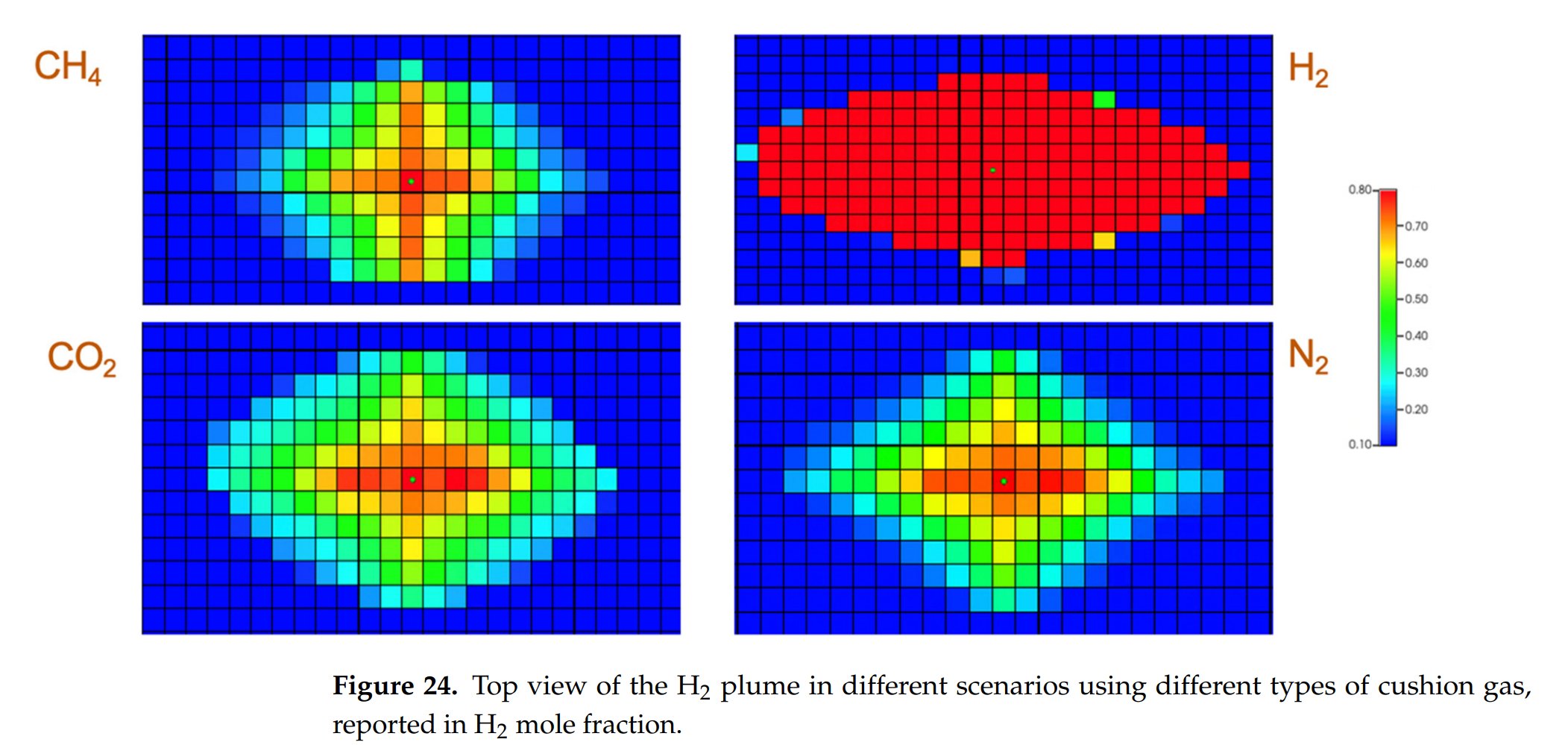
本研究旨在数值评估润湿性和相对渗透滞后对地下氢储存(UHS)期间氢损失的影响,并探索通过使用适当的垫气来最小化这些损失的策略。研究利用Carlson模型计算被捕集气体的饱和度,并使用Killough模型考虑水滞后。通过结合基于实验室测量数据的Land系数,针对氢/盐水系统。研究表明,当H2用作垫气时,气体滞后对氢气回采率有显著影响。忽略滞后效应的基础模型显示,到第四周期回采率为78%,这是可以改进的。相比之下,考虑滞后并且导致被捕集气体饱和度约为17%的修改模型显示,到第四周期氢气回采率为45%。此外,气体滞后对水产量有显著影响,观察到体积增加了12.5%。进一步通过评估不同的垫层气体(如CO2、N2和CH4)来优化开采过程,其中CH4被证明是最佳选择。这些发现提高了估算H2回采率的准确性,这对于评估储存项目的可行性至关重要。
CMG软件应用情况:
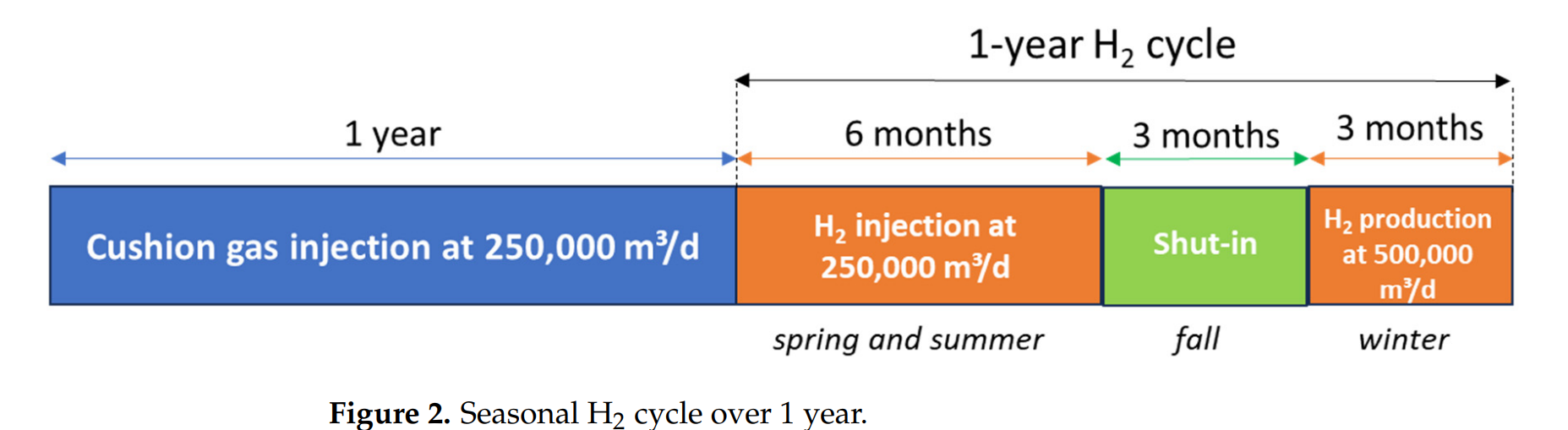
研究中使用了CMG-GEM软件(版本2022.10)来模拟合成背斜含水层模型,以执行UHS期间的多项研究。CMG-GEM以其在预测和分析地下储氢系统中各种热力学性质和流相态的多功能性和适应性而闻名。它采用有限体积和有限差分方法在空间和时间上离散化物质平衡和能量平衡方程。模型为三维对称结构,平均储层厚度为90米。模型包含150×50×50个网格块,每个网格大小为100×100×2立方米。水平渗透率和孔隙度呈非均质分布,平均分别为20%和200毫达西。研究中还包括了对网格尺寸影响的深入研究,并应用了局部网格细化,将初始网格在x、y和z方向上加密为5个,得到20×10×0.4立方米的加密网格。模型中包括了四年内四个完整的氢气注入/生产周期,并对一些分析进行了延长生产。
作者单位:
德克萨斯大学奥斯汀分校、巴西石油公司、休斯顿阿美洲公司

Abstract
This study aims to numerically assess the impact of wettability and relative permeability hysteresis on hydrogen losses during underground hydrogen storage (UHS) and explore strategies to minimize them by using an appropriate cushion gas. The research utilizes the Carlson model to calculate the saturation of trapped gas and the Killough model to account for water hysteresis. By incorporating the Land coefficient based on laboratory-measured data for a hydrogen/brine system, our findings demonstrate a significant influence of gas hysteresis on the hydrogen recovery factor when H2 is used as a cushion gas. The base model, which neglects the hysteresis effect, indicates a recovery factor of 78% by the fourth cycle, which can be improved. In contrast, the modified model, which considers hysteresis and results in a trapped gas saturation of approximately 17%, shows a hydrogen recovery factor of 45% by the fourth cycle. Additionally, gas hysteresis has a notable impact on water production, with an observed 12.5% increase in volume in the model that incorporates gas hysteresis. Furthermore, optimization of the recovery process was conducted by evaluating different cushion gases such as CO2, N2, and CH4, with the latter proving to be the optimal choice. These findings enhance the accuracy of estimating the H2 recovery factor, which is crucial for assessing the feasibility of storage projects.
Keywords:
underground H2 storage; wettability; relative permeability; cushion gas; H2 recovery; H2 plume
