
Experiment-supported simulation of silica nanofluid alternating CO2 injection: Sensitivity analysis for enhanced oil recovery and CO2 storage in sandstone reservoirs
水基纳米流体交替气注(NWAG)是碳酸盐岩和砂岩储层提高原油采收率的有前景方法。NWAG注入性能受多种参数影响,需要通过计算机模拟进行敏感性分析。尽管已有NWAG在碳酸盐岩储层中的模拟研究报道,但在砂岩储层中该方法仅通过实验室实验进行过研究。
本研究旨在通过构建三维砂岩储层模型,对段塞尺寸、NWAG比例和纳米颗粒浓度进行敏感性分析,以大规模验证NWAG方法在砂岩中的可靠性。研究选择SiO₂纳米流体和CO₂,通过放大基于岩心驱替实验验证的一维模型,构建了储层尺度模型。
主要发现:
- 最优参数组合:段塞尺寸0.2烃孔隙体积(HCPV)、NWAG比例1:1、纳米颗粒浓度0.5wt%,可实现最快的原油采收
- 纳米流体双重作用:在控制气体流动性和改变岩石润湿性方面发挥两个同等重要的作用,仅关注单一方面会导致较差效果
- CO₂封存:较大的段塞尺寸和较高的气体比例可实现更大的CO₂封存,但会以延长相同原油产量所需的作业时间为代价
总体而言,研究表明通过使用正确的参数,NWAG注入可同时有效实现砂岩储层的原油采收和CO₂封存。
CMG软件应用情况
本研究全面采用CMG(Computer Modelling Group)软件系列进行数值模拟研究:
1. CMG STARS
- 作为主要模拟器进行多相流数值模拟
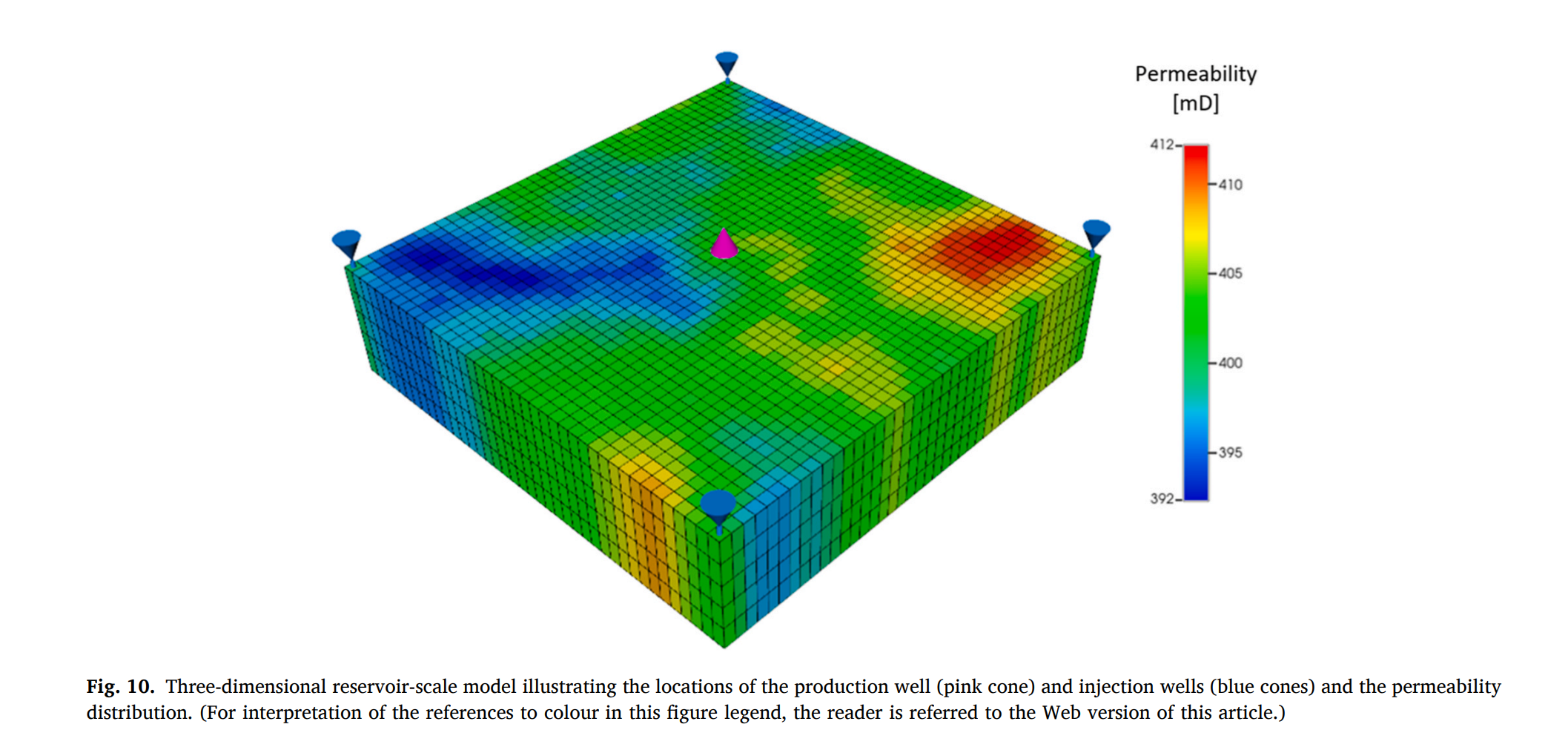
- 构建一维实验室尺度模型(75个网格块)和三维储层尺度模型(40×40×5网格,共8,000个网格块)
- 模拟纳米流体注入、CO₂注入及交替注入过程
- 采用Petronas AFM(纳米颗粒)向导模块自动集成纳米颗粒吸附、纳米流体-油相对渗透率及渗透率伤害模拟
2. CMG CMOST
- 用于三相相对渗透率的确定和优化,通过调整气相相对渗透率实现与实验结果的最佳匹配
- 用于确定纳米颗粒聚集和沉降反应速率的放大系数(从实验室尺度放大到储层尺度)
3. CMG WinProp
- 确定储层条件下CO₂在水中的平衡常数
- 基于文献中SiO₂纳米流体比纯水多吸收21% CO₂的数据,调整平衡常数以考虑纳米流体对CO₂溶解度的增强效应
4. CMG Builder
- 用于前处理模型构建
- 利用Petronas AFM(Nanoparticle)Wizard设置纳米颗粒吸附、渗透率伤害等关键参数
结论
- 段塞尺寸优化:较大段塞尺寸(0.3-0.4 HCPV)导致NWAG注入初期原油采收率较低;段塞尺寸小于0.2 HCPV未带来明显改善,因此0.2 HCPV为最优选择。
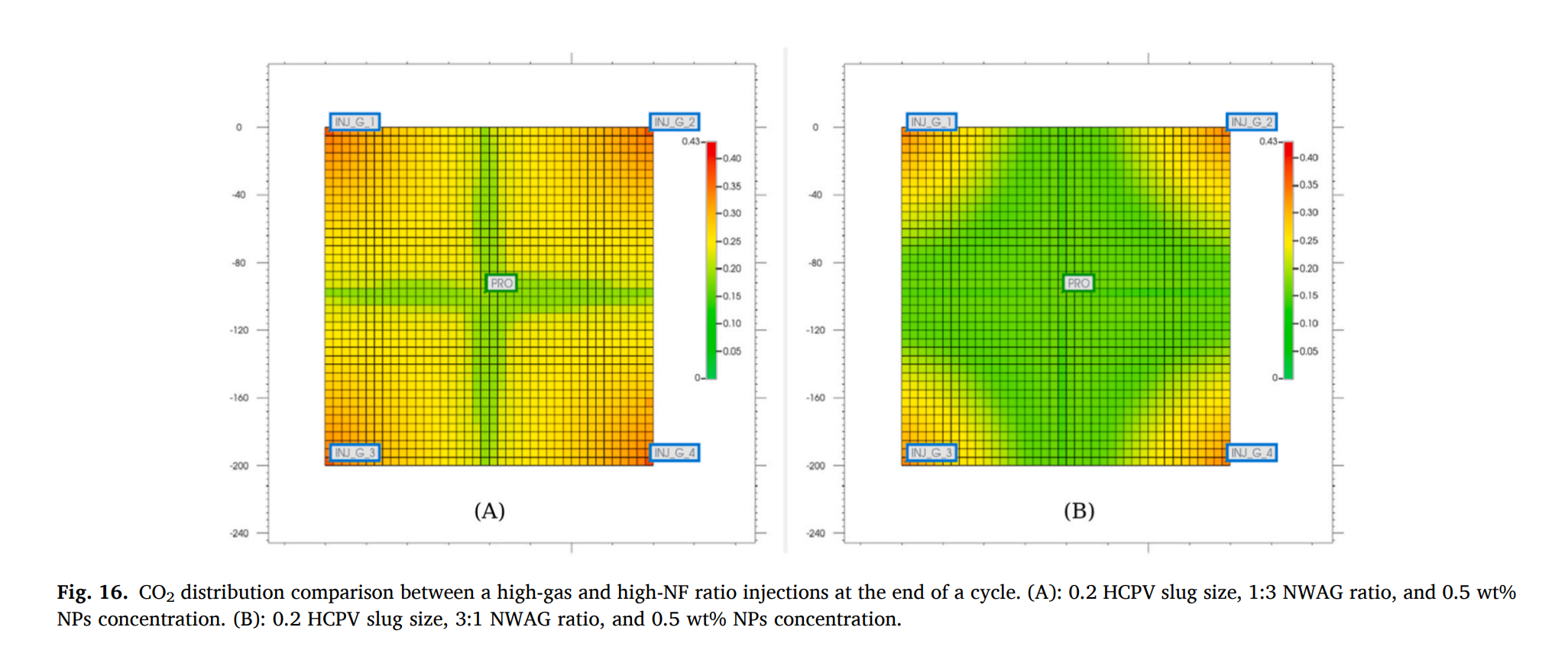
- NWAG比例优化:较高纳米流体比例(3:1, 2:1)或较高气体比例(1:2, 1:3)相比平衡的1:1 NWAG比例产生较差的原油生产性能。1:1比例通过适当数量的纳米流体注入,协同实现了控制气体流动性和改变润湿性的双重作用。
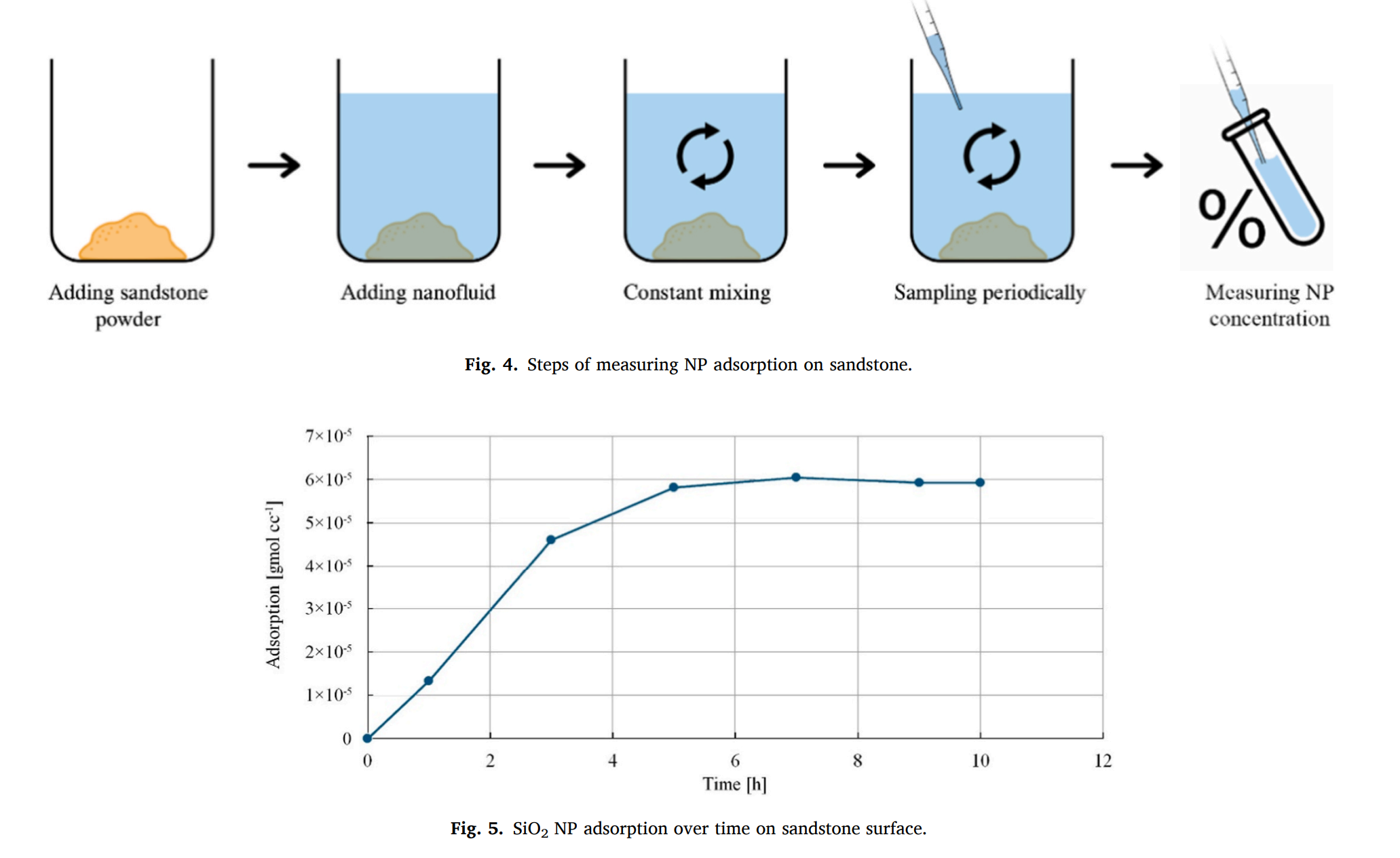
- 纳米颗粒浓度:较高浓度(0.5wt%)导致更快的岩石表面吸附和更高的纳米流体粘度,从而提高了原油生产性能,但浓度超过0.25wt%后效果提升趋缓。
- CO₂封存能力:较大的段塞尺寸和较高的气体比例由于可实现更高的捕集气体饱和度,从而在砂岩储层中实现更高的CO₂封存能力。
- 推荐作业方案:在所述储层条件下,建议采用段塞尺寸0.2 HCPV、NWAG比例1:1、纳米颗粒浓度0.5wt%的参数组合,进行9个循环(约10年3个月),以实现最佳的原油采收和CO₂封存效果。
研究局限性:本研究基于一维岩心驱替实验的放大模型,对于储层尺度的模拟精度和可信度有待通过实际现场数据的进一步验证。
作者单位
日本秋田大学国际资源科学学院地球资源工程与环境科学系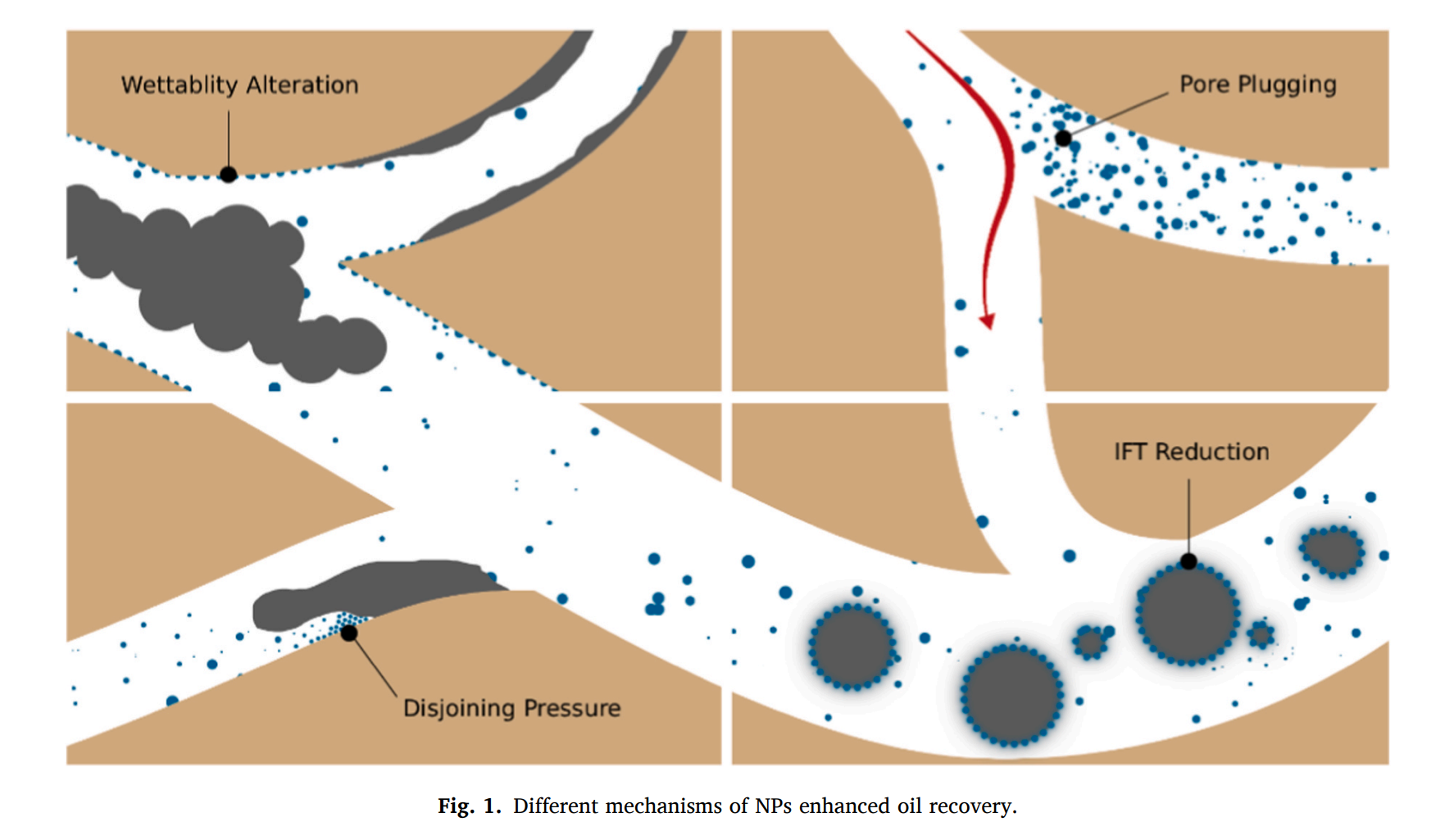
Abstract
Water-based nanofluid alternating gas (NWAG) injection is a promising approach for enhancing oil recovery in carbonate and sandstone reservoirs. The NWAG injection performance is influenced by multiple parameters, which necessitates sensitivity analysis using computer simulation. NWAG simulations have been reported for carbonate reservoirs. However, in sandstone, the NWAG method has only been studied through laboratory experiments. This study aims to investigate the reliability of the NWAG method in sandstone on a large scale by making a simulation and performing sensitivity analysis for the slug size, NWAG ratio, and nanoparticle concentration in a three-dimensional model of a sandstone reservoir. Silica nanofluid and CO2 were chosen to investigate oil recovery and CO2 storage performance during NWAG injection. A reservoir-scale model was constructed by upscaling a laboratory-validated one-dimensional model based on a core flooding experiment. Subsequently, several simulations were performed to determine the effects of each parameter. Results indicated that a slug size of 0.2 hydrocarbon pore volume, NWAG ratio of 1:1, and nanoparticle concentration of 0.5 wt% resulted in the fastest oil recovery. Moreover, results suggested that nanofluid plays two equally important roles, controlling gas mobility and altering rock wettability, and focusing only on one aspect leads to inferior results. For CO2 storage, larger slug sizes and higher gas ratios resulted in greater CO2 storage but at the expense of longer operation time for the same amount of oil produced. Overall, the study findings demonstrate that by using the right parameters, NWAG injection can be effective for simultaneous oil recovery and CO2 storage in sandstone reservoirs.
