
Numerical Modeling and Multiscale Evaluation of Fe3O4–Graphene Oxide Nanofluids in Electromagnetic Heating for Colombian Heavy Oil Recovery
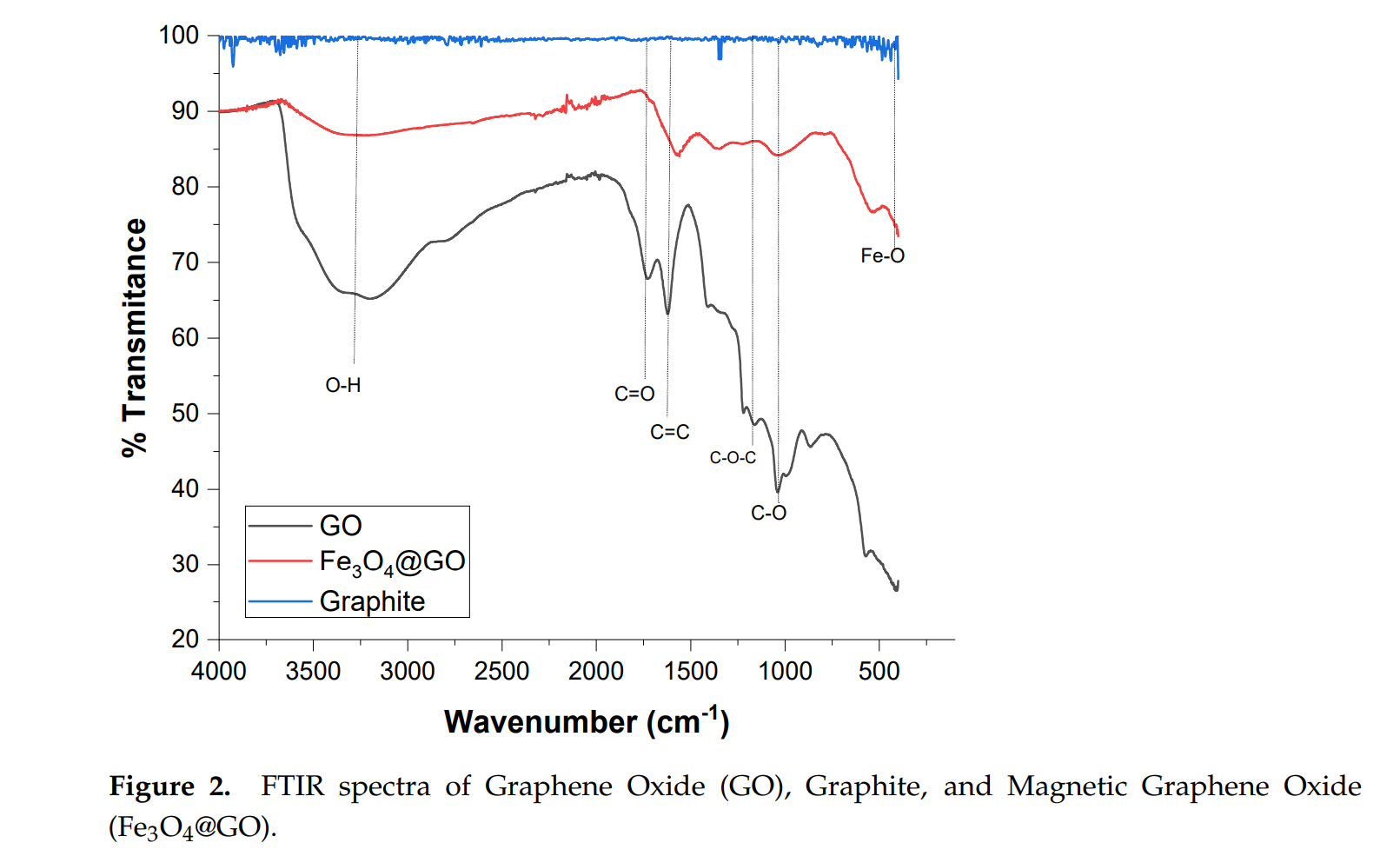
针对传统热采技术在稠油油藏中面临的能量损失大、加热不均等问题,本文提出将具有超顺磁性的Fe₃O₄@氧化石墨烯(Fe₃O₄@GO)纳米复合颗粒(≈80 nm)引入微波电磁加热(EMH)体系,以提高近井地带能量吸收能力。研究首先采用改良Hummers法+原位共沉淀工艺合成纳米材料,并通过FTIR、Raman等多手段表征其结构;随后设计9组不同含水/含油/含纳米颗粒浓度的岩-油-水实验,在5.5 kW实验室微波装置中连续加热55 h,最高温度达240 ℃。实验温度曲线经CMG-STARS商业热采模拟器历史拟合,反演得到目标层有效传热量(最高653 MJ),证实纳米颗粒可显著提升热效率与热场均匀性。进一步建立考虑汽化-吸波耦合的电磁吸收系数α回归模型(α=0.00765-0.00111S_o+0.01539S_w-1.68×10⁻⁶NP),为现场扩大提供可直接嵌入主流油藏模拟器的计算框架。
CMG软件应用情况
- 使用模块:CMG-STARS(热采/化学驱全能模拟器)。
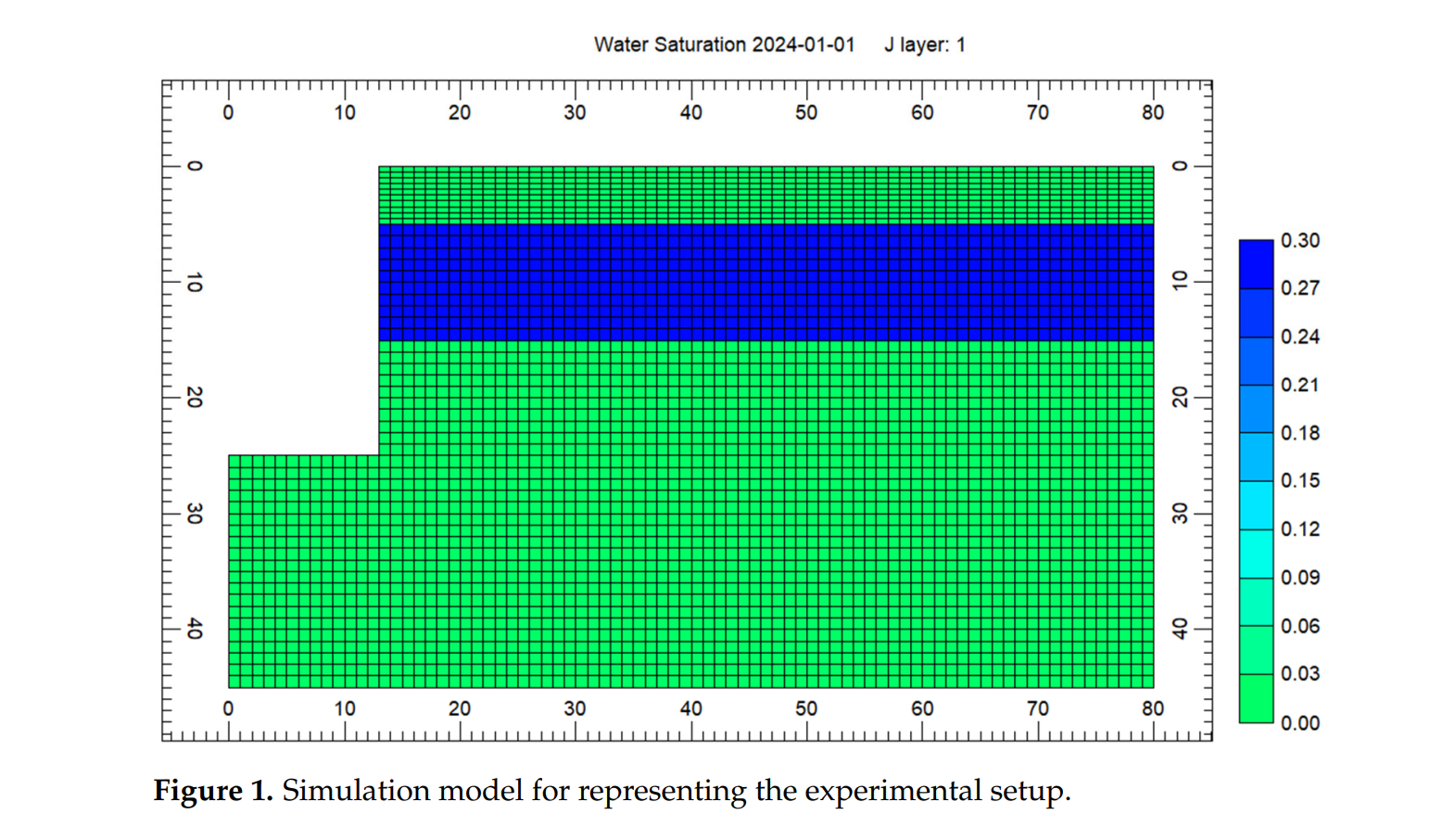
- 建模方式:建立80×1×30径向网格,分别刻画石英天线管、目标层及上/下隔层;赋予不同热物性、孔隙度35%、渗透率6 D。
- 关键功能:
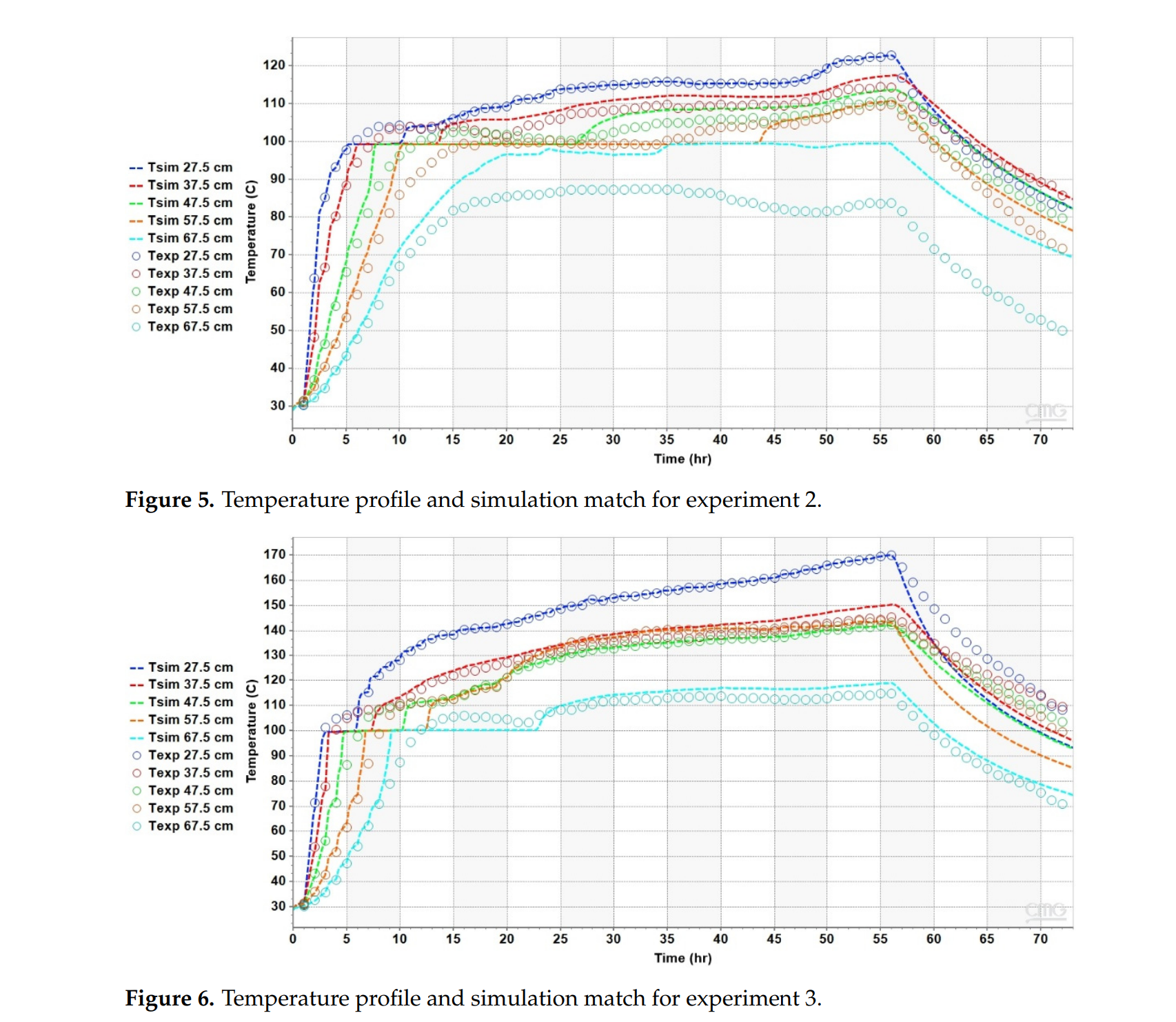
– 通过“UHTR”关键字给各网格赋时变热源,反演实验温度历史;
– 利用“TMPSET”设置边界散热系数(-30 J/min·℃)以重现降温段;
– 输出“SCTR”累计热量,计算不同工况下目标层55 h累计传热量与真实输入功率的比值(Transfer Ratio)。 - 结果:模拟温度曲线与5组热电偶实测值吻合良好,据此量化纳米流体对传热增强的贡献(Transfer Ratio由0.58→0.64~0.68)。
主要结论
- 成功制备直径约80 nm、具有超顺磁性的Fe₃O₄@GO纳米复合颗粒,在高盐、酸性及高温条件下保持稳定。
- 实验-数值联合证实:在500 ppm浓度下,该纳米颗粒可提高微波加热传热效率6–10%,且含水饱和度越高,增效越明显。
- 基于CMG-STARS的历史拟合反演得到目标层累计传热量,并建立可嵌入商业模拟器的电磁吸收系数α经验公式,为后续现场方案优化与产能预测提供了可直接调用的模块。
- 研究提出的“数据驱动-材料感知”型EMH-EOR技术路线,为哥伦比亚乃至全球稠油油藏提供了一种绿色、高效、可规模化的热力采油新思路。
作者单位
哥伦比亚桑坦德工业大学 工业计算机断层扫描研究组(GIT)
Abstract
Electromagnetic heating (EMH) using microwaves has emerged as a promising enhanced oil recovery (EOR) technique, particularly for heavy crude oils where conventional thermal methods encounter technical and environmental challenges. However, its large-scale implementation remains limited due to incomplete understanding of its energy transfer mechanisms. This study proposes an experimental–numerical approach integrating magnetic graphene oxide nanoparticles (Fe3O4@GO) with microwave heating to enhance energy absorption near the wellbore. The nanomaterial was synthesized via a modified Hummer’s method followed by in situ magnetite precipitation and studied through multiple material characterization techniques showing uniform 80 nm particles with superparamagnetic behavior—ideal for EMH applications. Nine experiments were conducted on sand–heavy-oil–water systems with nanoparticle concentrations up to 500 ppm using a laboratory microwave heating prototype. A simulation model was then developed in CMG-STARS for history matching to estimate energy absorption as a function of saturation and nanoparticle concentration. Experiments reached temperatures up to 240 °C, with 653 MJ of effective heat transferred to the target zone over 55 h, as estimated from the input heat required in the simulator for history matching. The results confirm that magnetic graphene oxide nanoparticles enhance thermal efficiency and heat distribution in microwave-assisted EOR.
