
A novel numerical simulation method and applications of CO2 thickened flooding
CO₂驱提高采收率技术已在世界各地广泛应用,但低黏度CO₂易形成黏性指进、重力超覆和窜流,导致体积波及效率大幅下降。现有抑制手段(WAG、凝胶封堵、泡沫等)中,CO₂稠化被认为最具潜力,却缺少系统的数值模拟方法。本文提出在CMG-GEM平台上通过修改关键黏度参数“Vc(viscosity)”实现CO₂稠化一体化模拟,并以经典非均质“Egg Model”为对象,系统评价连续注气、稠化-未稠化交替注气及水气交替(WAG)三种方案在不同稠化倍数、段塞比和储层非均质性下的开发效果。本研究为CO₂稠化驱提供了可直接落地的数值模拟思路与参数依据。
CMG软件应用情况
- 软件平台:CMG-GEM(一体化三相多组分模拟器)
- 关键做法:
– 通过WinProp模块修改CO₂组分的“Vc(viscosity)”伪临界体积参数,在JST黏度相关式中实现2–9倍黏度任意调节,且不影响相平衡与混溶压力;
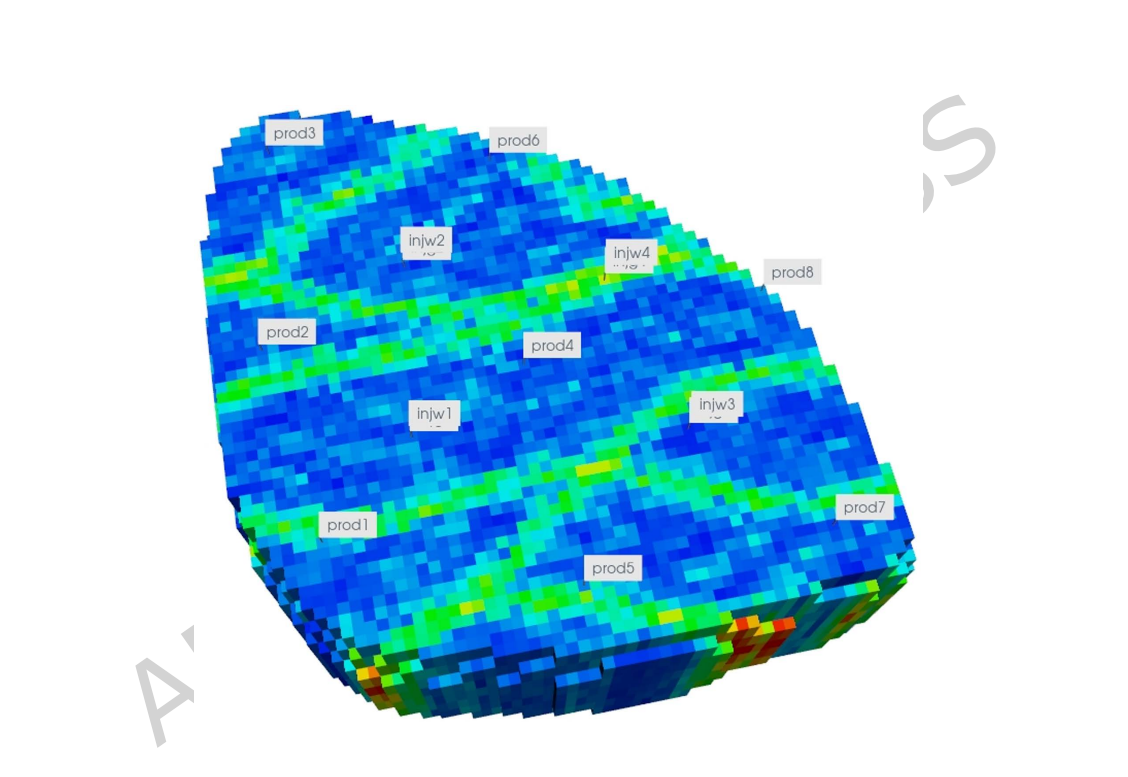
– 建立25 200网格(60×60×7)Egg模型,嵌入不同渗透率(20–100 mD)非均质场;
– 设计连续注气、交替注气、WAG三大方案共30余组算例,统一在GEM中完成历史拟合、方案对比及敏感性分析;
– 利用GEM内置IPOPT优化器保持注采约束一致,确保不同稠化倍数/段塞比结果可比。 - 创新点:首次在CMG环境下将“Vc(viscosity)”参数化方法用于CO₂稠化一体化模拟,避免了实验级稠化剂物性缺失带来的预测偏差。
主要结论
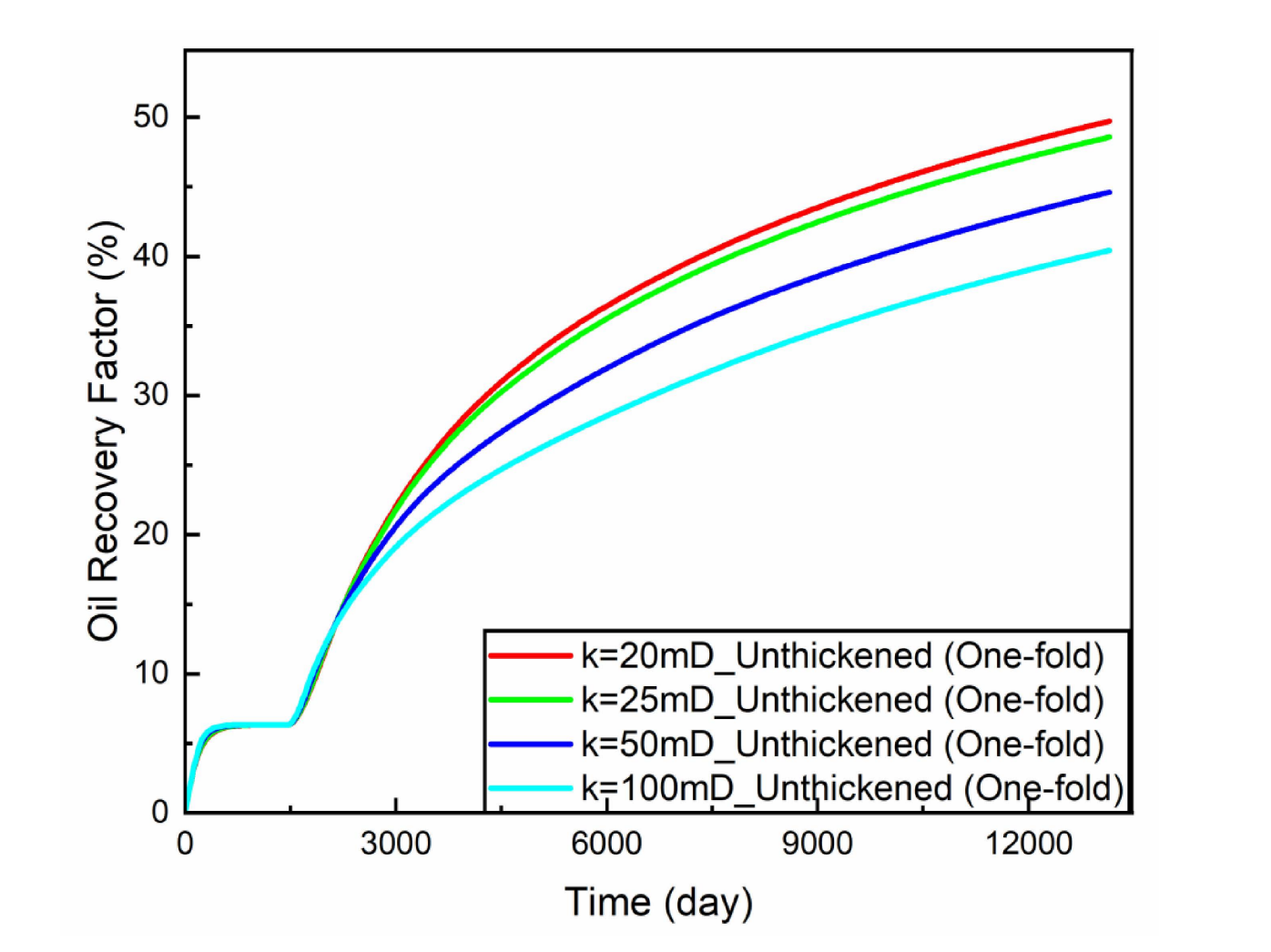
- 修改“Vc(viscosity)”可稳定再现2–9倍CO₂黏度提升,模拟结果与实验趋势一致。
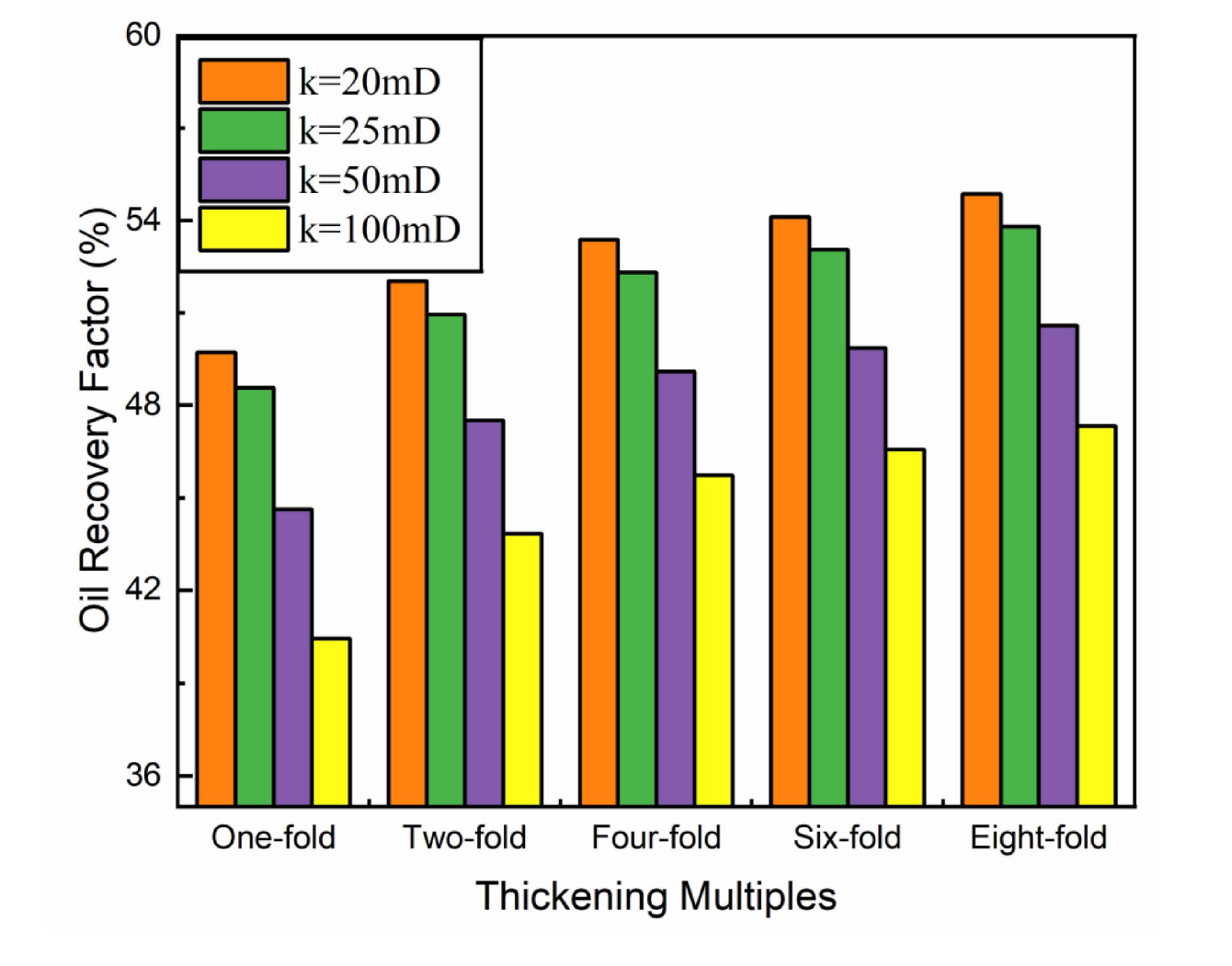
- 八倍稠化连续注气采收率最高(53.8%),但四–六倍区间性价比最好。
- WAG模式下,CO₂占比越高(1:3),稠化提采幅度越大(增幅达3.6%)。
- 渗透率50–100 mD的强非均质储层对稠化最敏感,采收率可提高5–7%。
- 提出的“Vc(viscosity)一体化模拟法”可快速评价稠化剂段塞尺寸、注入时机与经济性,为现场方案编制提供直接依据。
作者单位
中国石油勘探开发研究院·提高油气采收率国家重点实验室
Abstract
CO2-EOR (CO2 Enhanced Oil Recovery) is currently one of the predominant techniques for improving oil recovery worldwide, offering significant production enhancement. However, during CO2 flooding operations, challenges such as viscous fingering, gravity segregation, and reservoir heterogeneity often lead to severe gas channeling issues. Current mitigation strategies include water-alternating-gas (WAG) injection, CO2 viscosity thickening, hydrogel plugging, foam blockage, and nanoparticle-based conformance control. Among these, CO2 viscosity enhancement is considered a highly promising method for improving oil recovery. However, simulating CO2 thickening has remained a significant challenge, with existing research primarily focused on laboratory experiments and limited numerical simulation studies. This study employs the CMG-GEM numerical simulation software, utilizing a modified typical heterogeneous “Egg Model” reservoir, to systematically investigate the mechanisms of CO2 viscosity modification on recovery performance. To simulate CO2 thickening, this paper proposes modifying the key viscosity parameter “(viscosity)” to approximate the CO2 thickening process. A series of injection schemes were designed, including continuous gas injection, alternating injection of thickened and unthickened CO2, and water-alternating-gas (WAG) injection, to compare and evaluate the development performance under various conditions. The study systematically examines the effects of different thickening multiples, slug ratios, and reservoir heterogeneity levels. The results indicate that adjusting the viscosity parameter “(viscosity)” can effectively simulate CO2 thickening behavior. Furthermore, CO2 viscosity enhancement demonstrates significant potential for improving oil recovery, providing both theoretical insights and practical guidance for numerical simulation studies of viscosity-modified CO2 flooding.
