
CO2 sequestration potential in Depleted Hydrocarbon fields – A geochemical approach
本研究针对欧盟能源转型背景下二氧化碳减排需求,探讨了枯竭油气田(DHF)作为二氧化碳封存场所的技术可行性。研究以西班牙Marismas 3气田为模型区域,采用PHREEQC和CMG-GEM软件相结合的方法,系统分析了二氧化碳注入后与碳酸盐-硅质碎屑储层的相互作用机制。研究结果表明:
- 二氧化碳注入会形成碳酸导致多种矿物溶解,同时引发菱铁矿和粘土矿物沉淀
- 菱铁矿的胶体性质和钙蒙脱石的膨胀特性可能造成孔隙喉道堵塞
- 其他新形成的矿物相不会显著影响储层质量
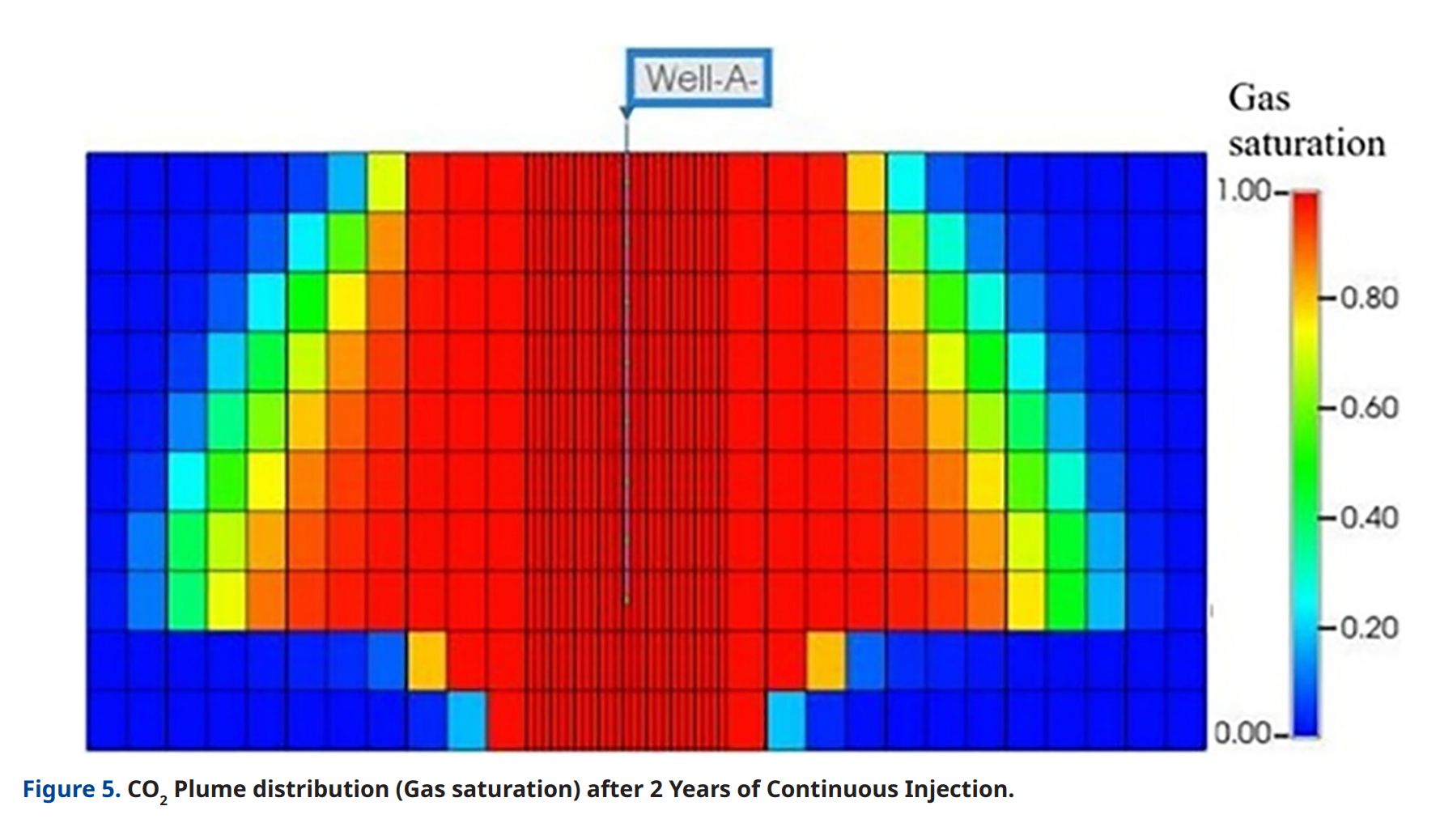
CMG-GEM验证了二氧化碳羽流建立的关键阶段
研究证实,通过人为调控储层参数可有效控制可能引发问题的矿物形成,表明枯竭油气田适合作为CEEGS(二氧化碳基电热能与地质封存)技术的实际应用场所。
CMG软件应用情况
本研究主要使用了CMG公司的GEM组分模拟器,其应用特点包括:
1.模型构建:
- 建立了1500m×1500m×50m的通用储层模型
- 模拟深度2000米,初始压力14MPa,温度75℃
- 包含两口井(注入井A和生产井B)的井网配置
2.模拟方案:
- 连续2年二氧化碳注入建立羽流(33kg/s,约100万吨/年)
- 包含1个月关井期和6个充放循环
- 注入井井口温度60℃,生产井回注温度20℃
3.关键成果:
- 验证了二氧化碳羽流分布特征(如图5所示)
- 分析了底部压力变化规律(如图6a所示)
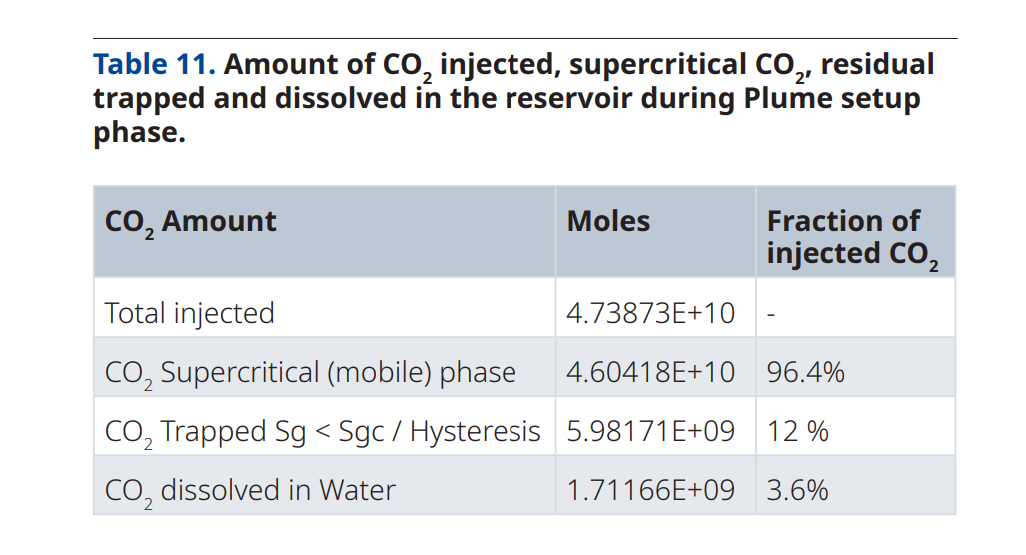
- 量化了不同封存形式的二氧化碳比例(溶解封存3.6%,残余封存12%)
结论
地球化学方面:
- 二氧化碳注入导致pH值下降,引发碳酸盐矿物溶解和粘土矿物形成
- 仅钙蒙脱石和菱铁矿可能造成孔隙堵塞问题
- 通过调控pH等参数可控制问题矿物的形成
工程应用方面:
- 建立二氧化碳羽流是恢复储层压力的关键阶段
- 需要2年连续注入(约200万吨)才能达到超临界状态生产要求
- 储层压力需维持在18.1MPa以上才能保证系统高效运行
3.技术可行性:
- 枯竭气田具备结构圈闭和盖层密封条件
- 适合长期封存二氧化碳
- 是CEEGS技术的理想实施场所
作者单位
希腊研究与技术中心(CERTH):
研究背景与意义
该研究是欧盟”地平线欧洲”计划资助项目CEEGS(新型二氧化碳基电热能与地质封存)的重要组成部分(项目编号101084376)。研究创新性地将二氧化碳封存与可再生能源存储技术相结合,为能源转型提供了新的技术路径。枯竭油气田因其已知的储层特征和现有基础设施,被认为是经济性最佳的二氧化碳封存场所之一。

Abstract
Background
The CO2 emissions reduction is crucial for the energy transition. New technologies for CO2 capture and storage are under development, such as CEEGS 1,2 . Porous media and rock caverns are geological formations of high interest for such technology. Among them, depleted hydrocarbon fields (DHF) gain ground due to existing reservoir knowledge and already established infrastructure which decreases the cost. However, one of the major problems caused during CO2 storage in DHF is the interactions between the injected CO2 and the remaining fluids.
Methods
In this study, the potential CO2 storage in DHF was investigated. Marismas 3 was used as a hypothetical model area for the examination of CO2 interactions with a carbonate-silisiclastic reservoir. PHREEQC software 1 was used to investigate reservoir rock/water/remained gas (CH4) interactions followed by interactions taking place after the CO2 injection. Different scenarios were used for the CO2 concentration and behaviour in the reservoir. To make the system more complex and generic, the CMG-GEM software 3 was utilized to examine the long-term sequestration of CO2 through dissolution trapping, residual trapping, and lateral migration in a reservoir analogue to the Marismas field, but at higher depth, compatible with the CEEGS technology.
Results
During the CO2 injection, carbonic acid was formed, causing a dissolution of several minerals, leading to siderite and clay minerals precipitation, which may cause problems to the permeability of the system. The colloidal nature of siderite and the Ca-montmorillonite swelling properties are of high concern for pore throat clogging. The other newly formed mineralogical phases are not threatening the reservoir quality. CMG-GEM validated the critical phase of CO2 plume establishment.
Conclusions
The proposed DHF is promising for real-world underground applications fitting to CEEGS technology as the newly formed minerals that could cause failures can be easily controlled by anthropogenic changes in the reservoir parameters.
