
INHERENT ERRORS IN CURRENT CORE-FLOODING RELATIVE PERMEABILITY DATA FOR MODELLING UNDERGROUND HYDROGEN STORAGE
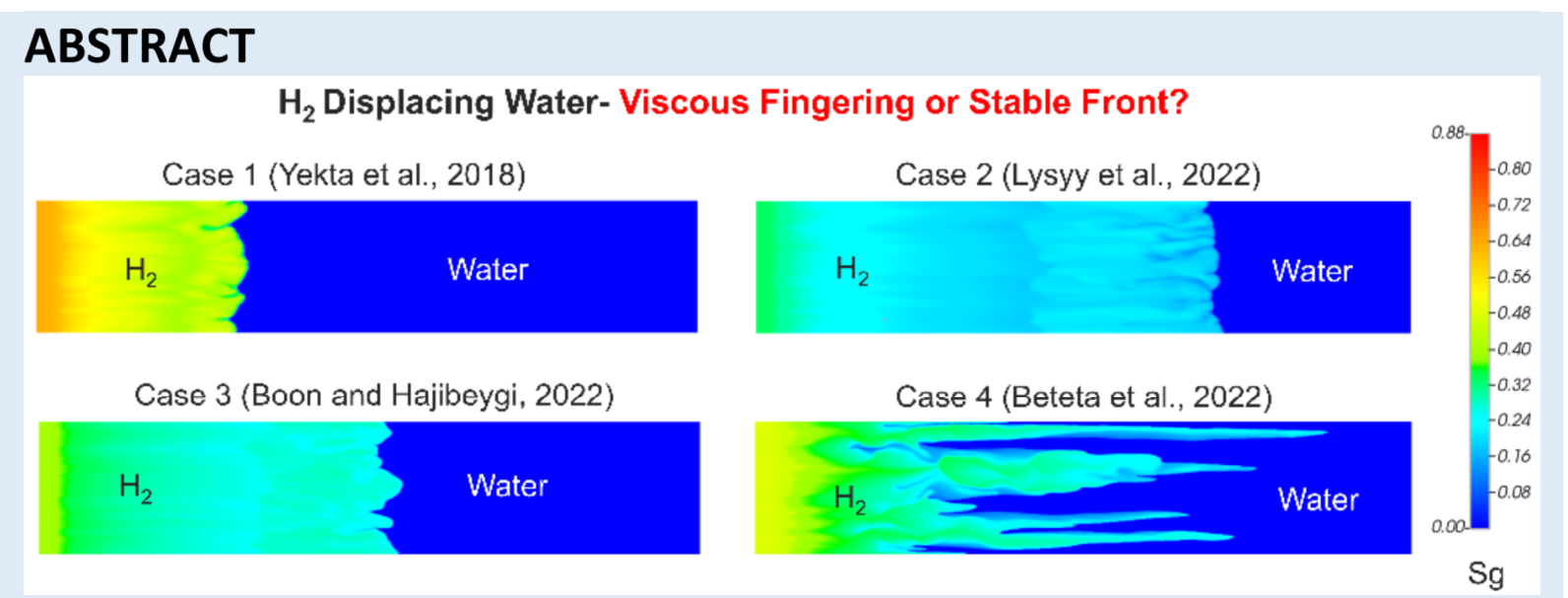
在设计和优化含水层或其他储层系统中的地下氢气(H₂)储存设施时,H₂/水相对渗透率(RP)是输入数值模拟的最关键的两相数据。本文对文献中发表的实验性H₂/水RP函数进行了批判性分析,并使用三个最广泛引用的稳态RP数据集(13, 20, 38),在约100米的矿场长度尺度上,对H₂驱替水(记作H₂→水)进行了细网格模拟。由于水和H₂之间的粘度比(µw/µH₂)约为70,因此在米级以上的某个长度尺度上,系统不可避免地会表现出H₂进入水相的不可混溶粘性指进。事实上,粘性指进在某个长度尺度上的出现是模拟中使用输入数据是否正确的“合理性检验”,尤其是H₂/水相对渗透率函数。然而,这三个发表的H₂/水RP曲线都没有导致粘性指进。相反,它们都显示出稳定的驱替前沿。原因在于获得RP函数的(常规)气/液实验方法的不足。这些方法在毛管力、重力和粘性力之间的平衡力方面得出RP函数。为了使指进出现,需要推导出粘性占主导的RP函数。本文提出并应用了一种替代的、更符合物理规律的粘性占主导的“指进RP函数”。当在岩心尺度上应用这些新的RP函数时,它们显示出完全分散的流动,就像在垂直(向下)重力稳定驱替中一样。然而,随着系统长度尺度的增加和粘性力变得占主导地位,粘性指进自然出现。
CMG软件应用情况
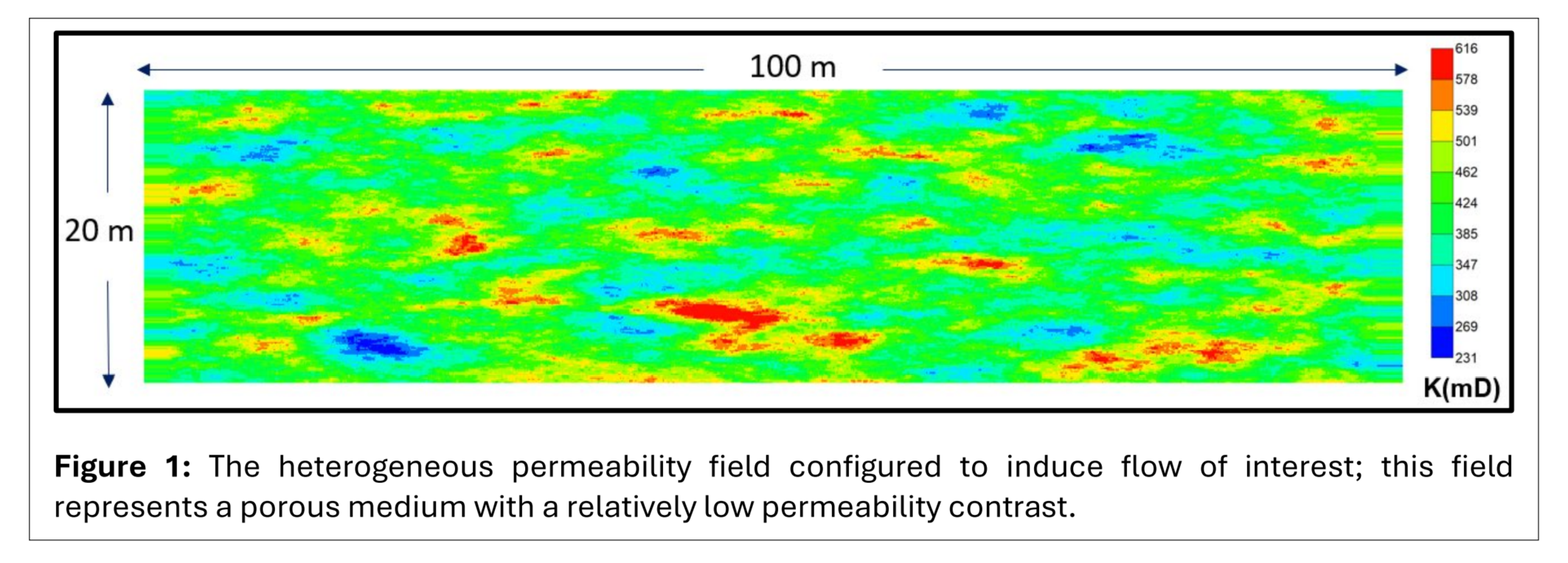
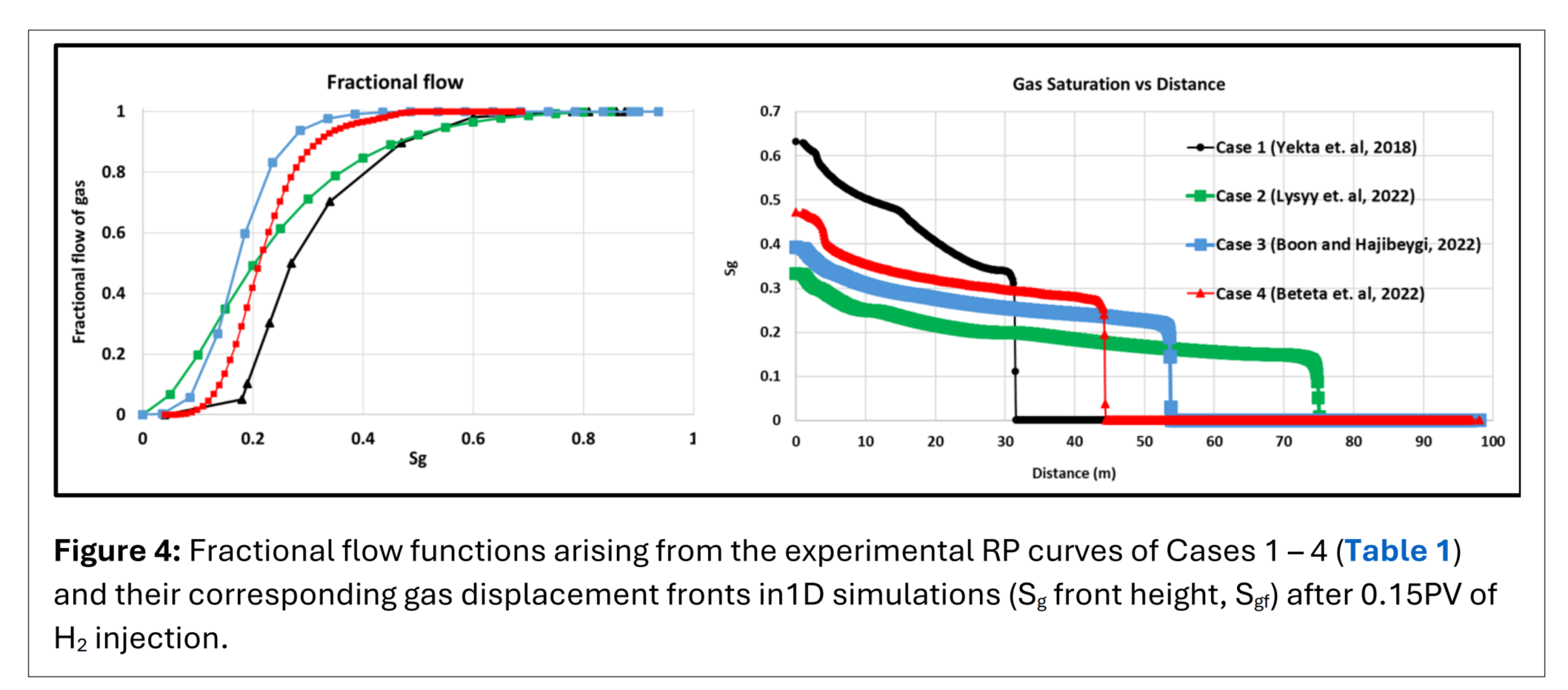
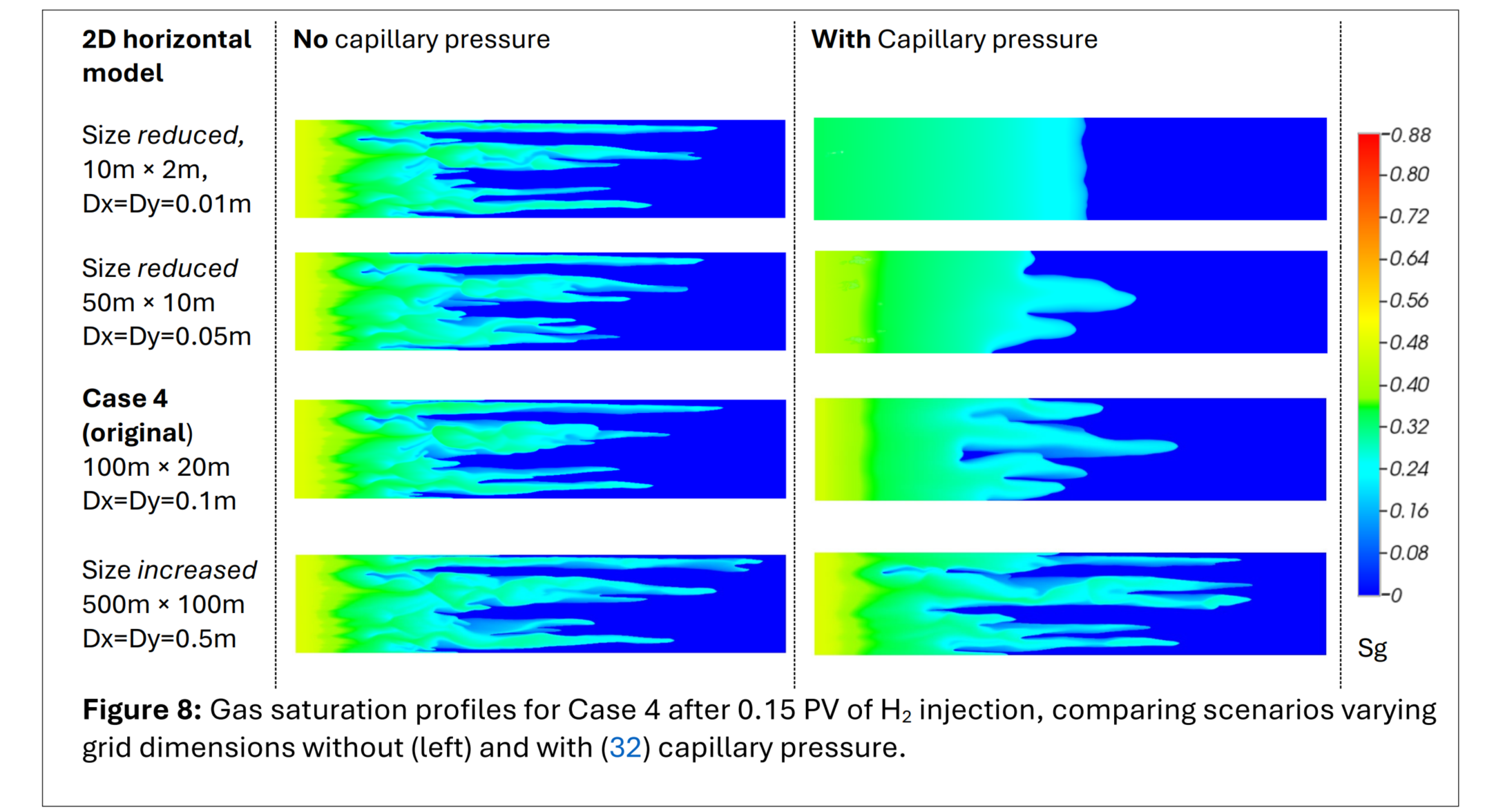
本文使用了CMG(Computer Modeling Group Ltd.)的GEM模块进行数值模拟。CMG-GEM是一个基于状态方程(EOS)流体模型的全组分模拟器,使用Peng和Robinson(23)的方程。所有流动模拟都是使用CMG/GEM进行的,该模拟器基于Peng-Robinson状态方程流体模型。输入值取自作者之前的工作,这些工作已经验证了关键流体属性(35)。这将允许未来的研究基于这项工作开展涉及多组分系统的研究。模拟中使用了一个水平注入井和一个水平生产井,分别位于模型的两端(在x = 0和x = 100米处)。注入井在整个左侧射孔,而生产井沿整个右侧射孔。注入速度为每天0.05孔隙体积(PV/day),并在注入3天后(0.15PV)显示饱和度模式。生产井以等于初始储层压力130巴的井底压力(BHP)约束运行,以模拟恒定压力边界。在本文提出的模拟中,没有气体突破到生产井。
结论
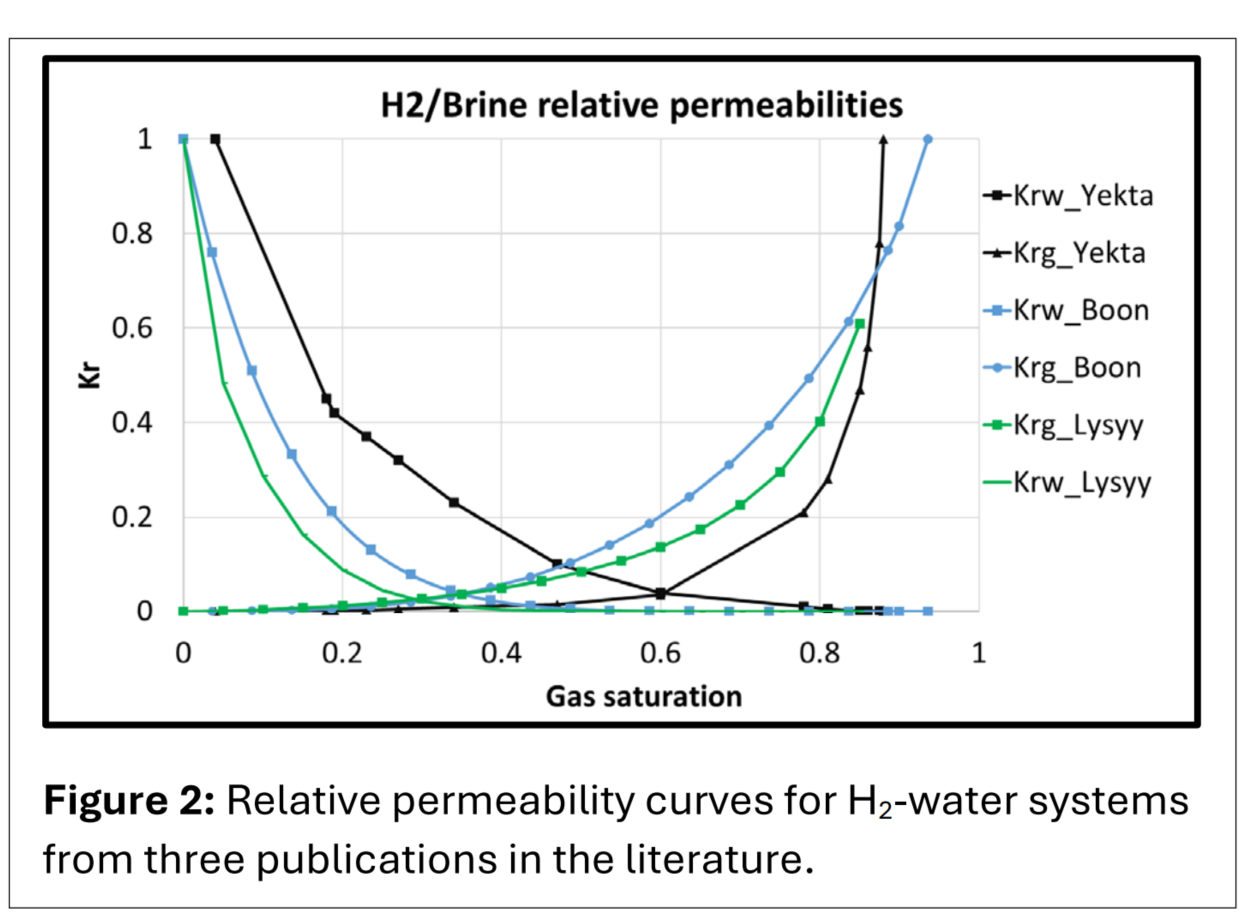
- 文献中发表的三组H₂/水相对渗透率数据集均未能正确反映多孔介质中H₂→水的不稳定流动特征。这些发表的RP曲线未能显示出预期的粘性不稳定性,主要原因是它们导致的总流动度(𝜆𝑇𝑇(𝑆𝑆𝑔𝑔))过低,从而抑制了指进。这些曲线产生的原因是实验并非在粘性占主导的条件下进行。在非常小的岩心中,局部毛管力分散占主导地位,岩心的方向对驱替前沿施加了强大的重力作用,再次稳定了指进。这两种效应导致RP曲线产生过低的总流动度函数,从而预测出过度稳定的驱替。
- 与常规方法不同,UHS(及其他气/液系统)的岩心驱替测试应使用更大的岩心,并且驱替应水平进行,并被视为多维流动过程。在拟合这些结果的数值建模时,应在数值模型中假设粘性指进(可以观察到)。所使用的方法是选择与两相传输正确拟合的正确分数流,然后推导出“最大流动度RP函数”。通过应用Case 4的RP曲线(9)来模拟H₂→水的驱替,展示了这种方法的一个例子。
- 如果使用上述Case 4中的指进RP函数,则当系统中引入毛管力或重力时,它将被正确限制。也就是说,在小尺度上,毛管力将稳定系统并停止指进,或者当以典型速度垂直(向下)驱替时,重力将抑制指进。然而,随着系统尺寸的增加,气体粘性指进将正确地在系统中出现。换句话说,毛管力的影响强烈依赖于尺度,随着模型尺寸的增加而减少。为了准确评估涉及的力的相互作用——包括粘性、毛管力和重力——推荐应用尺度理论(10, 35)。这种方法允许更精确地评估它们在不同尺度上的相对影响,从而更好地预测和控制各种储层条件下的驱替过程。
作者单位
- 英国赫瑞瓦特大学
Abstract
In the design and optimization of an underground hydrogen (H2) storage facility in an aquifer or other reservoir system, the H2/water relative permeabilities (RP) are the most critical two-phase data for input to numerical simulation. In this paper, we present a critical analysis of the published experimental H2/water RP functions in the literature. We present fine-grid simulations of H2 displacing water (denoted H2 ◊ water) using three of the most widely cited steady-state RP datasets (13, 20, 38) in a mildly heterogeneous permeability field, at a field length scale of ~100m. Since the viscosity ratio between water and H2 is (µw/µH2) ≈ 70, then at some length scale above a few meters, it is inevitable that the system must show immiscible viscous fingering of the H2 into the water phase. Indeed, the emergence of viscous fingering at some length scale is a “sense check” that the input data used in the simulations are correct, especially the H2/water relative permeability functions.
In fact, none of the three published H2/water RP curves leads to viscous fingering. Instead, they all show stabilized flood fronts. The reasons for this are due to shortcomings of the (conventional) gas/liquid experimental methods used to obtain the RP functions. These methods yield RP functions at the wrong force balance between the capillary, gravity and viscous forces. For fingering to emerge, it is necessary to derive the viscous dominated RP functions. An alternative, more physically appropriate set of viscous dominated “fingering RP functions” is proposed and applied. When applied at the core scale, these new RP functions show fully dispersed flow, as they do when applied in a vertical (downwards) gravity stable displacement. However, the viscous fingering emerges naturally in horizontal flow as the length scale of the system increases and viscous forces become dominant. KEYWORDS Hydrogen storage, Computational flow dynamics, Viscous fingering, H2/water relative permeability.
