
优化井距对于提高致密油开发的生产效率和经济效益至关重要。由于对压裂几何形状和特性的有限理解,在设计致密油储层的井距时面临重大挑战。本研究提出了一体化工作流程,用于优化致密油储层的井距。通过建立地质和地质力学模型,为数值储层模拟和动态压裂扩展模拟奠定了基础。利用与实际现场注泵计划相匹配的水力压裂模拟器,进行了水平井的多级多簇压裂扩展模拟。分析了压裂扩展模拟结果与现场监测结果(包括微地震测试和分布式温度传感(DTS)监测)之间的差异。
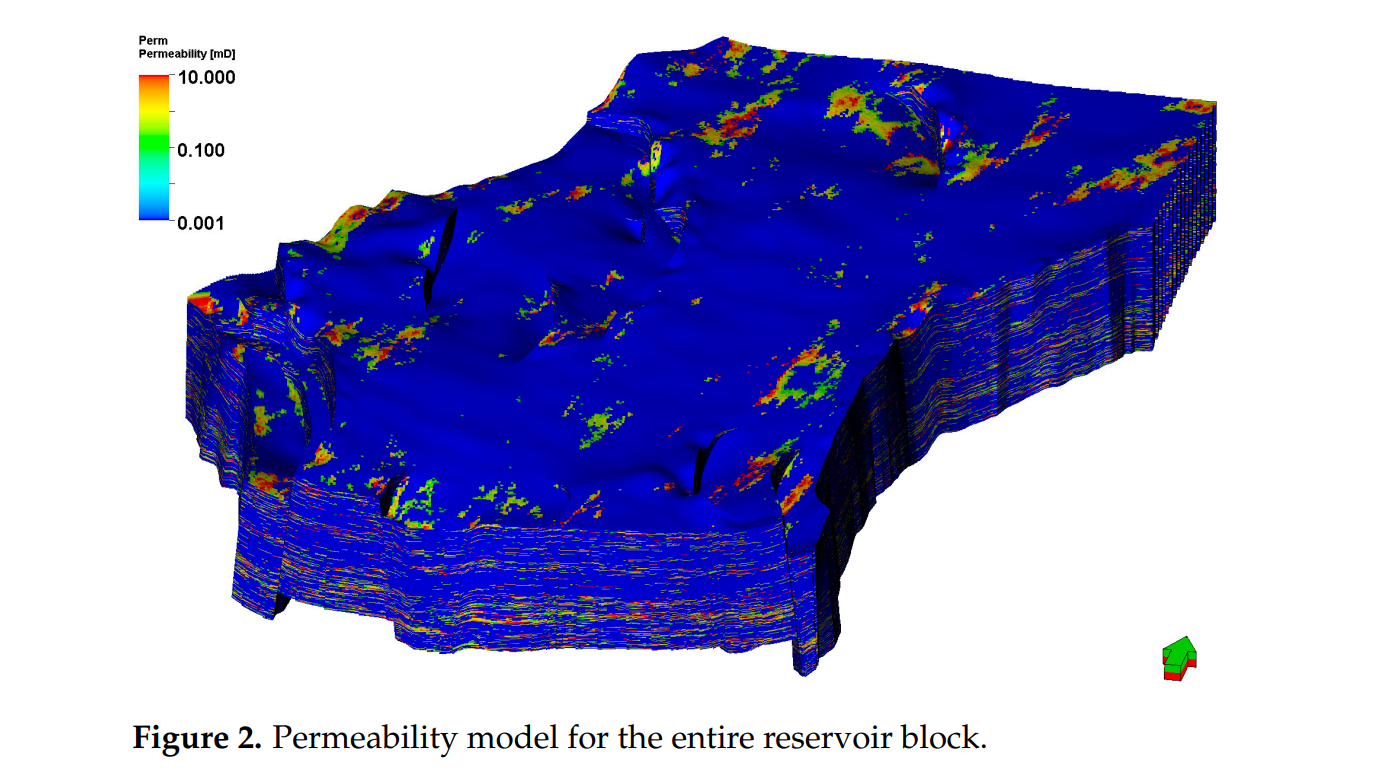
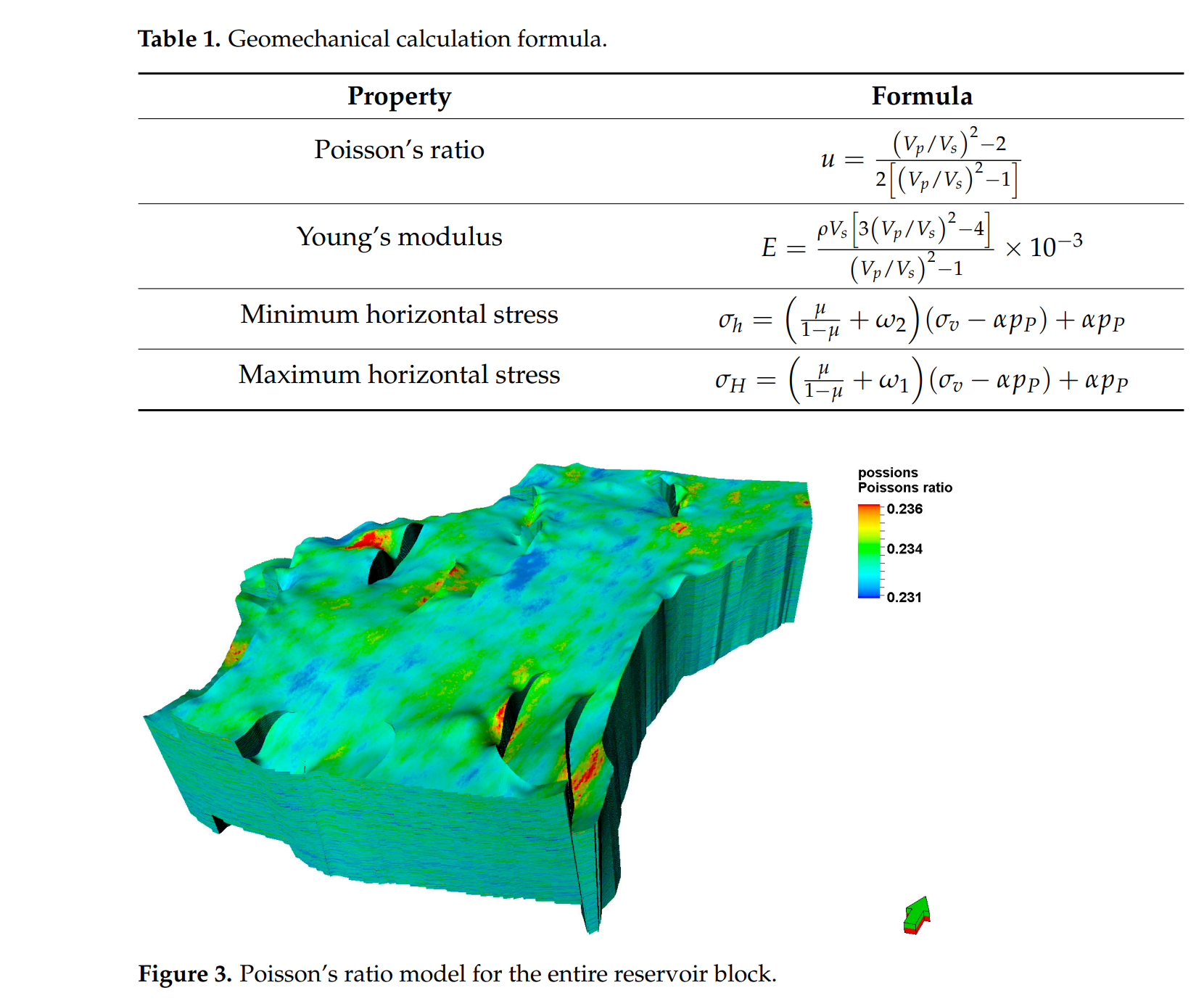
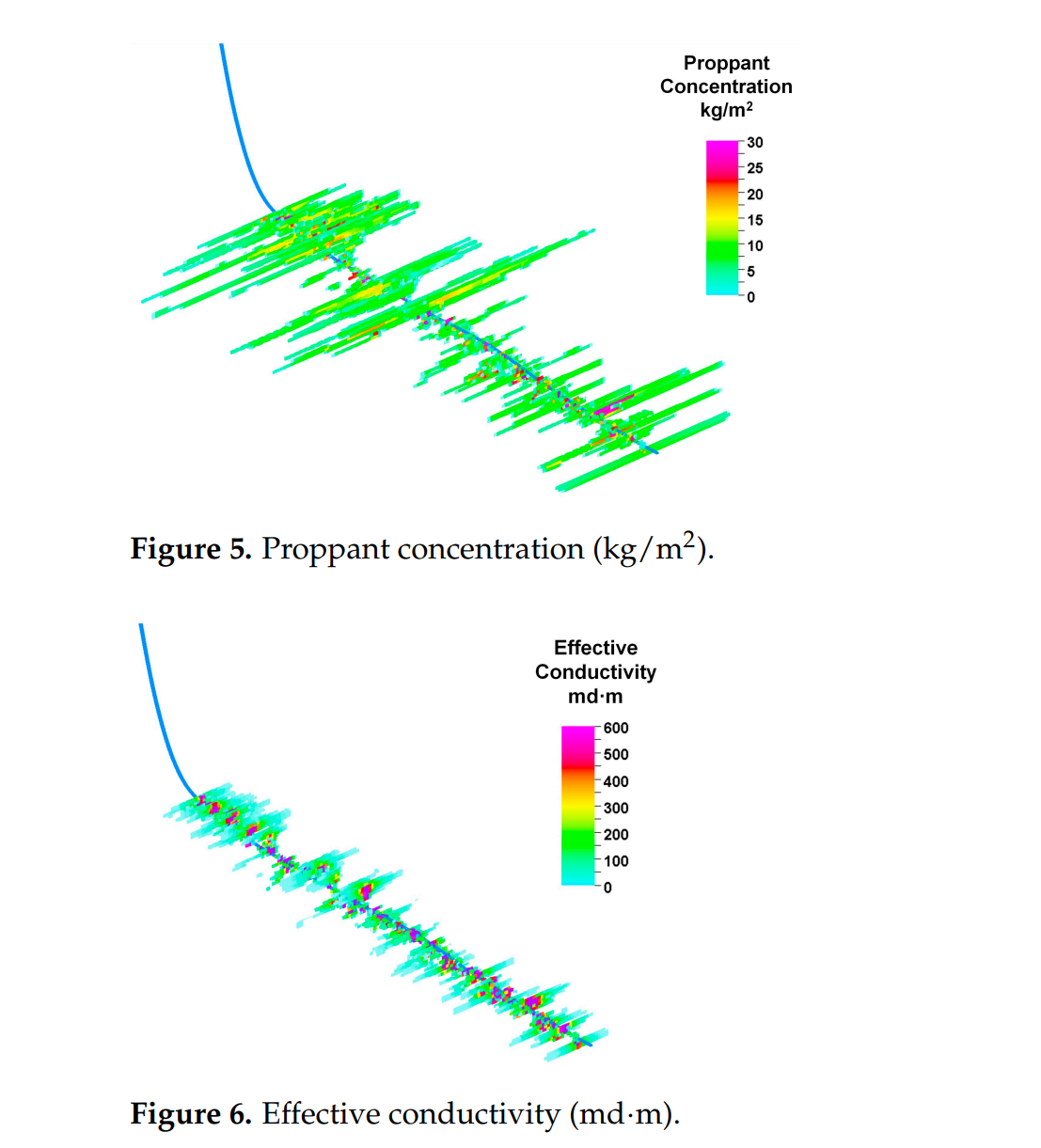
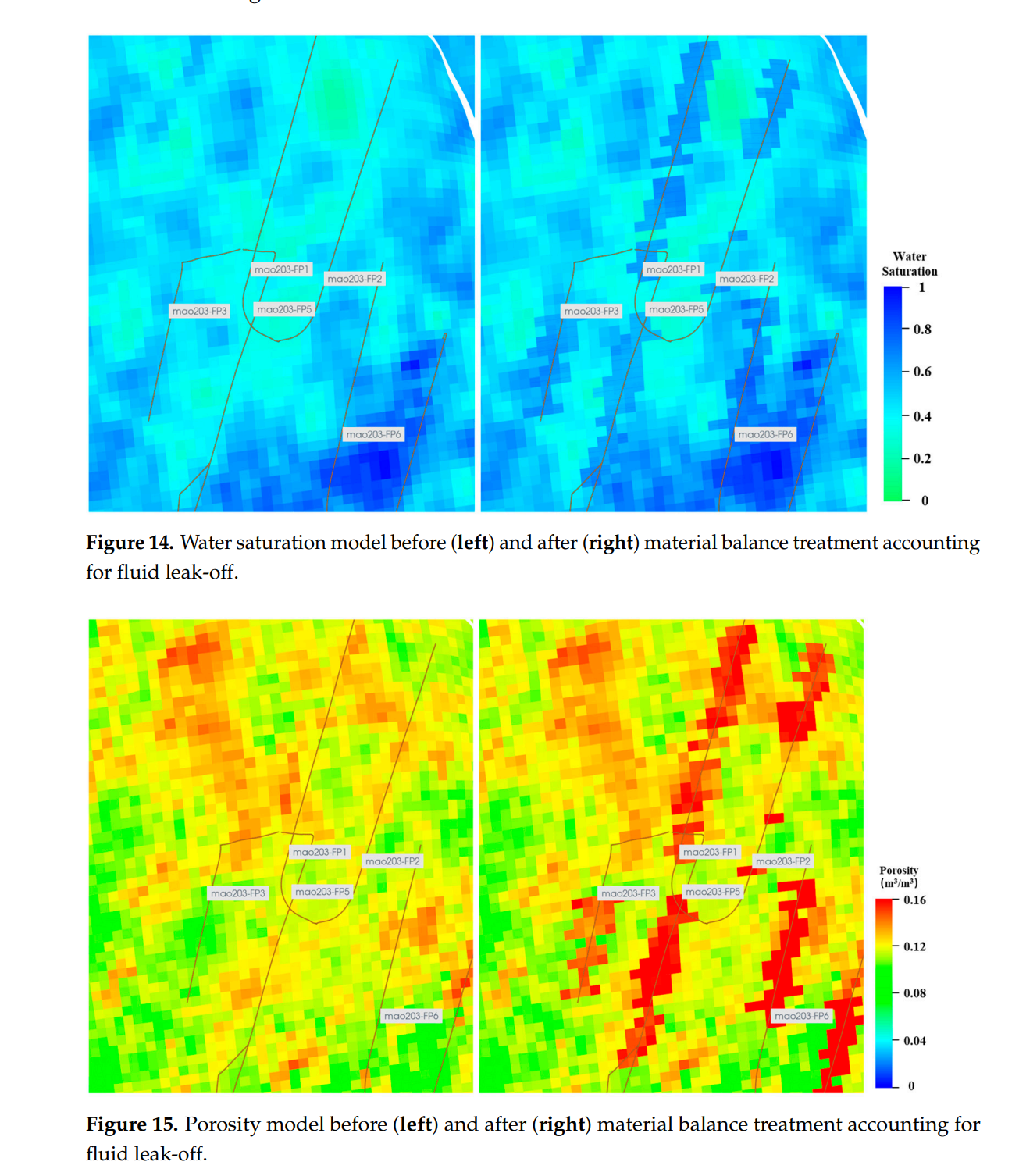
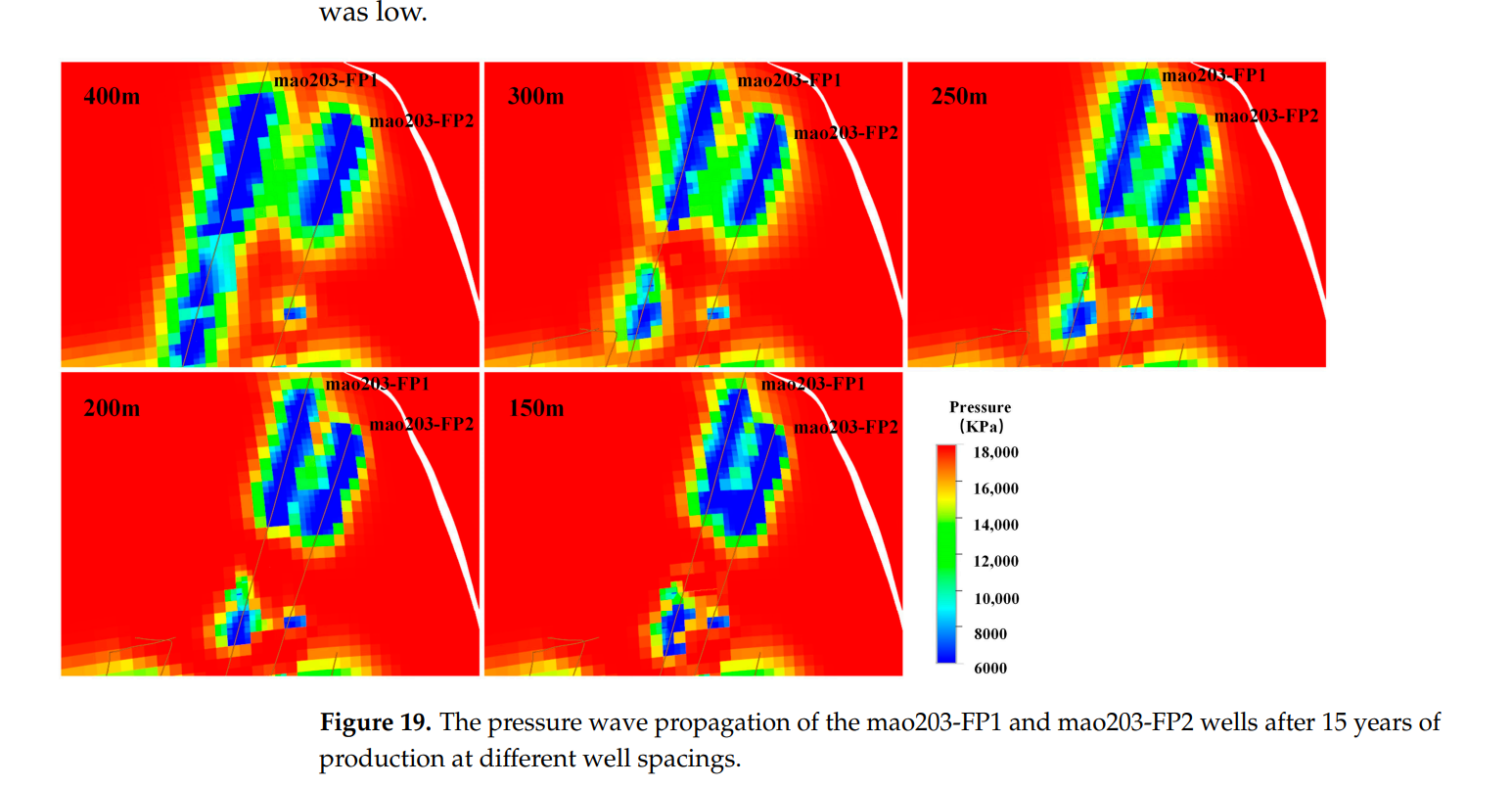
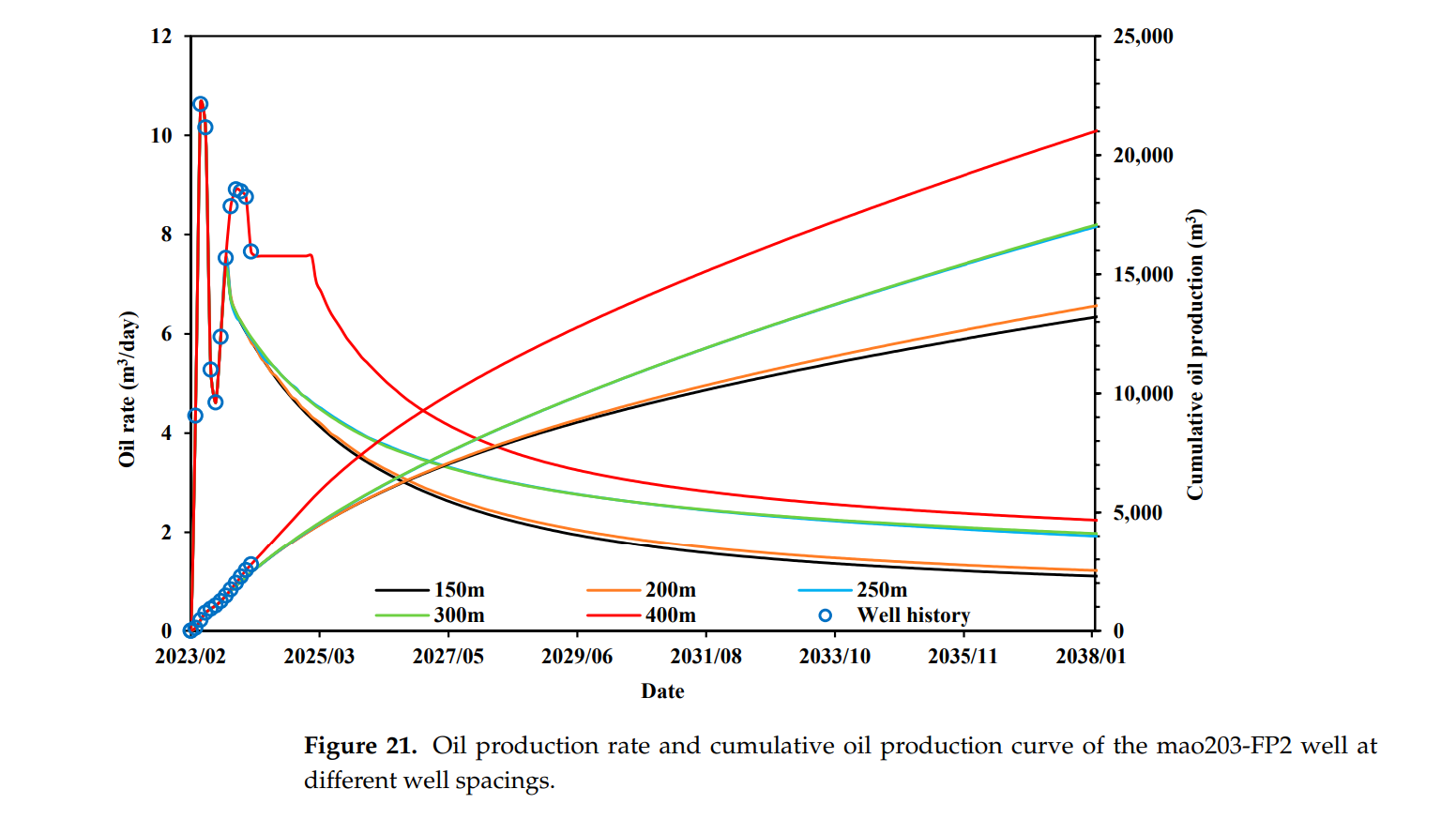
将地质模型和压裂扩展模拟结果整合到高效的数值储层模拟器中。提出了一种用于压裂液漏失的物质平衡方法,并用于等效计算压裂后的实际油水分布,并完成所有井的历史拟合含水率。随后,评估了井间泄油面积和压力干扰。通过采用这一一体化工作流程,模拟了六口井(三对井)在不同井距下的15年生产效果,并预测了其估计的最终采收量(EUR)。当井距小于最佳距离时,石油产量显著下降。最终确定该区块的合理井距为250米。在未来井网设计中,应使用小于当前值的井距。
CMG软件应用情况
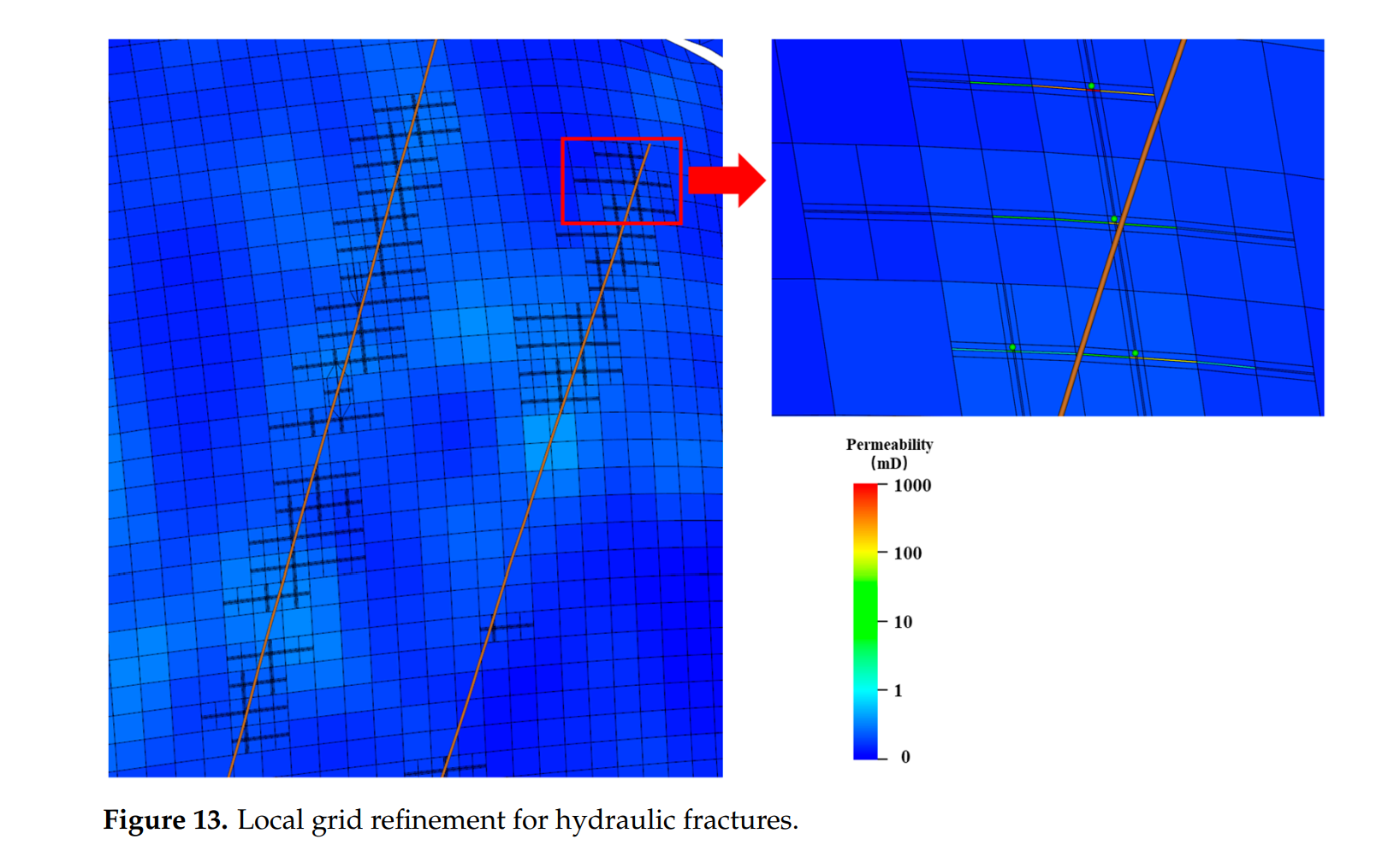
在本研究中,使用了CMG(Computer Modelling Group)的IMEX模块(版本2022.10,加拿大卡尔加里)进行数值储层模拟。IMEX是一个黑油模拟器,用于模拟油藏的流体流动和生产动态。通过将地质模型与数值模拟器无缝集成,完成了基于流体PVT参数和相对渗透率参数的初始设置。研究中还采用了局部网格细化(LGR)技术来表示裂缝,并将裂缝参数存储在关键字数组中,以便在历史拟合过程中直接进行修改。通过标准化的关键字,将压裂扩展模拟结果与数值储层模拟器无缝集成。此外,基于物质平衡原理,提出了一种考虑压裂液漏失的方法,用于修改储层的孔隙度和油水饱和度,以真实反映压裂后储层中油水的分布情况。
结论
本研究建立了一体化工作流程,用于优化致密油井距,并得出以下结论:
- 通过泵注计划匹配、现场监测分析和生产历史拟合,确保了模拟结果的可靠性。考虑压裂液漏失的物质平衡,模拟了不同井距下六口井的生产性能。
- 总体而言,随着井距的减小,井的EUR(估计最终采收量)降低。当井距小于250米时,井间存在显著的压力干扰,导致产量迅速下降。合理的井距为250米。
- 当前井距过大,需要进一步考虑井网加密。根据优化后的合理井距,后续的加密钻井存在较大风险。建议在后续开发中认真考虑“一次性井网”。
- 一体化工作流程可以大大提高致密油井距优化的效率,优化结果高度可靠。通过这一一体化工作流程,可以开展多种优化设计,如井网优化、压裂优化和生产优化。
作者单位
中国石油大学(北京)石油资源与勘探国家重点实验室

Abstract
Optimizing well spacing is crucial for enhancing the production efficiency and economic returns of tight oil development. The limited understanding of hydraulic fracture geometry and properties poses significant challenges in designing well spacing for tight oil reservoirs. In this study, we proposed an integrated workflow for optimizing well spacing in tight oil reservoirs. Geological and geomechanical models were established to form the basis for numerical reservoir simulation and dynamic fracture modeling. A multi-staged, multi-clustered fracture propagation simulation of horizontal wells was conducted by a hydraulic fracturing simulator with matched actual field pumping schedules. The differences between fracture propagation simulation results and field monitoring results, including micro-seismic testing and distributed temperature sensing (DTS) monitoring, were analyzed. The geological model and fracture propagation simulation results were integrated into an efficient numerical reservoir simulator. A material balance method for fracturing fluids leak-off was proposed and utilized to equivalently calculate the actual oil–water distribution after fracturing and to complete the historical matching water cuts of all wells. Subsequently, the inter-well drainage area and pressure interference were evaluated. By employing this integrated workflow, the production performance of six wells (three well pairs) at different well spacings was simulated over a 15-year period, and their estimated ultimate recoveries (EURs) were predicted. When well spacing was less than the optimal distance, oil production dropped significantly. Ultimately, it was determined that reasonable well spacing for this block was 250 m. In future well pattern designs, well spacing smaller than the current value should be used.
