
CO2 Injectivity Under Varying Thermal Conditions in Deep Saline Geologic CO2 Storage Reservoir Systems
本研究探讨了在深部咸水层地质构造中进行大规模CO2注入时,注入量受热力学条件影响的规律。通过现场观测、实验室实验和数值模拟,研究了注入CO2的温度变化对注入量的影响。研究发现,注入CO2的温度变化对注入量有显著影响,尤其是在季节性温度变化的情况下。研究结果表明,注入较冷的CO2可以提高注入量,而注入较热的CO2则会降低注入量。这一现象不能仅用CO2的流体性质变化来解释,而是与地质构造的热力学响应密切相关。
CMG软件应用情况
在本研究中,CMG(Computer Modelling Group)软件被用于模拟CO2在地质构造中的注入和储存过程。CMG软件能够处理复杂的热力学和流体力学问题,提供了多种模拟工具来分析CO2注入量的变化。通过CMG软件,研究人员能够模拟不同温度条件下的CO2注入情况,评估热力学效应对接近井筒区域岩石有效渗透率的影响,以及优化注入方案以提高CO2储存效率。
结论
- 注入CO2的温度变化对注入量有显著影响,注入较冷的CO2可以提高注入量,而注入较热的CO2则会降低注入量。
- 热力学效应,特别是热弹性效应,是影响注入量的重要因素。这些效应可以改变岩石的有效渗透率,从而影响CO2的注入量。
- 热力学效应与多相流体流动效应共同作用,影响注入量。在某些情况下,热力学效应可能比流体性质变化对注入量的影响更为显著。
- 研究结果对于优化CO2注入方案、提高储存效率以及评估地质构造的储存容量具有重要意义。
作者单位
卡尔加里大学地质与地球物理系


ABSTRACT
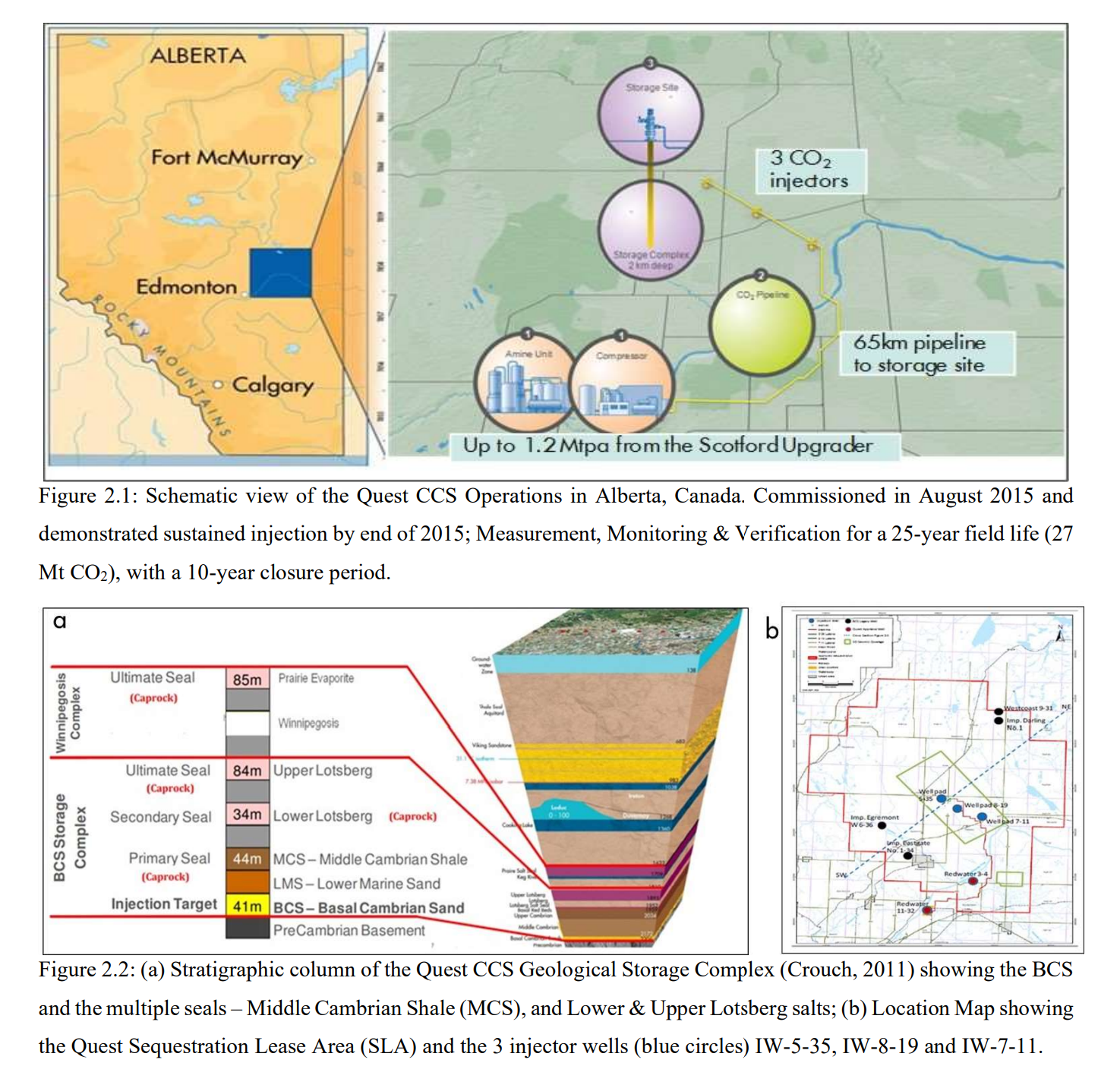
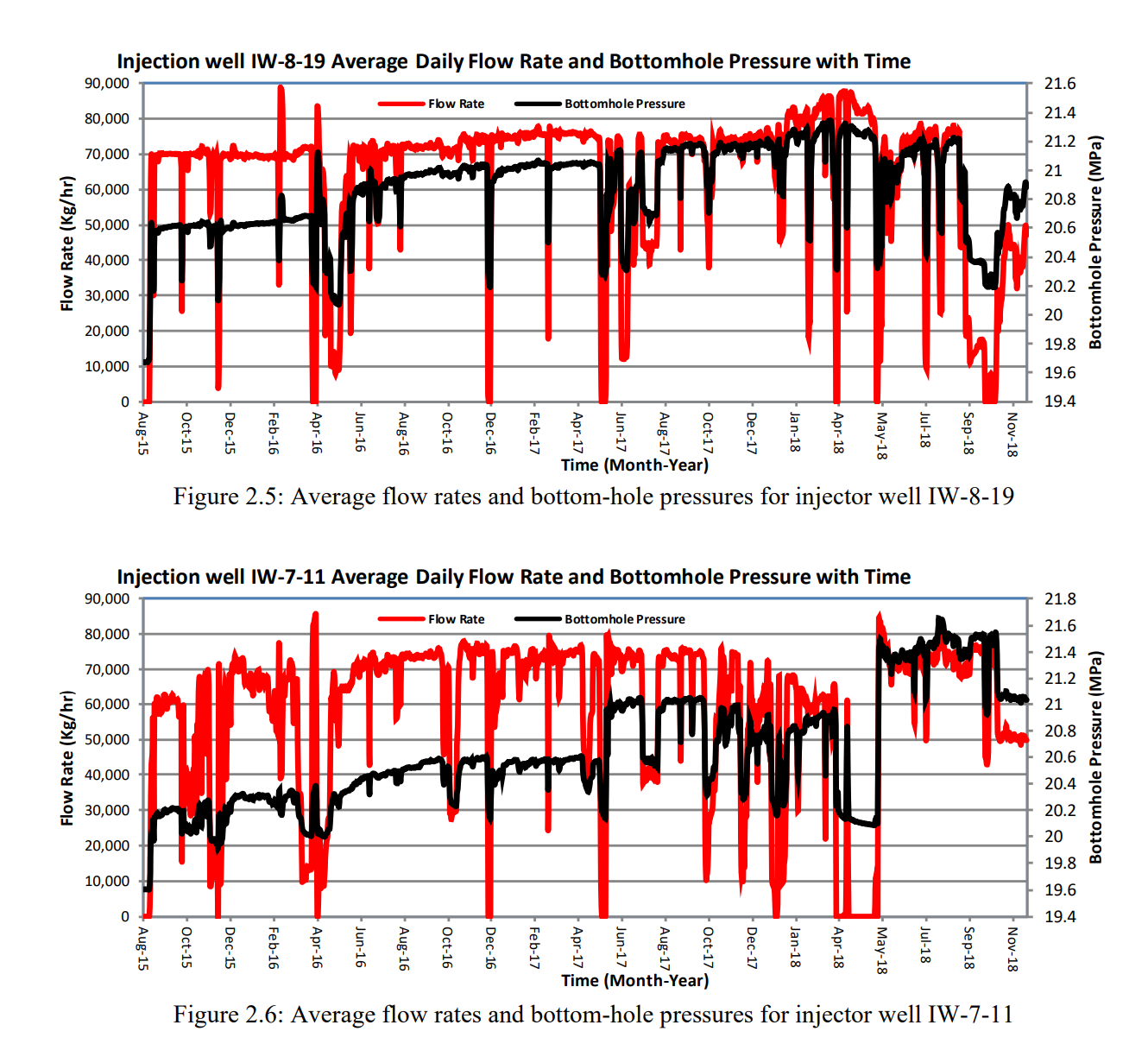
CO2 injectivity is critical to achieving the rapidly-scaled and significant rates of CO2 injection into subsurface geologic reservoirs for Carbon Capture & Storage (CCS) as an important greenhouse gas (GHG) emissions reduction technology. In this research, the influence of injected CO2 bottomhole temperature (BHT) variability on CO2 injectivity has been investigated at the fieldscale using field performance observations and data analysis of a large-scale (>1Mtpa injected CO2) commercial CCS operation, the Quest CCS site, and lab-scale experimental CO2 corefloods at varying equilibrium temperatures.
The results of this study indicate that CO2 injectivity exhibits an inverse relationship with CO2 BHT. A 10 oC decrease in CO2 BHT causes CO2 injectivity to increase by 10% for a constant continuous mass rate of CO2 injection into a deep saline aquifer, where the temperature difference (ΔT) between the CO2 BHT and the reservoir fluctuates between 27 oC (summer) and 40 oC (winter). Neither CO2 kinematic viscosity changes alone with temperature or CO2 physico-chemical reactions with in-situ reservoir fluids under non-isothermal conditions can explain the inverse relationship between seasonally cyclical CO2 BHT and injectivity. Non-isothermal cyclic CO2/brine drainage-imbibition can change CO2/brine two-phase flow characteristics. CO2 drainage endpoint phase mobility increases as temperature increases, but the mobility increases cannot explain the inverse relationship between CO2 BHT and injectivity. CO2 endpoint relative permeability contributes marginally to the CO2 phase mobility changes with temperature.
Thermo-geomechanical mechanisms linked to continuous injection of “colder” CO2 at BHTs lower than the average deep saline aquifer reservoir temperatures, can induce thermal stimulation of existing natural fractures around the vicinity of the CO2 injector well through thermoelastic effects. Thermoelasticity enhances CO2 injectivity as the CO2 BHT decreases, even when bottomhole injection pressures (BHIPs) are considerably (tens of MPa) below the fracture pressure of the reservoir rocks. CO2 phase mobility changes with BHT and thermally induced stimulation mechanisms act contemporaneously and in opposite directions to influence injectivity. Thermal stimulation effects on CO2 injectivity can be more dominant than CO2 phase mobility effects, implying a need to distinguish thermoelasticity from poroelastic effects in CO2 injection regulatory requirements for improved injection efficiency in geologic CO2 storage while maintaining permanent storage security.
