
A Study on the Displacement Mechanism of Nitrogen Injection to Enhance Recovery in Water-Drive Gas Reservoirs: A Collaborative Analysis of Experiment and Simulation
针对水驱气藏开发中后期水侵导致气井快速减产、大量气体被水锁滞留的问题,本文通过高压岩心驱替实验与数值模拟相结合的方法,系统研究了水驱后注氮气提高采收率(EGR)的驱替机理。
实验在30MPa高压条件下进行,结果表明:水驱后残余气饱和度高达28.1%,而后续注氮气可将残余气饱和度降至7.99%,最终采收率达88.9%。数值模拟进一步揭示,在裂缝-孔隙型储层中,水优先沿高渗裂缝窜流,而基质中气体因毛管自吸作用被滞留;注氮气可通过建立0.3–0.8MPa的压差克服毛管屏障,使滞留气饱和度降低30–50%,证实了注氮气作为水驱气藏提高采收率方法的技术可行性。
CMG软件应用情况
| 软件模块 | 具体应用 | 技术细节 |
| CMG IMEX | 水驱气藏注氮气过程数值模拟 | 采用两相黑油模型(Two-phase black oil model),模拟气-水两相流动 |
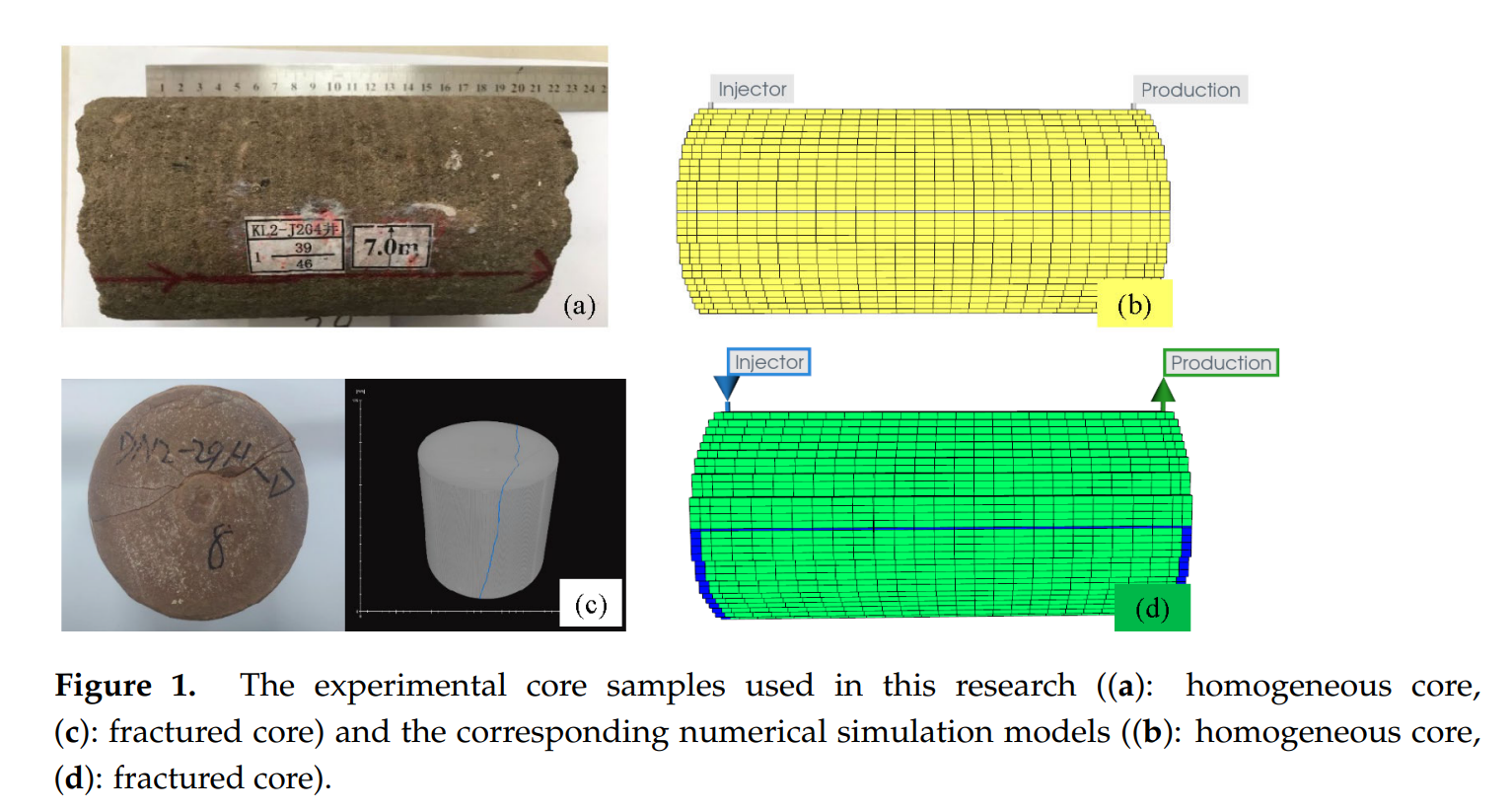
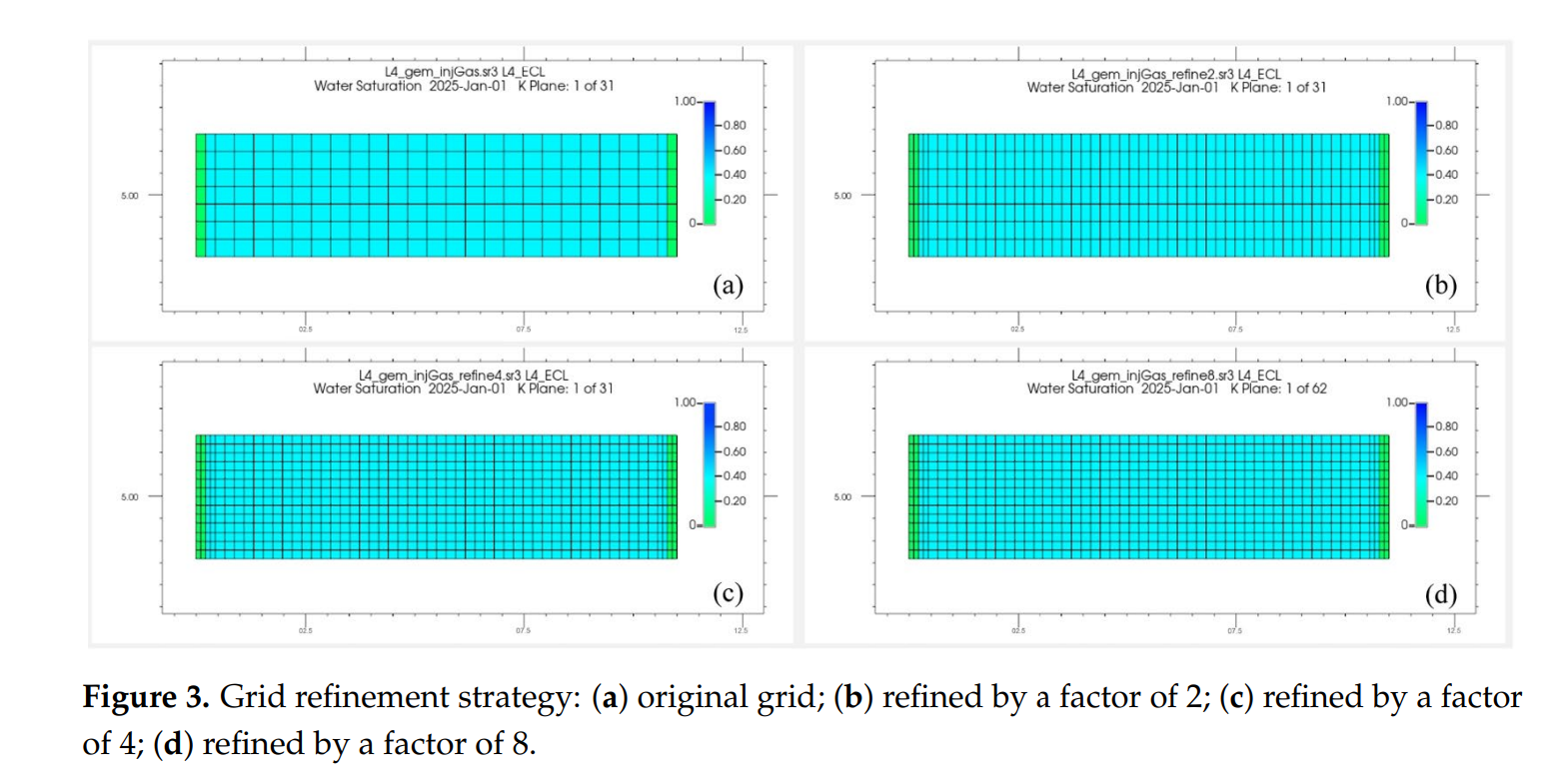
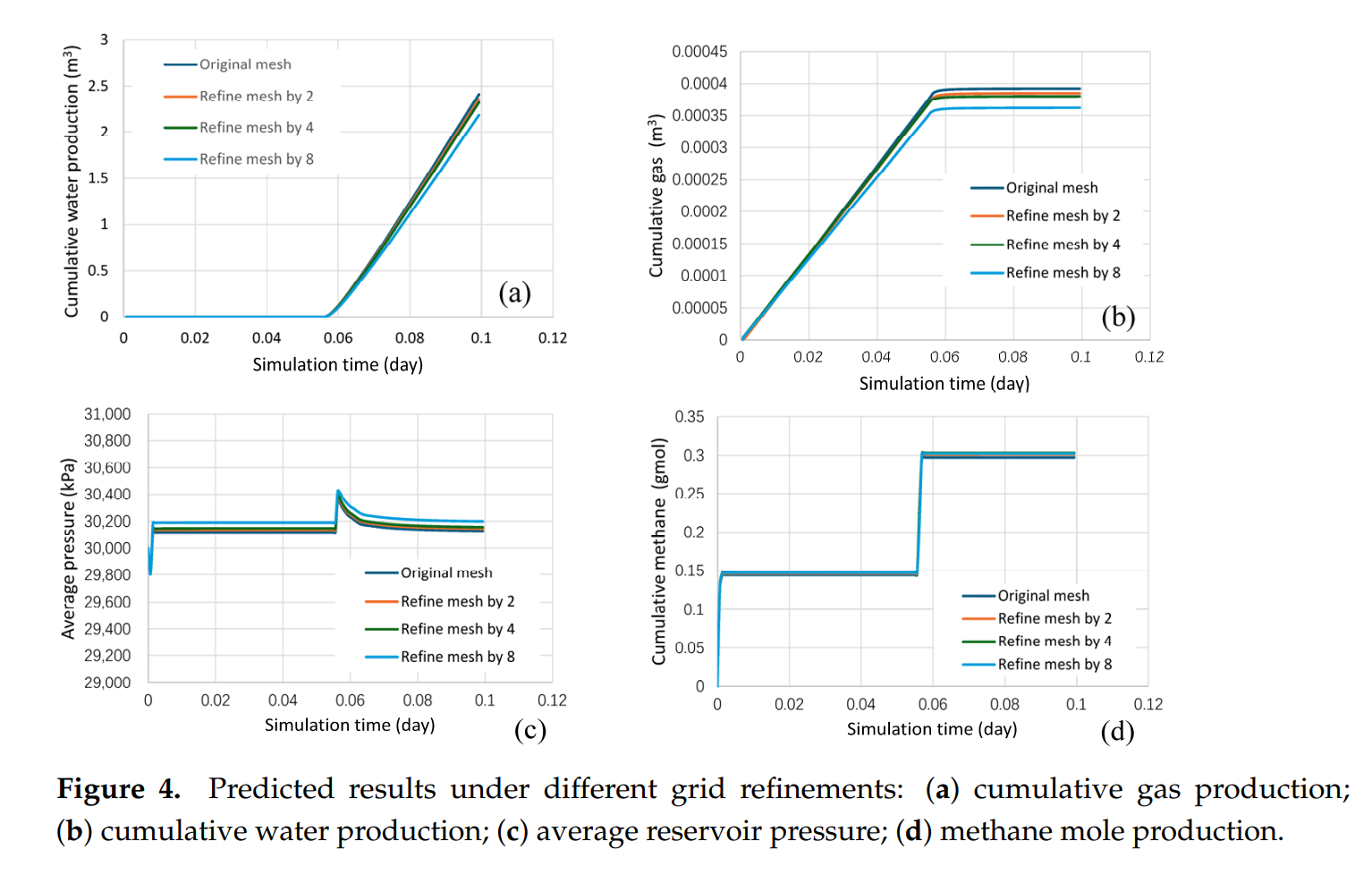
| 网格建模 | 岩心尺度精细网格划分 | 建立结构化网格模型(31×25×27,共20,000个网格单元),分别模拟均质岩心和裂缝-孔隙岩心;通过网格加密敏感性分析(2倍、4倍、8倍加密)验证结果可靠性 |
| 流体模型 | 状态方程与相态计算 | 调整EOS参数以匹配实验温度(80°C)和压力(30MPa)条件下的相态行为和体积特性 |
| 岩石-流体相互作用 | 渗流特征模拟 | 输入实验测得的相对渗透率曲线和毛管压力曲线,准确刻画气-水两相渗流及毛管自吸效应 |
| 裂缝建模 | 裂缝-基质流动模拟 | 将人工裂缝表示为高渗网格(渗透率对比度kf/km=100~6000),毛管压力设为零以模拟裂缝导流能力 |
模拟方案设计:
- 均质岩心模型:模拟水驱后注氮气全过程,验证实验数据
- 裂缝-孔隙模型:设置不同裂缝-基质渗透率对比度(100 vs 6000),分析水侵路径及氮气驱替机理
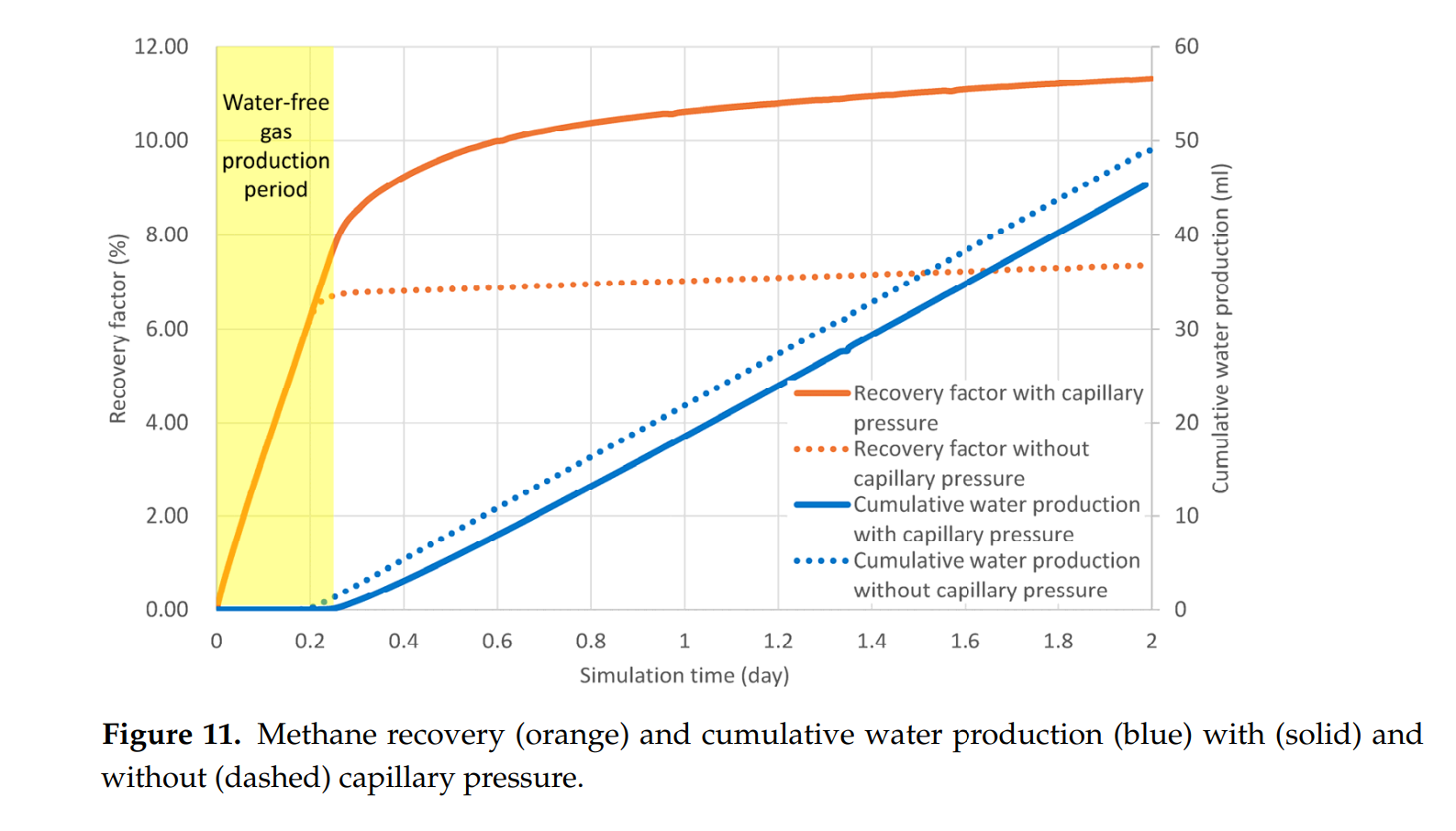
- 毛管压力敏感性:对比考虑/不考虑毛管压力两种情况,揭示毛管力在水锁形成与解除中的双重作用
主要结论
- 注氮气显著提高采收率:均质岩心水驱后注氮气最终采收率达91.3%,残余气饱和度降至6.3%;数值模拟结果(88.9%采收率)与实验数据吻合良好,验证了模型的可靠性。
- 裂缝-基质渗透率对比度是关键控制因素:
- 低对比度(kf/km=100):水驱前缘均匀推进,采收率25.2%
- 高对比度(kf/km=6000):水沿裂缝快速窜流,采收率仅11.3%,形成严重的水锁气
- 毛管压力的双重作用机制:
- 初期促进水自吸进入基质,提高波及效率;
- 后期形成毛管屏障(0.3–0.8MPa)阻碍气体流动;
- 注氮气可通过建立足够压差克服毛管力,使基质中被锁气体重新 mobilization(滞留气饱和度降低30–50%)。
- 工程应用建议:建立了可靠的岩心-数值模拟联合分析流程,可为现场注氮气方案设计(注入时机、注入量、注入速率等)提供理论依据;建议针对具体储层的裂缝发育程度和毛管压力特征定制注入参数。
作者单位
中石油塔里木油田分公司
Abstract
The efficient extraction of natural gas from water-drive reservoirs is often hindered by premature water breakthrough and the consequent trapping of significant residual gas, which collectively result in suboptimal recovery and economic returns. Traditional production methods have proven inadequate in mitigating water influx and mobilizing this trapped gas, underscoring the need for advanced enhanced gas recovery (EGR) strategies. This research specifically examines the potential of nitrogen injection as a tertiary recovery technique in such reservoirs, with a focus on its mechanistic role and displacement efficiency. Utilizing high-pressure core flooding experiments and complementary numerical simulations, the process of nitrogen injection following water flooding was systematically investigated. Experimental findings at 30 MPa indicate that while water flooding left a substantial residual gas saturation of 28.1%, subsequent nitrogen injection reduced this to 20.8% at breakthrough and ultimately to 7.99%, achieving a final recovery of 88.9%. Simulation results further elucidate that in fractured systems, water preferentially channels through high-permeability fractures, while capillary imbibition leads to gas entrapment within the matrix. Nitrogen injection effectively targets and reduces this trapped gas saturation by 30–50%, demonstrating its efficacy as a viable EGR method. The study thus provides critical theoretical and practical insights for improving recovery in challenging water-drive gas reservoirs.
