
Mechanistic analysis of flow functions in tertiary enriched gas injection following secondary lean gas injection
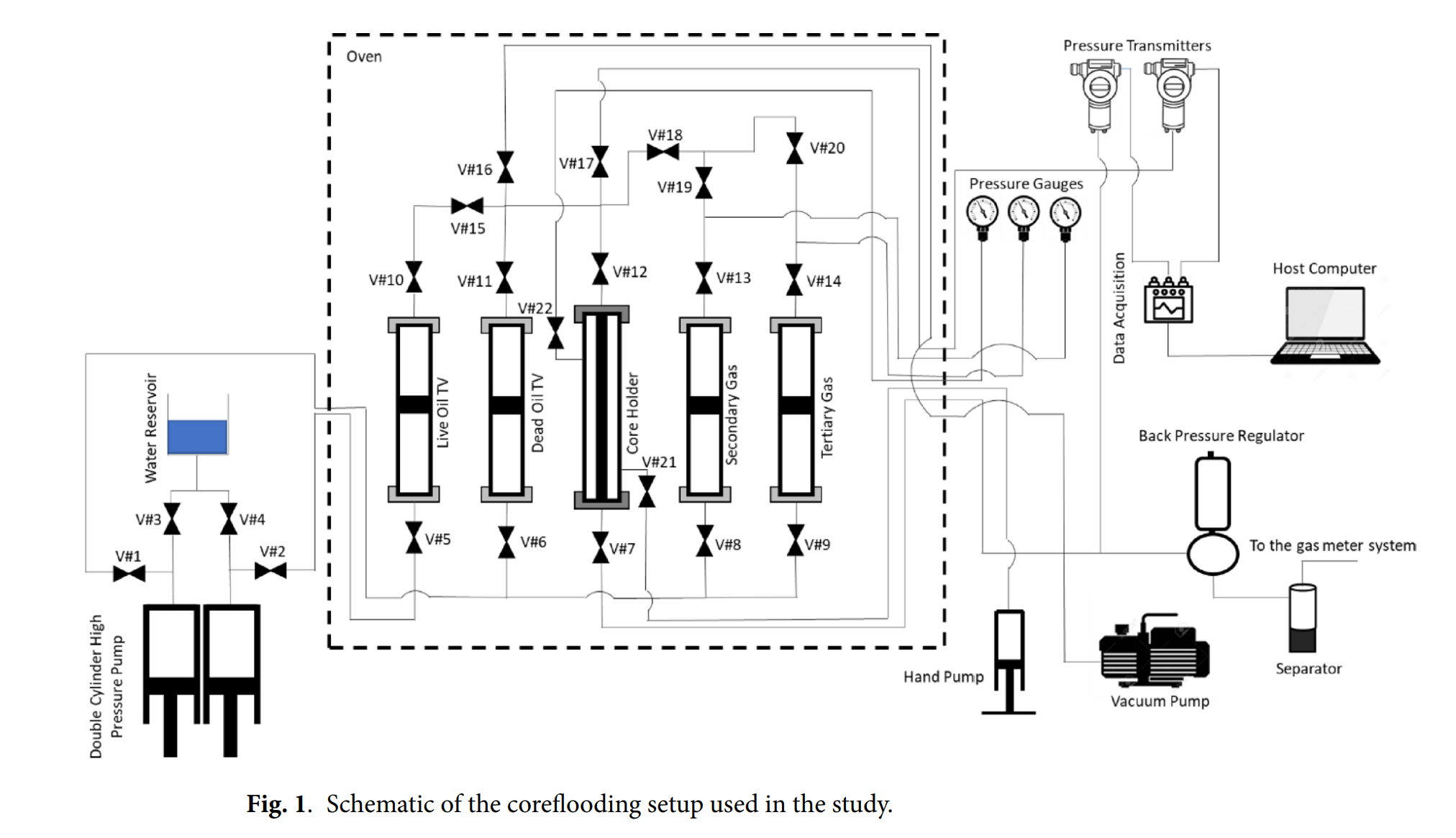
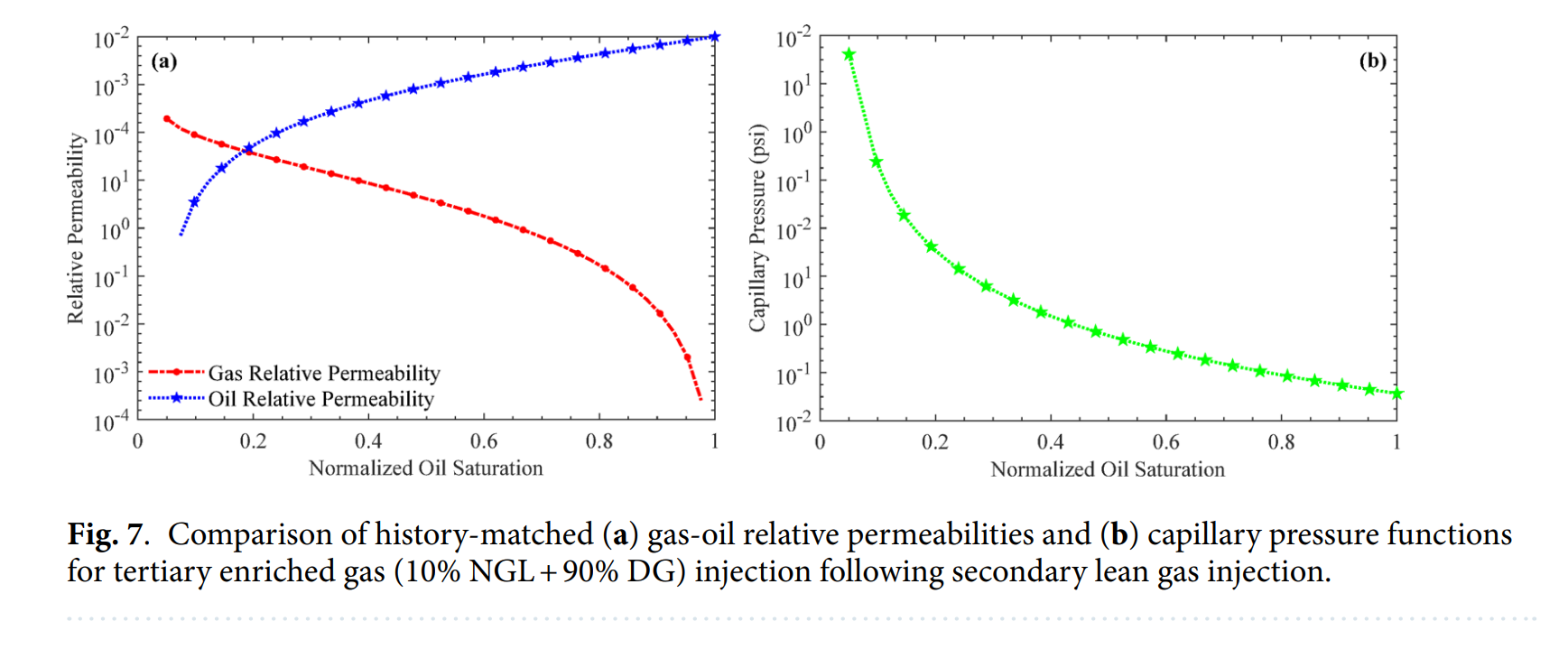
本文针对“二次贫气驱后接三次富气驱”这一尚缺乏系统研究的强化采油(EOR)策略,开展了系统的实验与数值模拟研究。通过在一组低渗透碳酸盐岩岩心中依次注入贫气与富气,结合CMG/GEM组分模拟器与DECE历史拟合算法,成功反演出适用于该过程的油气相对渗透率与毛管压力曲线,供了实验与模型基础。
CMG软件应用情况
本研究全程使用 CMG(Computer Modelling Group)软件平台,具体包括:
- CMG/GEM:用于构建一维组分模型,模拟贫气与富气驱替过程;
- Peng-Robinson EOS:描述油气相态;
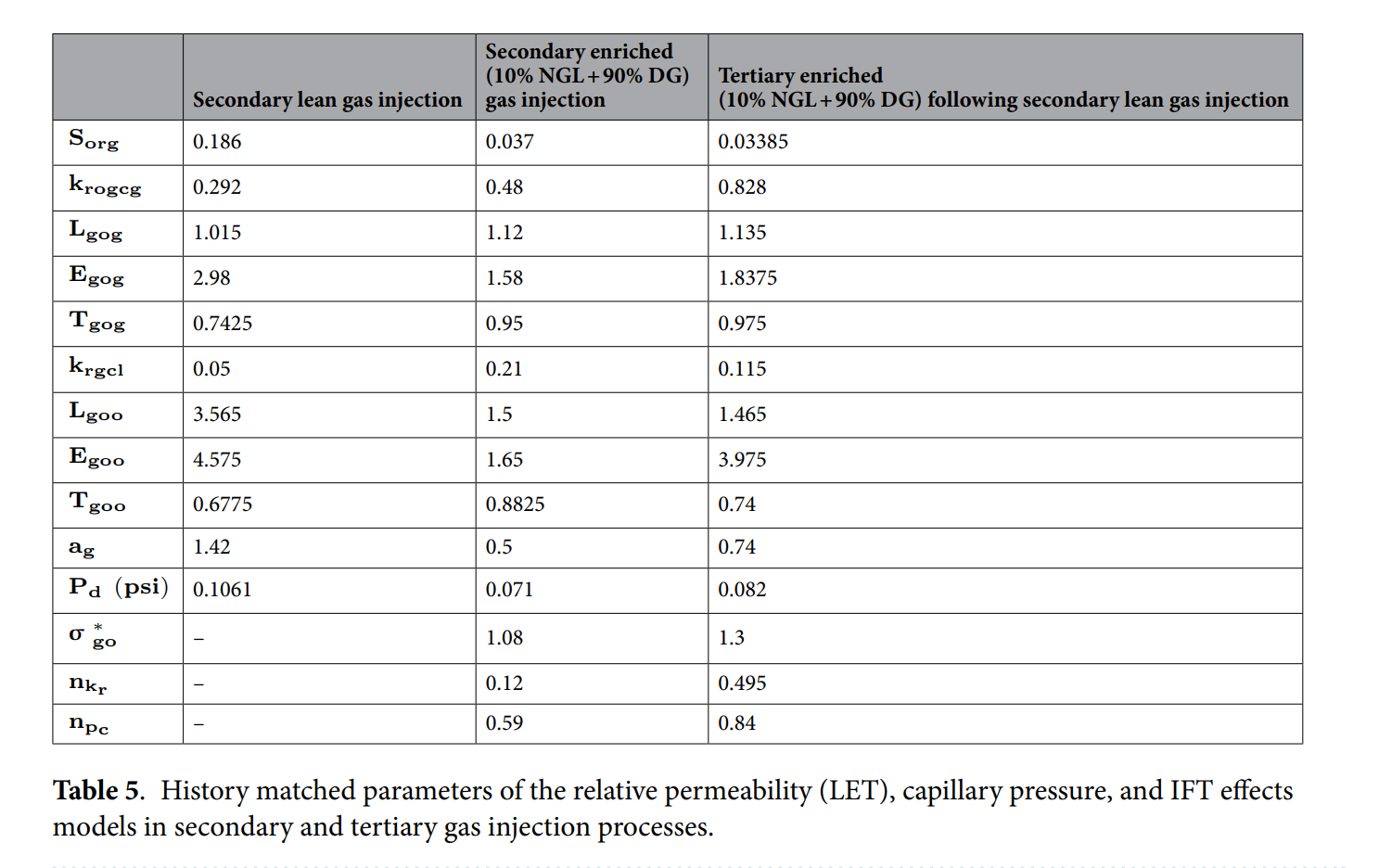
- LET模型:用于表征油气相对渗透率;
- Gang-Kelkar模型:用于表征毛管压力;
- Bette’模型:用于考虑IFT(界面张力)对相对渗透率与毛管压力的插值影响;
- CMOST模块 + DECE算法:用于自动历史拟合,反演相对渗透率与毛管压力参数;
- 拟合目标包括:产油量、累积产气量、压降曲线。
✅ 结论
- 三次富气驱在贫气驱基础上可进一步提升采收率约12%,具备显著EOR潜力;
- 富气注入通过增加中间组分(C3–C7)显著降低IFT,激活蒸发-冷凝驱油机制;
- 不同注入阶段(贫气 vs 富气)需采用不同的相对渗透率与毛管压力曲线,二次驱流函数不适用于三次驱;
- 本研究首次实验+数值联合获得了“贫气后富气”驱替顺序下的流函数,填补了该领域空白;
- 该方法适用于挥发性或中等原油储层,尤其在不具备升压至混相条件时更具操作性与经济性。
👨🔬 作者单位
- 伊朗谢里夫理工大学化学与石油工程系
Abstract
Significant amounts of residual oil can remain trapped after primary and secondary recovery stages, which can be effectively recovered using tertiary gas injection processes. While tertiary gas injection in water-swept reservoirs has been widely studied, the characterization of tertiary enriched gas injection following secondary lean gas injection remains underexplored. One critical challenge is the lack of gas–oil relative permeability and capillary pressure functions specific to this process, which play a key role in controlling multiphase flow behavior and oil mobilization. To address this gap, a series of coreflood experiments was performed by injecting lean gas followed by enriched gas into a low-permeability carbonate core. The CMG/GEM compositional simulator, coupled with the Design Exploration Controlled Evolution (DECE) history-matching algorithm, was used to match experimental data, including oil recovery, cumulative gas production, and pressure drop. Relative permeability and capillary pressure curves for tertiary enriched gas injection were derived from these simulations. Results showed the ultimate oil recovery increased by 12%. Analysis of ternary diagrams and produced fluid composition indicated that residual oil was mobilized primarily through a combined vaporizing–condensing mechanism. This study demonstrates the potential of tertiary enriched gas injection as an effective recovery strategy for reservoirs subjected to prior lean gas flooding.
