
Study on Phase Behavior in Pores of Different Types of Shales and Its Impact on CO2 Huff-Puff
页岩油藏具有纳米级孔隙发育和矿物组成复杂的特点,导致CO₂吞吐过程中不同孔隙中的产油规律存在显著差异。本文从影响开发效果的关键因素——相态出发,构建了考虑孔隙尺寸与润湿性影响的相平衡模型,并基于物质守恒原理建立了CO₂吞吐数值模型。通过模拟计算,系统分析了不同孔隙尺寸和润湿性条件下,多轮CO₂吞吐过程中多组分烃类的产出规律。本研究为页岩油藏CO₂吞吐开发提供了理论依据和技术支持。
CMG软件应用情况
- 使用模块:CMG WinProp(相态模拟模块)
- 应用方式:
- 用于验证本文自建相平衡模型的准确性;
- 模拟多轮CO₂吞吐过程中的气相摩尔分数、各组分产量等关键参数;
- 在不考虑润湿性和纳米尺度效应的条件下(接触角设为180°,孔径设为10 μm),与自建模型结果对比,验证了模型可靠性;
- 模拟结果显示,随着吞吐轮次增加,气相占比逐渐升高,产出组分总量呈下降趋势(排除CO₂影响后),与自建模型趋势一致。
主要结论
- 孔隙尺寸影响:
- 小孔中泡点压力低,液相膨胀能力强,重质组分产量高;
- CO₂在小孔中对甲烷驱替效果显著;
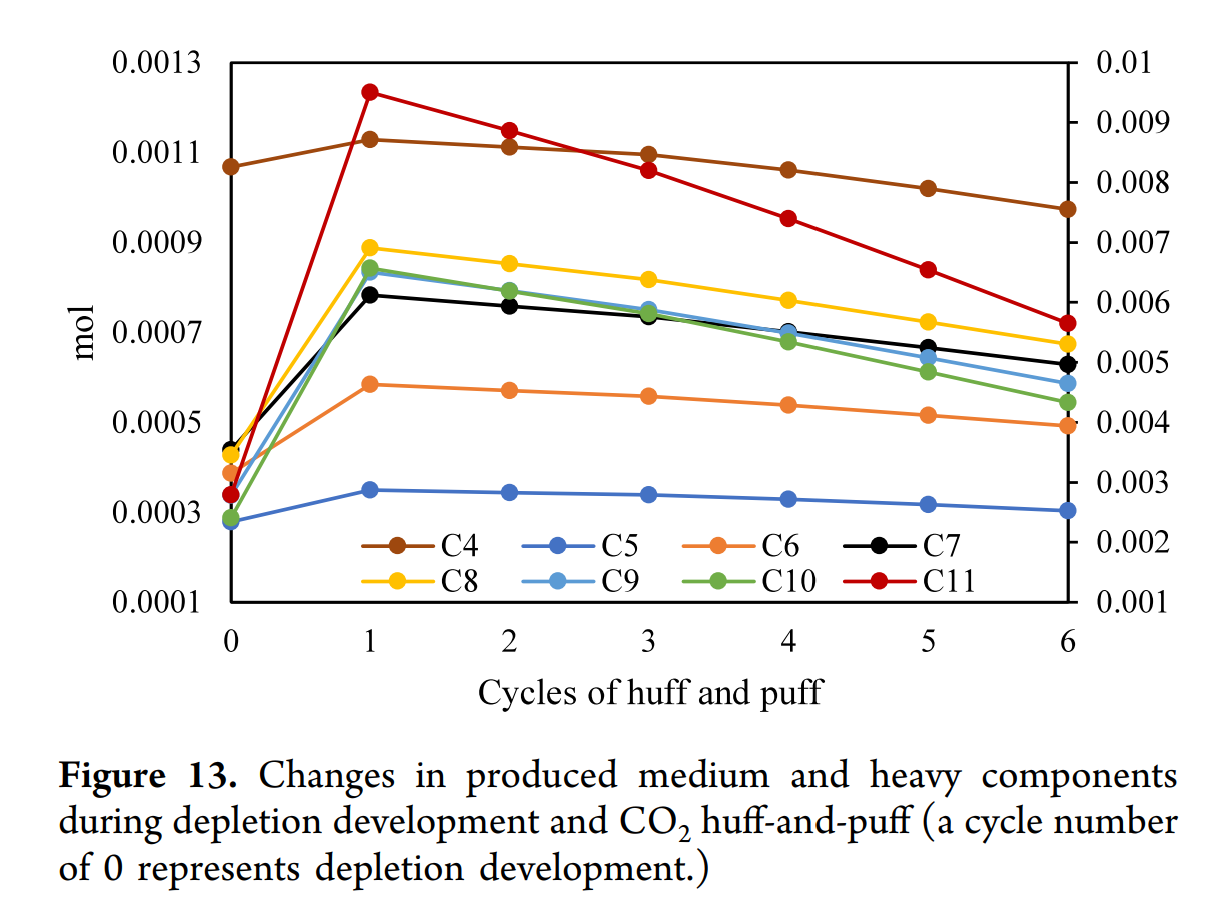
- 多轮吞吐后,小孔中重质组分产量仍略高于其他孔径。
- 润湿性影响:
- 润湿性越低(接触角越小),流体-壁面作用越强,泡点压力越低;
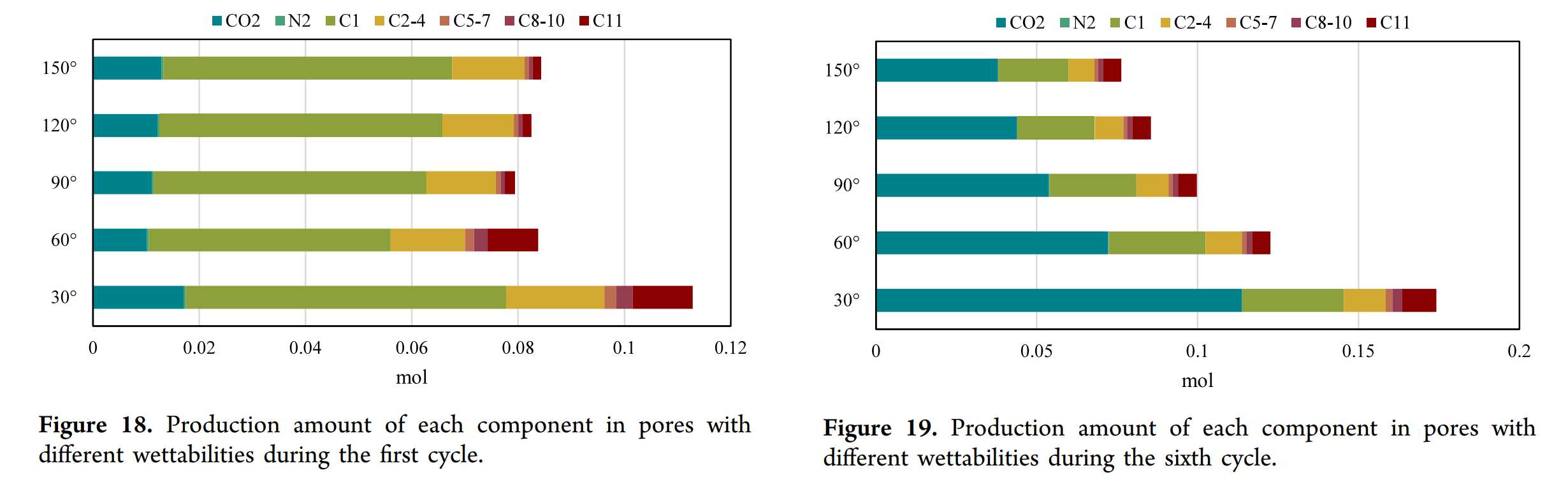
- 液相产量和重质组分产量随润湿性降低而增加;
- 多轮吞吐后,低润湿性孔隙中残余重质组分更少,气相产量更高。
- CO₂吞吐机制:
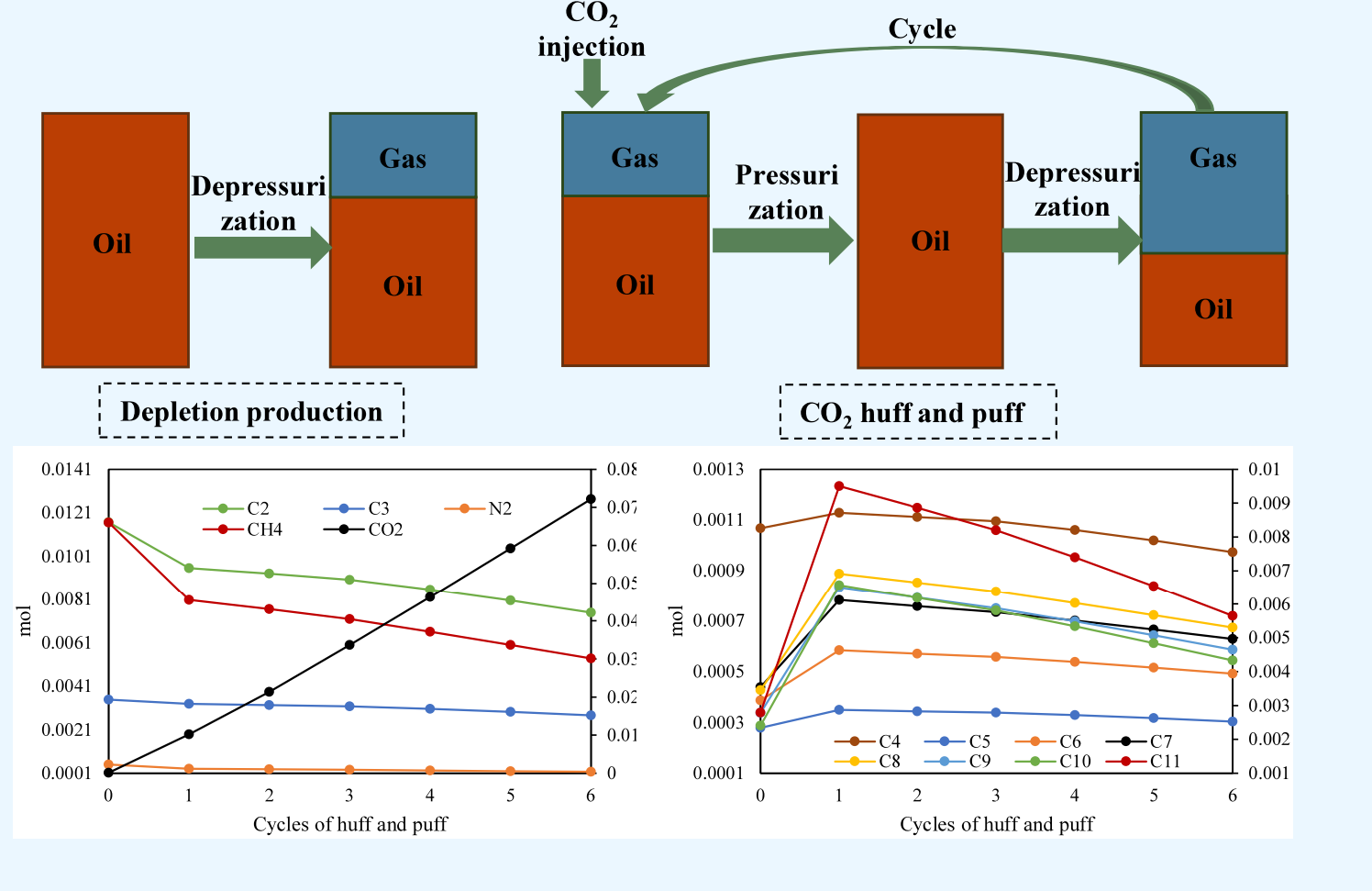
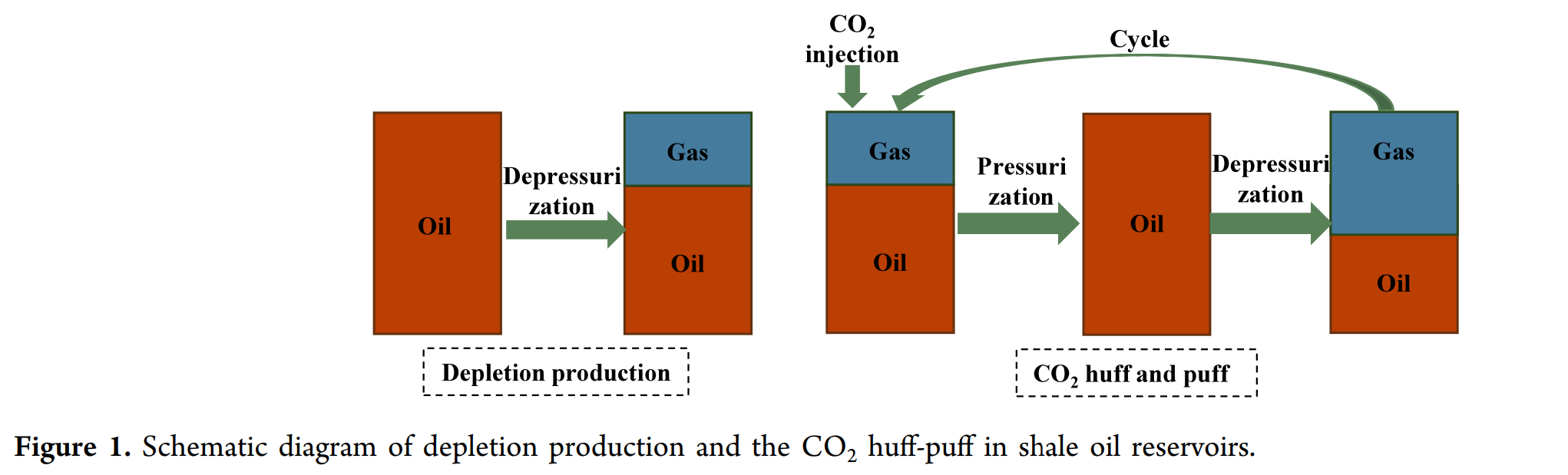
- 初期以甲烷驱替为主,后期CO₂在残余流体中富集;
- 多轮吞吐使气液两相区缩小,系统趋于单相,有助于抑制气窜、提高驱替效率;
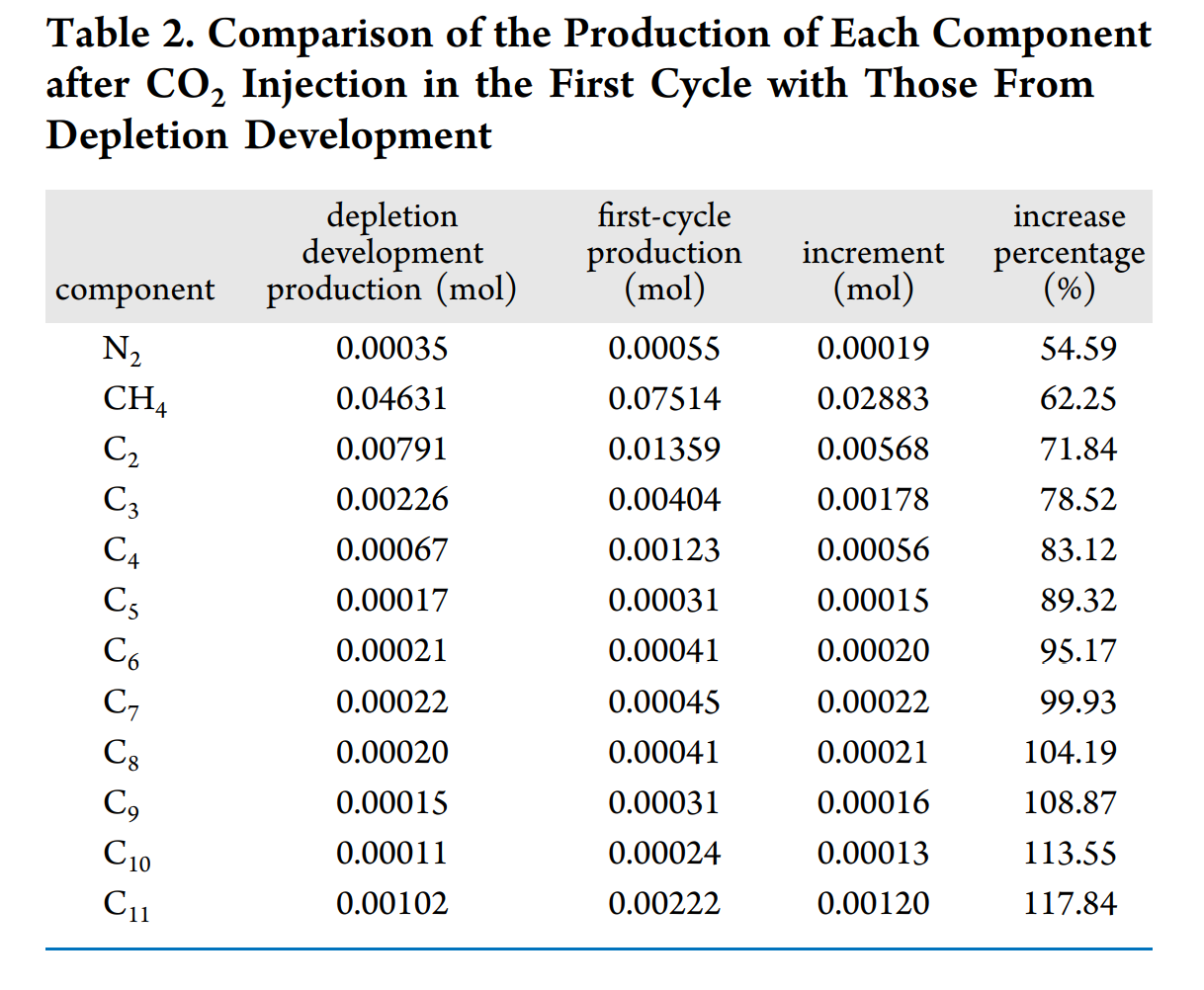
- CO₂对中重质组分(C4-C11)的提取作用显著,尤其在第一轮吞吐中效果明显。
作者单位
西安石油大学石油工程学院
Abstract
Shale oil resources have significant strategic value, and CO2 huff-n-puff technology is a key means for developing shale oil reservoirs. Due to the extensive development of nanopores in shale reservoirs and the complex and diverse mineral compositions, there are significant differences in the oil production laws in different pores during the CO2 huff-n-puff process. To address this issue, starting from the core factor affecting production─phase behavior─this paper first constructs a phase equilibrium model considering the influence of nanopore size and wettability; then, based on the principle of material conservation, it establishes a CO2 huff-n-puff numerical model. Through simulation calculations, it analyzes the production laws of multicomponent hydrocarbons in different CO2 huff-n-puff cycles under the conditions of different pore sizes and wettabilities. The results indicate that the bubble point pressure decreases as the pore size reduces. During pressure depletion production, more liquid is produced from small pores, resulting in a higher content of heavy components. In the early stage of CO2 huff-n-puff, more methane (CH4) is displaced by CO2 in small pores; as the number of cycles increases, the production of light and medium components in pores of different sizes tends to be consistent, with the heavy component production in 10 nm pores being slightly higher. The reduction of contact angle enhances the fluid–solid interaction, lowers the bubble point pressure, increases the liquid-phase yield, and thus increases the yield of heavy components. With increasing huff-n-puff cycles, pores with smaller contact angles contain fewer heavy components in the remaining fluid, leading to higher bubble point pressure and increased gas-phase production.
