
Numerical Simulation on Depressurization-Driven Production of Class I Hydrate Deposits with Transition Layer and Perforation Modes Optimization
南海广泛存在天然气水合物这种清洁能源。在神狐海域的低渗透I类水合物中广泛存在三相过渡层。因此,考虑到其平均渗透率为5.5毫达西且具有中等非均质性,本文通过克里金插值和随机建模方法建立了一个具有三相过渡层的三维非均质I类水合物储层地质模型,并利用数值模拟模型描述了该储层的降压开采效果。
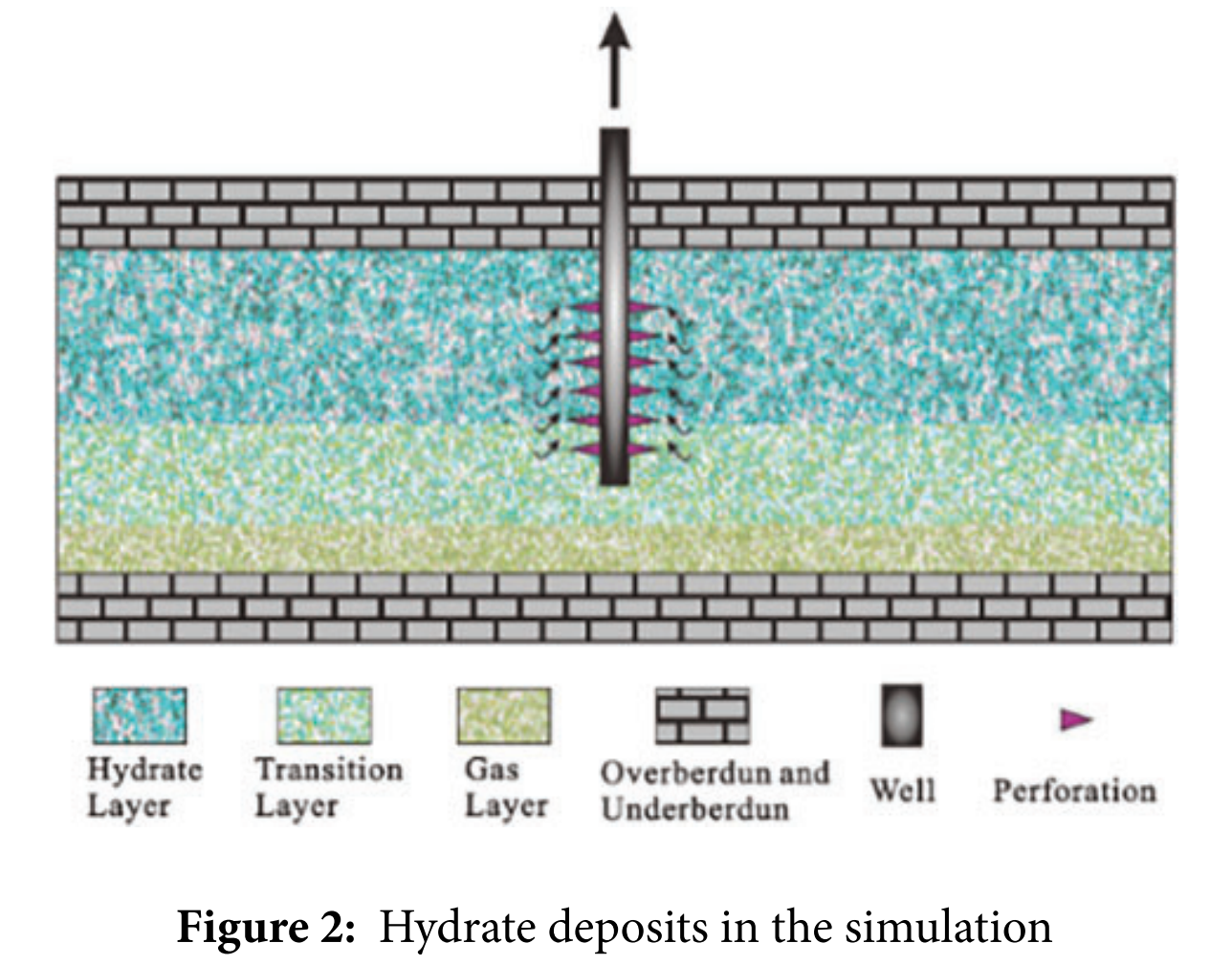
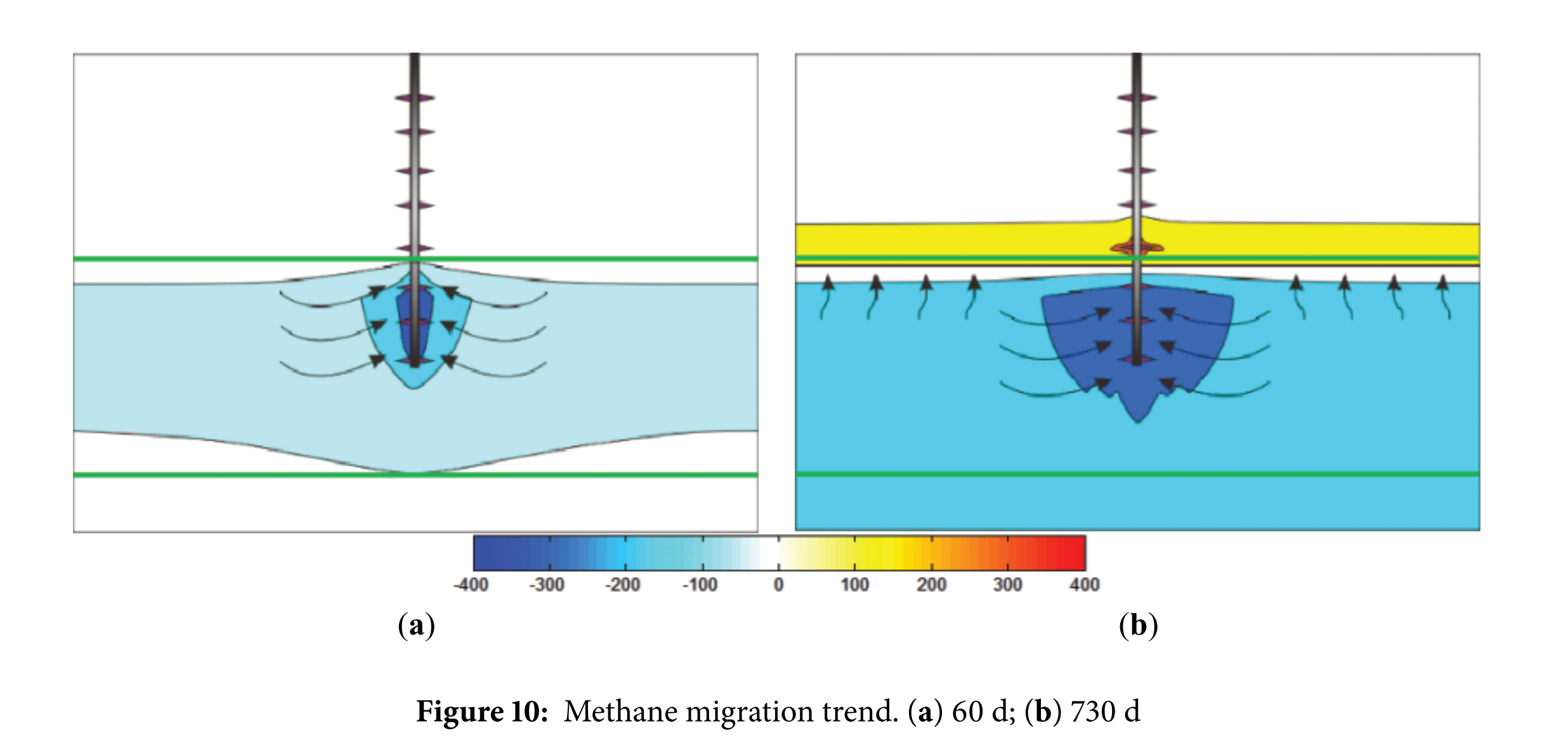
随着降压的进行,水合物层和过渡层中均出现了特定范围的完全分解区。整个储层的分解区倾向于向外和向上扩散。在三相过渡层中出现了明显的甲烷逸出。由于水合物分解的相变改善了局部渗透性,在水合物层底部出现了一些甲烷聚集,形成了局部甲烷富集区。在重力的影响下,储层中的甲烷迁移趋势主要是向生产井和水合物层移动。然而,由于水合物储层的渗透性限制,许多流体未能被有效开采,仍留在储层中。
因此,为了提高储层的有效降压,本文通过分析影响因素优化了压裂方法和降压方法。对比研究表明,自由层与一次性降压相结合可以增强有效降压并提高开采效果。自由气层的产气速度是过渡层的两倍。本研究可以为海洋能源的利用提供理论支持。
CMG软件应用情况
- 本文基于CMG-STARS模块,采用Kim-Bishnoi水合物分解动力学模型和Vysniauskas-Bishnoi水合物形成动力学模型来模拟水合物的分解和形成,并通过Moridis模型判断水合物的形成/分解。
- 通过与Konno等人的研究结果进行对比验证了CMG-STARS模块在水合物降压开采模拟中的可靠性,其模拟结果与实际试生产数据一致,能够准确反映水合物储层的开采动态。
结论
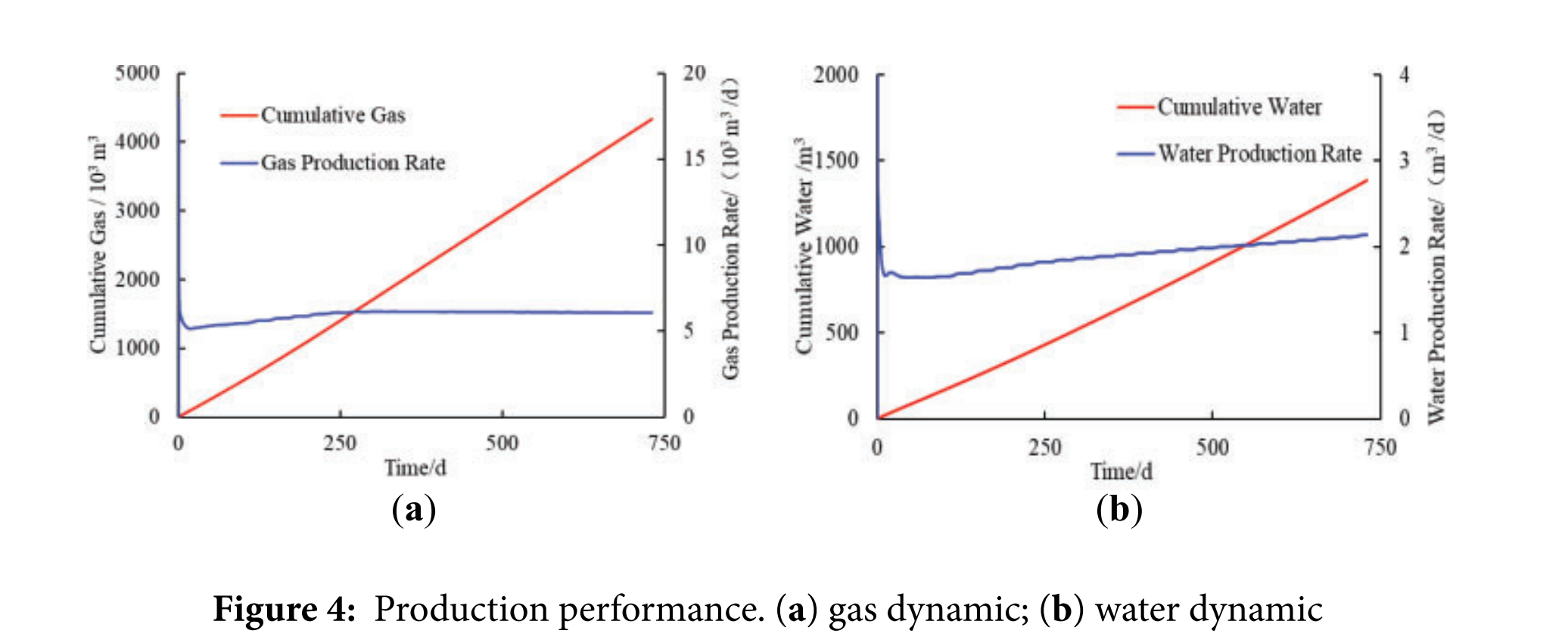
- 在早期生产阶段,气、水产量随储层渗透率增加而增加。250天后,由于天然气储量有限,气产量趋于稳定,而水产量仍随储层渗透率增加而增加。
- 储层中甲烷主要有两种运移趋势:向生产井运移以及在重力作用下向水合物层运移。三相过渡层有明显的甲烷逸出,且在过渡层上方出现甲烷聚集。因此,在水合物开采过程中,需重点关注甲烷聚集位置,以防止甲烷泄漏。
- 不同的压裂方法对生产效率影响显著。由于自由气层的气体流动速度快,更容易降低储层压力,因此水合物层、过渡层和自由气层的压裂方案生产效果最佳。
- 不同的降压方法对生产性能影响显著。气产量与有效降压范围成正比,因此在合理的降压范围内,一步降压法效率最高。
作者单位
- 中国石油化工股份有限公司石油勘探开发研究院


ABSTRACT:
Natural gas hydrate widely exists in the South China Sea as clean energy. A three-phase transition layer widely exists in low permeability Class I hydrates in the Shenhu offshore area. Therefore, taking into account the low-permeability characteristics with an average permeability of 5.5 mD and moderate heterogeneity, a 3-D geological model of heterogeneous Class I hydrate reservoirs with three-phase transition layers is established by Kriging interpolation and stochastic modeling method, and a numerical simulation model is used to describe the depressurization production performance of the reservoir. With the development of depressurization, a specific range of complete decomposition zones appear both in the hydrate and transition layers. The entire decomposition zone of the whole reservoir tends to outward and upward diffusion. There is apparent methane escape in the three-phase transition layer. Due to the improvement of local permeability caused by the phase transition of hydrate dissociation, some methane accumulation occurs at the bottom of the hydrate layer, forming a local methane enrichment zone. The methane migration trends in reservoirs are mainly characterized by movement toward production wells and hydrate layers under the influence of gravity. However, due to the permeability limitation of hydrate reservoirs, many fluids have not been effectively produced and remain in the reservoir. Therefore, to improve the effective pressure drop of the reservoir, the perforation method and pressure reduction method were optimized by analyzing the influencing factors based on the gas production rate. The comparative study demonstrates that perforating through the free gas layer combined with one-time depressurization can enhance the effective depressurization and improve production performance. The gas production rate from perforating through the free gas layer can be twice as high as that from perforating through the transition layer. This study can provide theoretical support for the utilization of marine energy
