Simulation study of relative permeability and the dynamic capillarity of waterfooding in tight oil reservoirs
Abstract
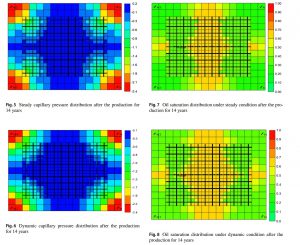
Relative permeability (kr ) and the capillary pressure (Pc) are the central key elements defining the multiphase fluids fow behavior in the porous media. However, the dynamic capillarity should consider the dynamic relative permeability and the dynamic capillary pressure while performing waterfooding process in extremely low permeable formations. In order to improve the oil production, the advanced horizontal well drilling along with multiple hydraulic fracturing is generally instigated to penetrate the unconventional resources. The aim of this study is to consider the dynamic capillarity in a commercial reservoir simulation, while utilizing the data gained from the dynamic and steady experiments of the relative permeability and the capillary pressure impacts during waterfooding process in the core plugs of unconventional tight oil reservoirs. The commercial reservoir simulation conducted sensitivity analyses using Computer Modeling Group simulator. The outcomes show that the well production of the reservoir is overestimated while implementing steady data for forecasting due to which the oil saturation decreases more equally and further rapidly. Additionally, the forecast of the well production estimated to breakthrough sooner. However, neglecting the dynamic capillarity causes a huge breakthrough of water infux. Therefore, the core objective of this study is to probe the consequences of taking into consideration the dynamic capillarity in ultra-low permeable formations while giving an alternative perspective to forecast the production of the hydraulically fractured unconventional tight oil reservoirs.