
Development of a hydrate risk assessment tool based on machine learning for CO2 storage in depleted gas reservoirs
枯竭气藏由于其巨大的储存容量、经过验证的密封完整性、现有的基础设施和地下数据的可用性,成为碳捕获与储存(CCS)的有吸引力的场所。然而,将二氧化碳注入枯竭气藏可能会导致井筒附近形成水合物,从而影响注入能力。
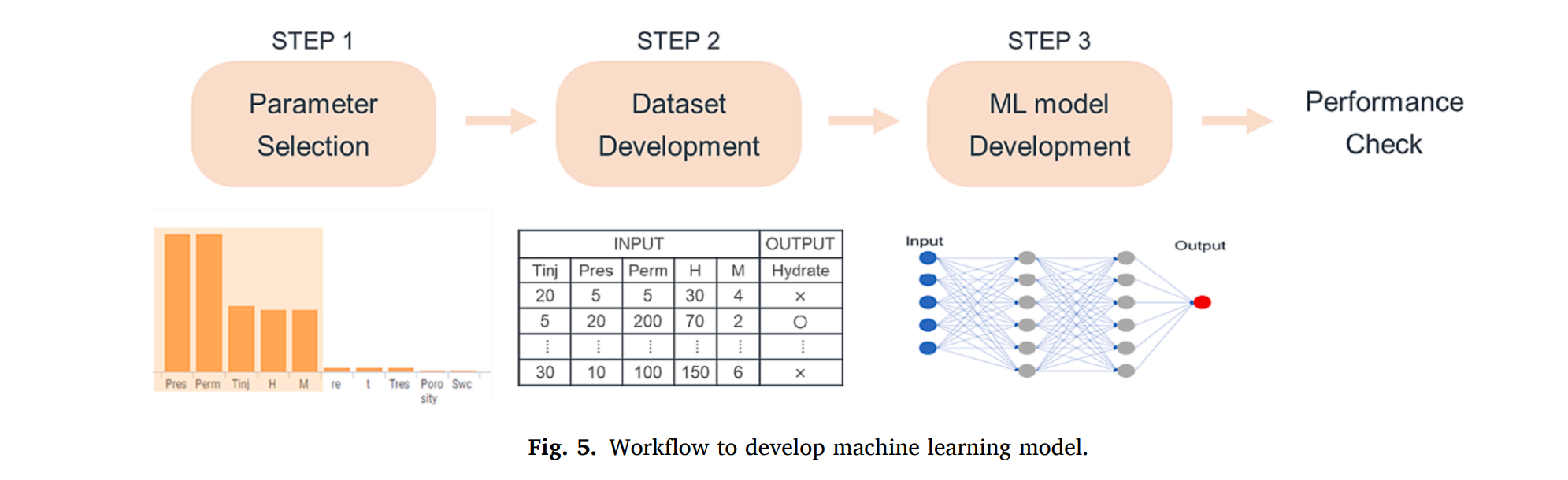
本研究旨在提出一种基于物理的机器学习(ML)方法,用于在枯竭气藏中注入二氧化碳时的水合物风险评估。首先,基于敏感性研究结果选择机器学习模型的输入参数,使用解析解对不同的操作和岩石物理值进行分析。然后,利用基于广泛输入参数值的数值拟结果的数据库对机器学习模型进行调整和测试。这是首次将机器学习方法用于评估枯竭气藏中二氧化碳储存的水合物风险。
本研究开发的机器学习模型在预测水合物形成事件方面表现出高效的性能,其中深度神经网络模型的召回值达到95%,精确度值达到84%。这些结果表明,机器学习模型可以进一步用于筛选阶段的风险评估,将机器学习筛选与数值模拟详细分析相结合的流程可以为未来的CCS项目提供高效的研究工作流程。
CMG软件应用情况:
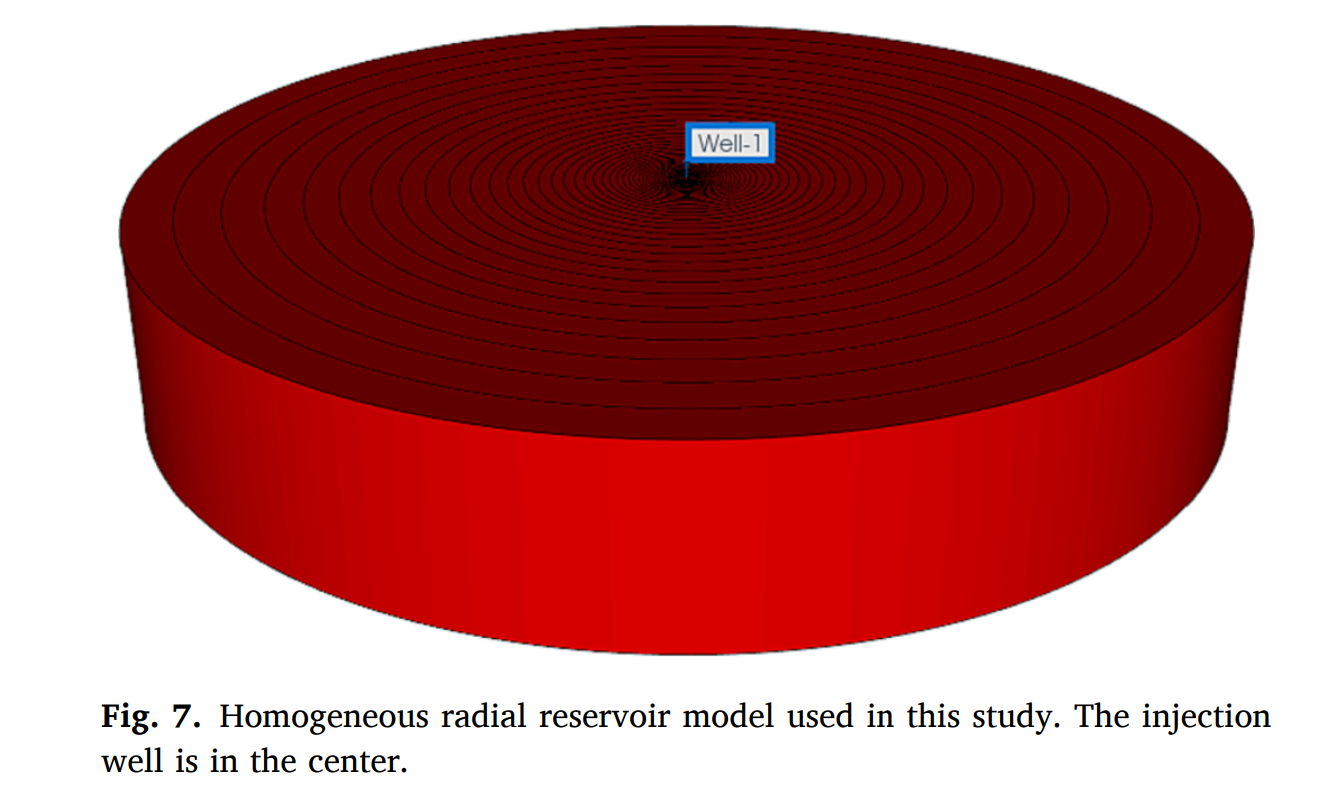
本研究使用了CMG公司的GEM软件进行非等温组分储层模拟,以模拟在甲烷储层中注入二氧化碳的过程。GEM软件能够考虑更实际的储层特性和相行为,与解析解相比具有优势。通过设置详细的网格和定义岩石及流体的关键参数,如渗透率、孔隙度、热导率等,模拟了流体流动和热传递过程。CMG-GEM软件的应用使得研究人员能够详细分析不同操作和储层条件下水合物形成的风险,为开发高效的水合物风险评估工具提供了有力支持。
结论:
本研究开发了一种基于机器学习模型的高效筛选工具,用于评估在枯竭气藏中注入二氧化碳时的水合物形成风险。通过使用解析解生成数据集进行参数重要性分析,再通过17,697次非等温数值模拟生成训练/测试数据集,开发了四种机器学习模型:随机森林、梯度提升、神经网络和深度神经网络。
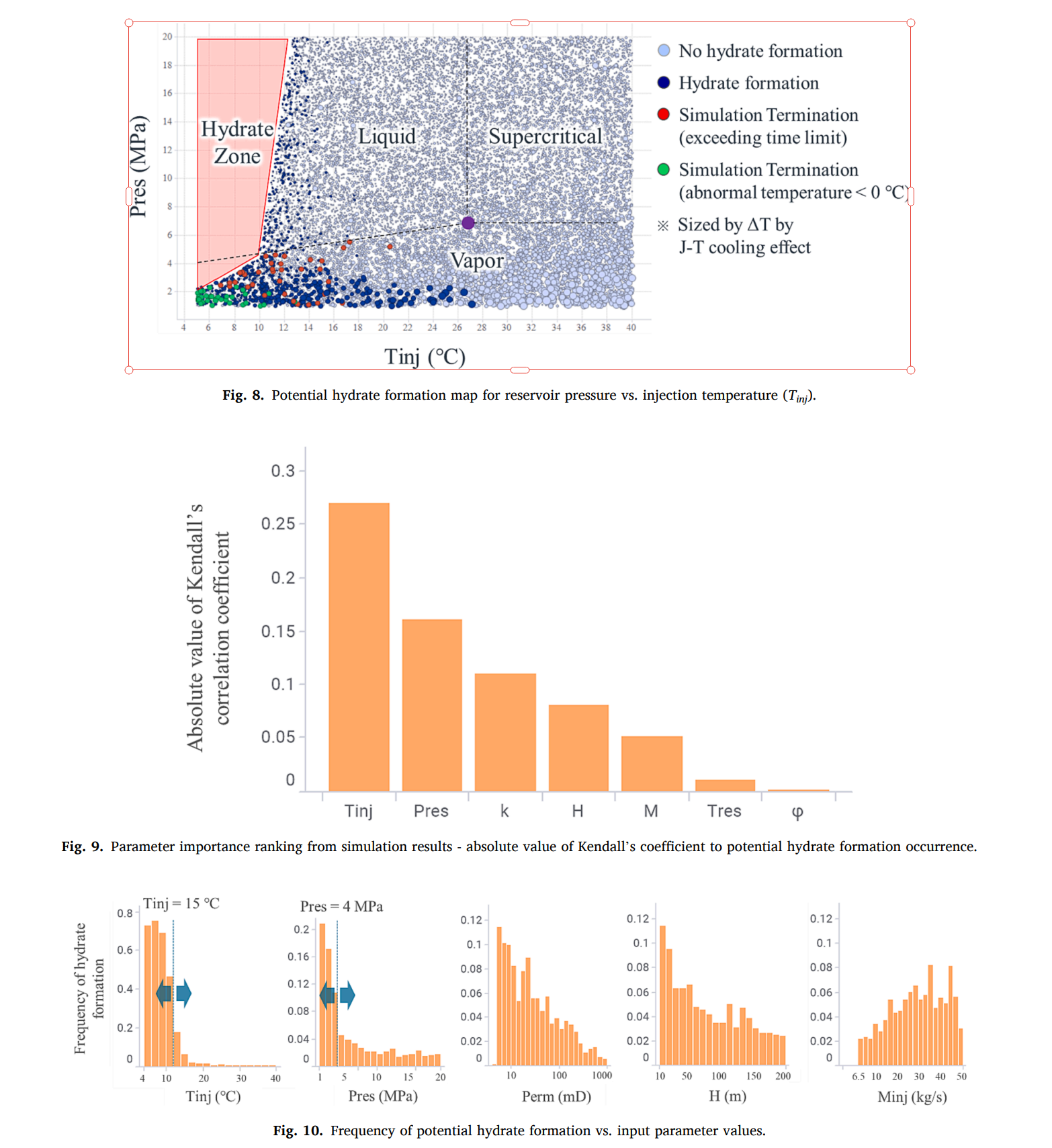
研究的关键结论包括:解析解在计算二氧化碳注入过程中的压力和温度剖面方面是有用的,但它考虑了多个简化假设;数值模拟可能显示更现实的结果,但需要更多的时间和精力,有时在二氧化碳相变附近会出现数值问题;数值模拟表明,井底注入温度和储层压力对潜在的水合物形成事件影响最大;开发的机器学习模型基于敏感性研究结果选择了七个输入参数,并使用数值模拟结果进行训练和测试;其中,深度神经网络模型在召回值达到95%的同时,精确度值达到84%,表现出最佳性能。这意味着机器学习模型可以立即在不出现数值问题的情况下预测95%的水合物情况,仅需七个输入参数,为未来的CCS项目选址过程提供高效的水合物风险快速筛选模型。
作者单位:
德克萨斯大学奥斯汀分校石油与地球系统工程系
A B S T R A C T
Depleted gas reservoirs are attractive sites for Carbon Capture and Storage (CCS) due to their huge storage capacities, proven seal integrity, existing infrastructure and subsurface data availability. However, CO2 injection into depleted formations can potentially lead to hydrate formation near the wellbore due to Joule-Thomson cooling, which might cause injectivity issues. Some challenges encountered when modeling and simulating this process are the computational time caused by Newton’s convergence issues and instability. The objective of this work is to propose a novel approach for hydrate risk assessment during CO2 injection into depleted gas reservoirs using physics-based Machine Learning (ML) approach. First, the selection of input parameters for the ML models is performed based on sensitivity study results using an analytical solution for different operational and petrophysical values. Then the ML models are tuned and tested using datasets from numerical reservoir simulation results based on a wide range of input parameter values. To the best of our knowledge, this is the ffrst time that an ML approach is used for risk assessment of CO2 hydrate in its storage in depleted gas reservoirs. The ML models developed in this study presented an efffcient performance to predict hydrate-forming events. The deep neural network model performed best with a 95% recall value and 84% precision value. These results show that the ML model can be further utilized for risk assessment in the screening stage, and the combination of screening by ML, followed by detailed analysis with numerical simulation in high-risk cases can be an efffcient probing workffow for future CCS projects.
