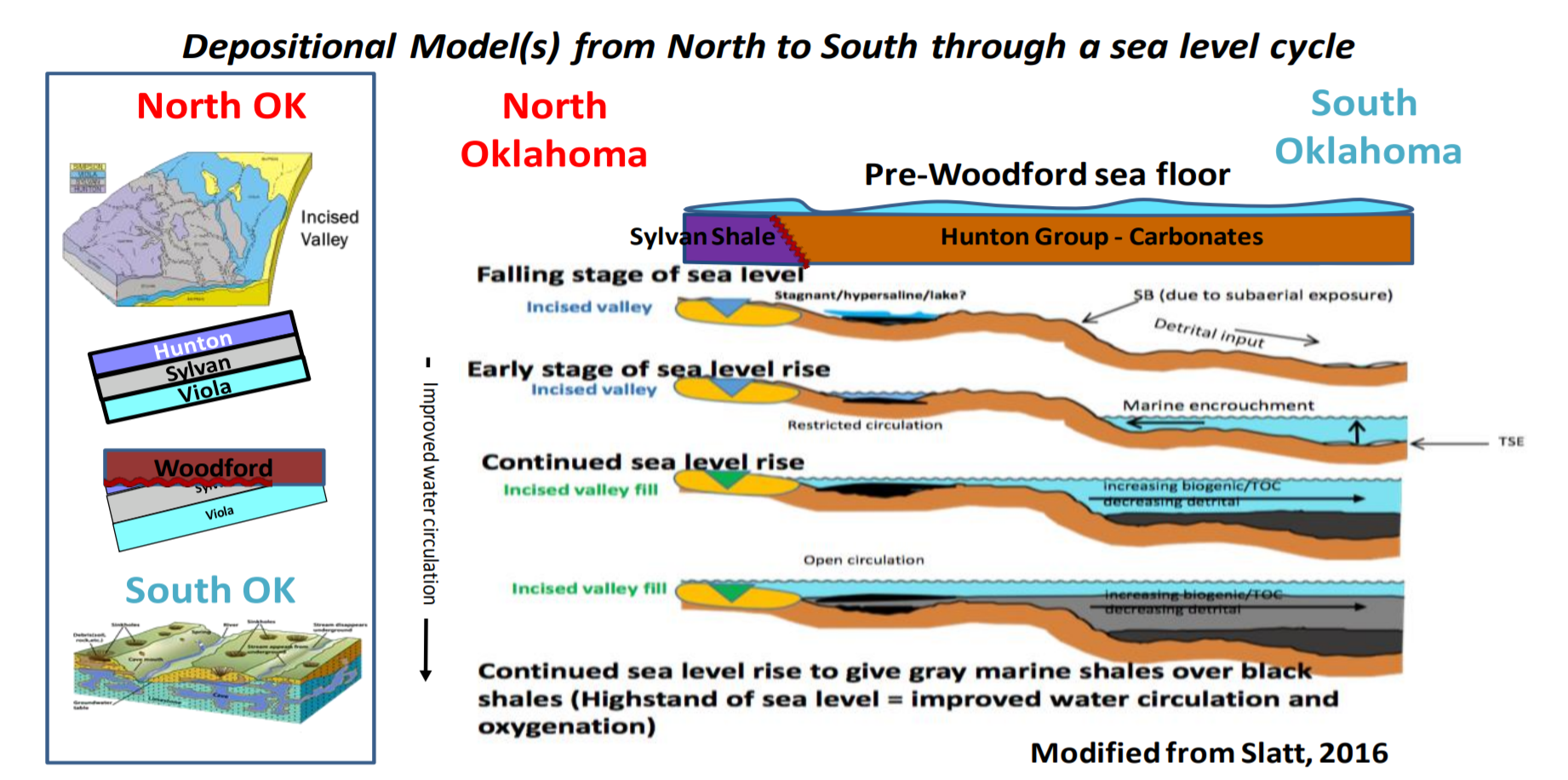
摘要:本研究的目的是利用各尺度数据进行储层表征,并最终进行储层模拟。当前的研究区域为俄克拉荷马州的伍德福德页岩。由于其巨大的产层和由此产生的油气储量,伍德福德页岩目前是俄克拉荷马州主要石油运营商的关注中心。
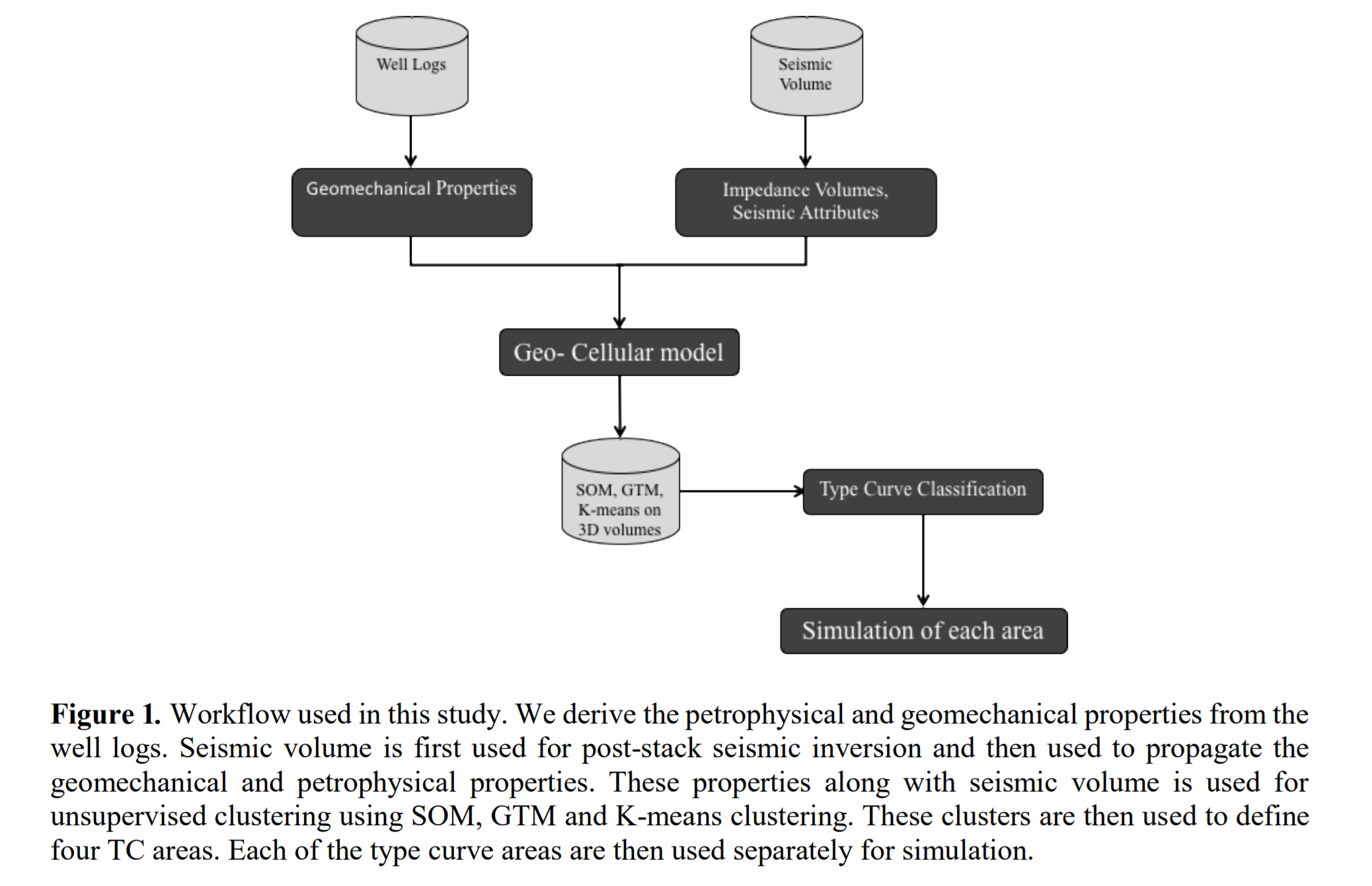
在本研究中,我们利用测井数据获取高垂直分辨率的岩石物理和地质力学属性,如孔隙度、总有机碳(TOC)、杨氏模量、剪切模量、比奥系数、泊松比、应力等。我们使用地震反演得到的阻抗体积来填充模型区域中的这些属性,以更好地控制这些属性的层序。为了获得类型曲线(TC),我们采用了无监督机器学习方法,如自组织映射(SOM)和生成拓扑映射(GTM),对储层属性进行聚类。
从这些聚类中,我们确定了四个类型曲线(TC)区域。为了展示这四个类型曲线区域的物理意义,我们使用了完全组分、完全耦合的地质力学状态方程(EOS)模拟器,模拟应力函数下的压裂岩石体积(SRV),并最终模拟生产。
我们的结果表明,从地震到生产尺度的整合为储层表征提供了出色的控制,并增强了对静态模型的信心。在所有聚类技术中,SOM在我们的案例中效果最佳,并与区域地质一致。地震数据提供的样本数量越多,对地质力学属性的水平控制就越好,从而更好地模拟SRV并最终预测生产行为。
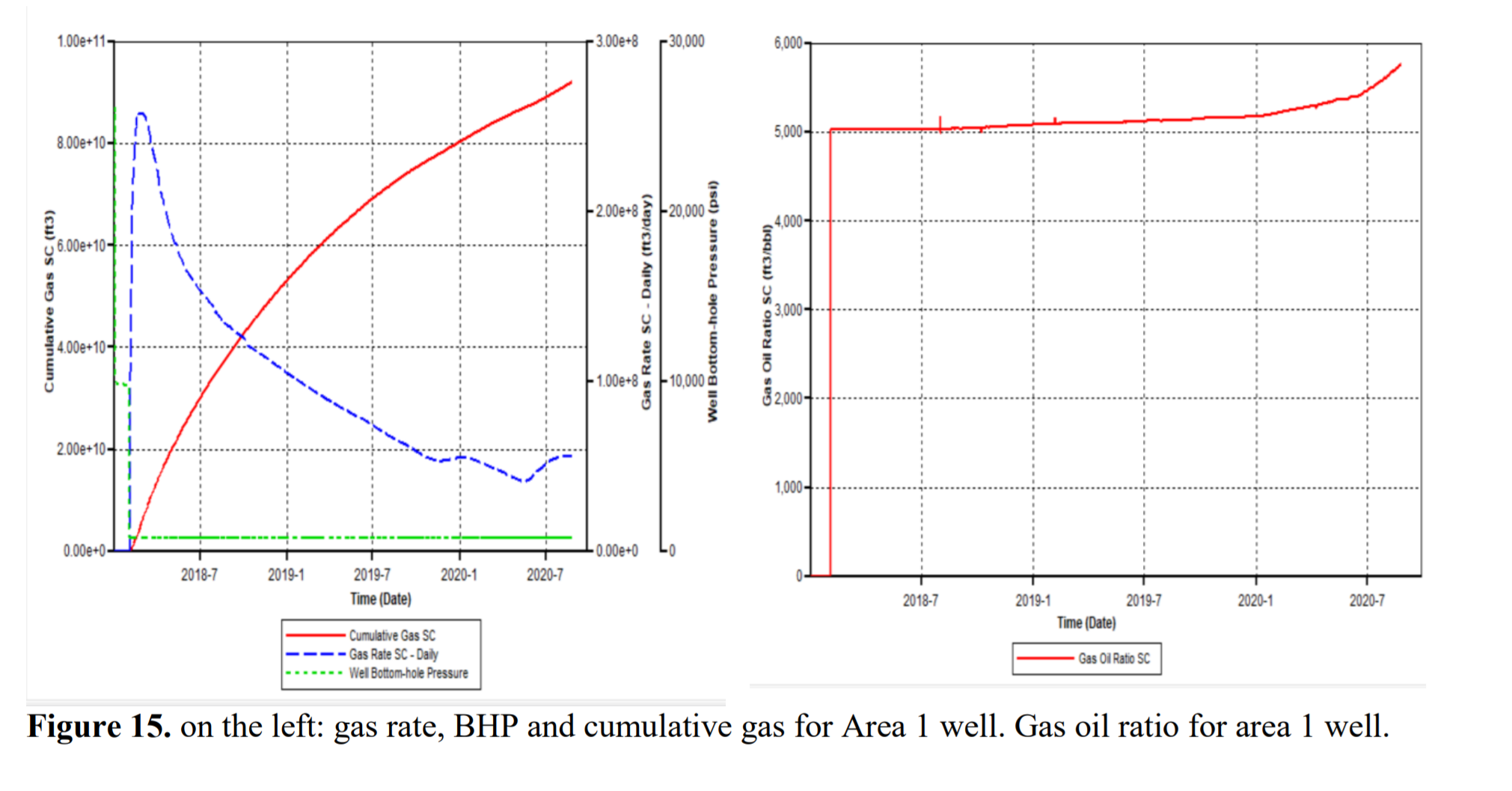
Reservoir Simulation We have selected four type curve areas for simulation in our study based on the seismic and well logs derived clusters. We use a 5,000 Ft. lateral length of the wells in our area to perform our simulation based on most accepted industry standards in vicinity areas. To fully capture the fluid effects, we use a fully compositional rich condensate representative PVT in the area.
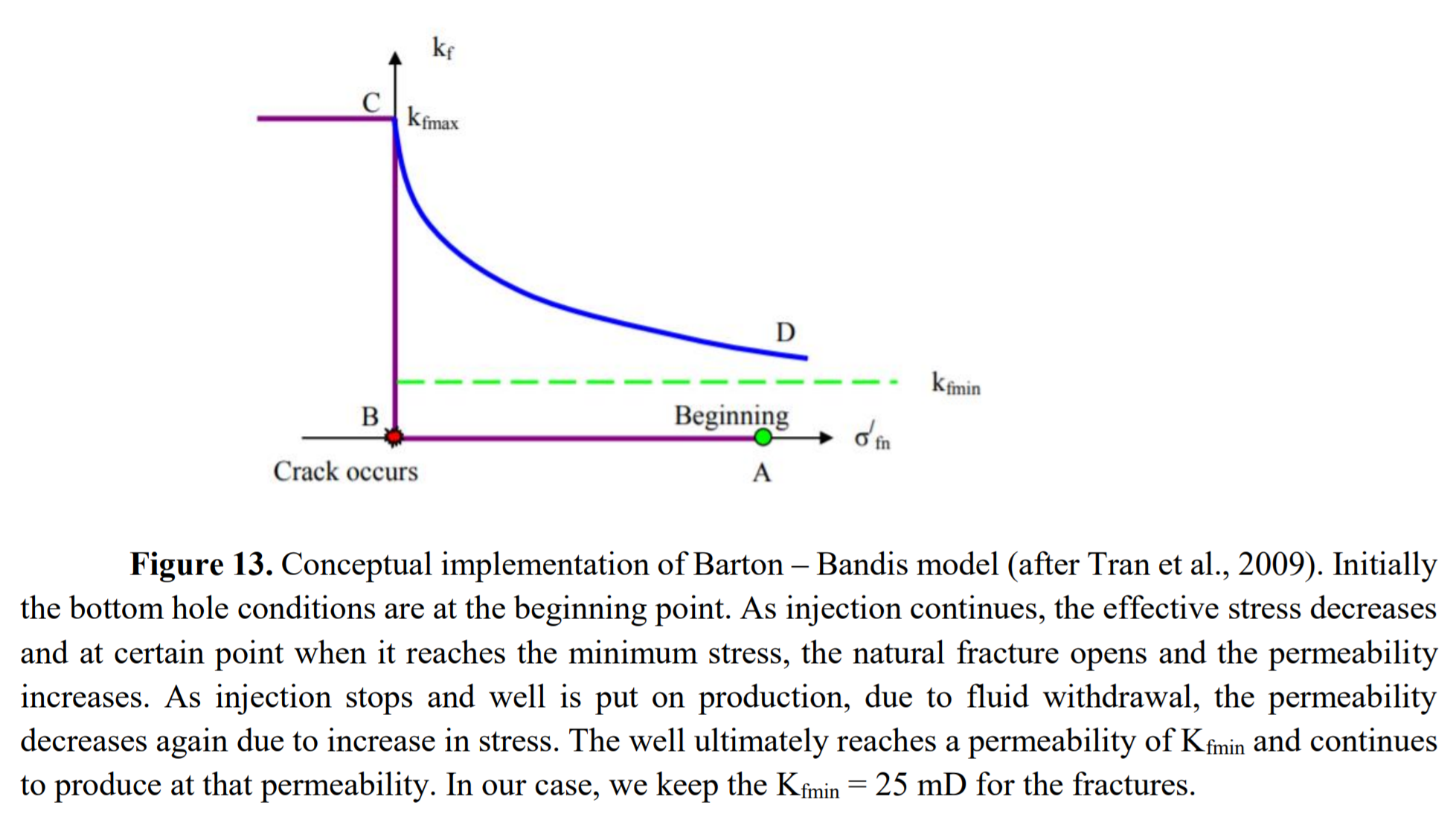
We use the same fluid in all the areas as the primary aim of this study is to identify the type curves based on reservoir properties that can be known ahead of the drilling and not the fluid properties which can vary and alter the Recovery Factors (RF’s). For geomechanical coupling, we use a fully coupled Barton-Bandis model (Bandis et al., 1983) in a dual porosity setup. Figure 13 shows the conceptual implementation of this model in which the permeability of the natural factures is coupled in the model as the minimum effective stress. As the injection is carried out in a typical hydraulic fracturing scenario, the minimum effective stress decreases, eventually increasing the permeability of the natural fractures.